














Story Highlight
– SMW Limited fined £129,000 for safety breaches.
– Worker harmed due to miscommunication about machinery safety.
– Incident involved rotary lock valve and moving blades.
– Permanent disfigurement and life-changing consequences for worker.
– HSE emphasized need for better safeguards and communication.
Full Story
A biomass facility situated near Glasgow has faced significant legal consequences following a serious workplace accident that resulted in a worker losing part of three fingers. The incident occurred in June 2023 at the Daldowie Fuel Plant, owned by SMW Limited, located in Uddingston. The company has been fined £129,000 after an investigation conducted by the Health and Safety Executive (HSE).
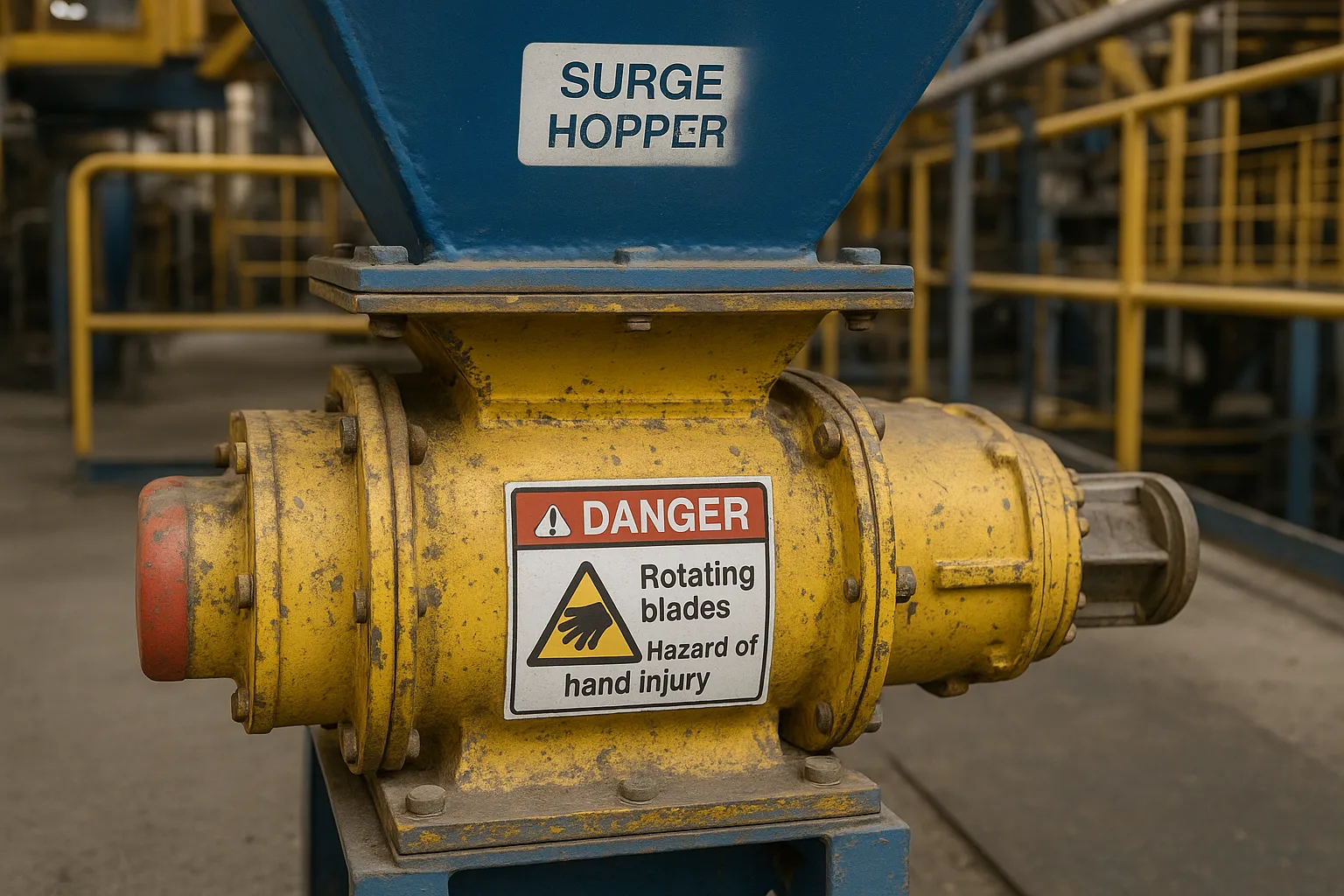
The injured employee, Garry Roberts, aged 57, was operating a machine and believed that it was safe to perform maintenance work due to a misunderstanding regarding the operation of the machinery. During the incident, he was trying to clear a blockage in a surge hopper, a large container situated at the end of the production line through which the processed material flows. Investigators indicated that Roberts had been attempting to address an issue within a rotary lock valve equipped with rapidly spinning blades, which rotate at a speed of 25 revolutions per minute.
As part of his efforts to manage the blockage, Roberts removed a metal clip and a rubber gaiter, which allowed him access to the rotary lock valve. Communication regarding the machine’s status was relayed through hand-held radios, a system that proved ineffective due to a lack of direct visibility and the potential for radio interference. This miscommunication led Roberts to mistakenly believe that the rotary lock valve was not operational, resulting in a critical error when he inserted his right hand into the area of the moving blades. Consequently, his index, middle, and ring fingers suffered partial severing.
The HSE’s investigation revealed that despite having a specific safety protocol in place for clearing such blockages—a protocol that Roberts had recently completed training on in April 2023—the company had neglected to implement critical safeguards to restrict access to the hazardous components of the machinery. At Hamilton Sheriff Court, SMW Limited pleaded guilty to violations of The Provision and Use of Work Equipment Regulations 1998, specifically Regulations 11(1) and (2), as well as the Health and Safety at Work etc. Act 1974, Section 33(1)(c).
In light of these breaches, the court imposed a substantial fine of £120,000 on SMW Limited, along with a victim surcharge of £9,000.
Commenting on the case, Sheriff Kevin McCallum KC articulated the seriousness of Roberts’ injuries, highlighting that they led to permanent disfigurement and significant, life-altering consequences for his future. Since the incident, Roberts has been unable to return to work, with medical advice indicating that he will not be able to perform his previous role. The sheriff noted that the company had a responsibility to protect its workers, emphasising that it would have been feasible to integrate a fixed guard to prevent access to the dangerous moving parts of the machinery.
HSE inspector Nicola Kerr stressed the preventable nature of the incident, stating, “This man’s injuries have had a profound impact on his life, and were completely preventable.” She underscored the necessity for employers to implement adequate physical safeguards when workers are required to operate machines with potentially hazardous moving components. “Relying solely on radio communication to control isolation,” she said, “particularly where there is no line of sight and interference is possible, is simply not good enough.”
Kerr continued to advocate for stricter safety measures, noting that the incorporation of a fixed guard could have completely averted this unfortunate incident. The case serves as a poignant reminder of the critical importance of workplace safety measures within industrial settings.
The Daldowie Fuel Plant operates within a context where adherence to health and safety regulations is paramount to protect the workers who are integral to the facility’s operations. The experience of Garry Roberts highlights the need for ongoing training and communication protocols that align with best practice standards in safety management.
As workplace safety regulations evolve, this incident will likely contribute to ongoing discussions regarding the necessary measures employers must take to ensure the protection of their employees. Effective communication, clarity of procedures, and comprehensive training are aspects that must be continually revisited and improved to prevent such tragic accidents from occurring in the future.
As the industry moves forward, the focus must remain on creating a safer working environment to safeguard employees from similar incidents. This tragedy underscores the imperative for businesses to not only comply with regulations but to actively foster a culture of safety that prioritises workers’ health and well-being at all times.
Our Thoughts
The incident at SMW Limited highlights significant failures in adhering to UK health and safety regulations, specifically The Provision and Use of Work Equipment Regulations 1998 and the Health and Safety at Work etc. Act 1974. The key safety lessons include the necessity of effective communication protocols and the implementation of physical safeguards.
To prevent similar incidents, the company should have ensured that access to dangerous machinery parts was effectively guarded, such as by installing fixed guards to prevent operator injury. The reliance on hand-held radio communication, especially in the absence of line of sight, proved inadequate and unnecessarily risky. A more reliable isolation system or redundancy in communication methods, such as visual signals or an independent verification procedure, could have mitigated the risk of miscommunication.
In summary, enhancing safety measures by installing appropriate guards and improving communication protocols would have been reasonable practicable steps that could have prevented the incident and saved the worker from life-changing injuries.