















Story Highlight
– Jason Thomas fell through missing deck grate on oil rig.
– Health and Safety Executive found the incident avoidable.
– Ensco Offshore UK fined £267,000 for safety breaches.
– Thomas’ body was never recovered; search operation unsuccessful.
– Company implemented grating upgrades post-incident for safety.
Full Story
A man tragically lost his life following an incident on an oil rig in the North Sea, where he fell through a missing deck grate. Jason Thomas, aged 50, from Newport, had been working aboard the Valaris 121 offshore rig, which was en route to Dundee for maintenance at the time of the incident.
On 22 January 2023, Mr Thomas was supervising a deck team aboard the rig. His day started routine until adverse weather conditions set in, leading to dangerous winds and towering waves, which posed significant challenges for the crew. The Health and Safety Executive (HSE) later examined the circumstances surrounding the tragedy and concluded that the event could have been prevented had Ensco Offshore UK Limited, the firm operating the rig, implemented basic safety measures.
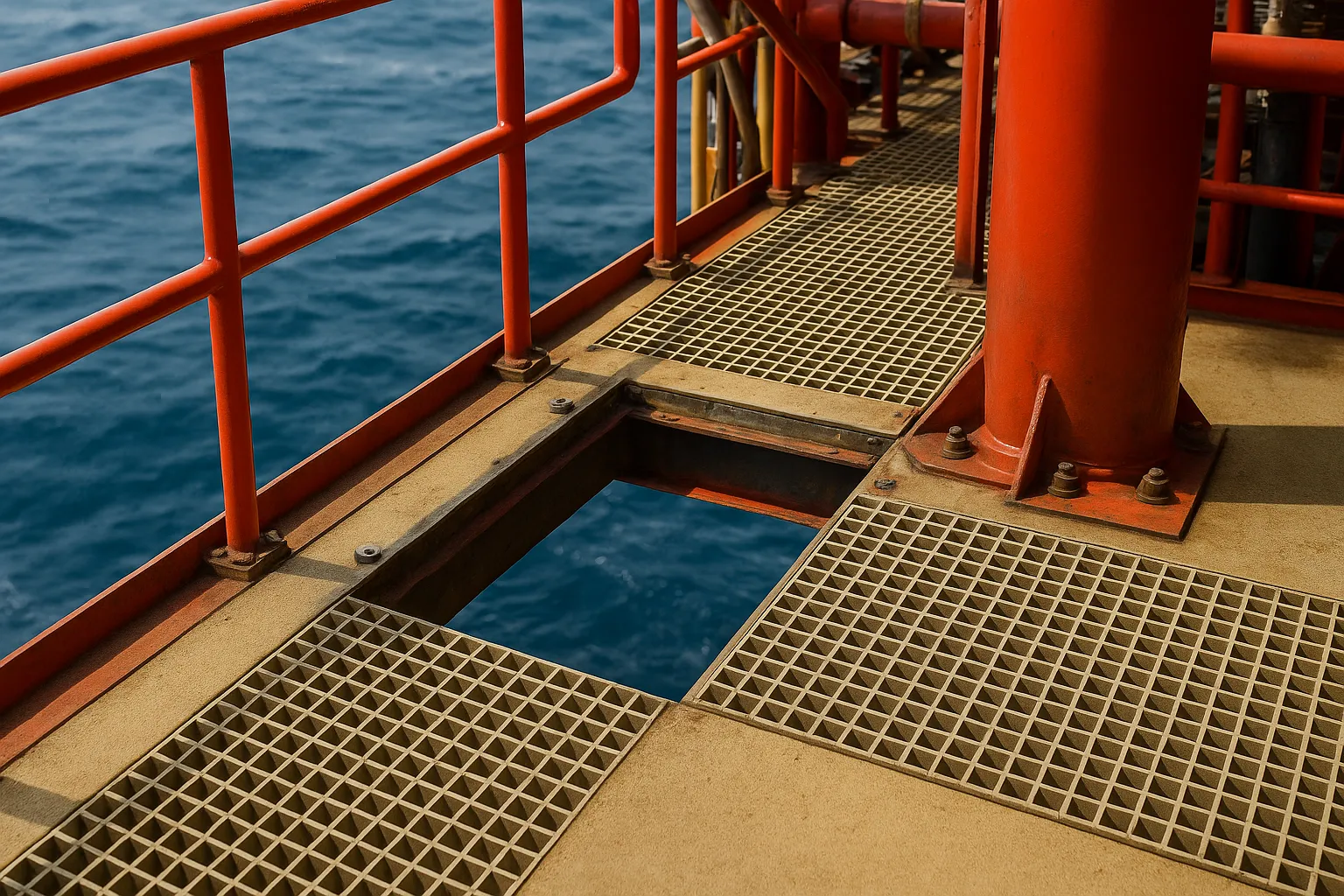
Witnesses last saw Mr Thomas leaving a staff lounge just after 3 pm, with a coffee in hand and his mobile phone. Approximately an hour later, a colleague reported hearing a loud noise just outside the boot room, prompting a search for Mr Thomas. The colleague opened the door to deck one and discovered a missing grating, which left a perilous hole extending directly to the turbulent North Sea below. Despite repeated public address system announcements to locate Mr Thomas, he was unaccounted for, which led to a call to HM Coastguard just before 9 pm. A subsequent search operation failed to find him, and the search was officially halted the following day.
In the aftermath of this incident, the HSE identified several contributing factors. The investigation revealed that strong wave action had caused a critical failure in the fastening mechanism of the deck grate, dislodging it from its rightful position. It was determined that the grating had not been properly secured to comply with the original installation guidelines. Additionally, subsequent inspections had neglected to adequately check the securing clips that were meant to prevent such risks.
The authorities proceeded to take action against Ensco Offshore UK Limited for serious breaches of health and safety legislation. Following their guilty plea in Aberdeen Sheriff’s Court, the company faced a fine of £267,000 for failing to adhere to Section 3(1) and Section 33(1)(a) of the Health and Safety at Work Act 1974. They were also mandated to pay a victim surcharge of £20,025.
Stephen Hanson Hall, a principal inspector for the HSE, conveyed the gravity of the situation, acknowledging the emotional turmoil that followed Mr Thomas’s death. He stated, “This was a profound tragedy which left a lasting mark on Jason’s colleagues and his community. The fact his body was never found resulted in great anguish to his mother, who has also since died.” He further elaborated that the investigation was thorough and emphasized that all safety systems, particularly grating systems, must be designed and maintained to ensure they pose no risk to personnel.
Following the tragedy, Ensco Offshore UK Limited announced plans to replace all polymer grating utilized on their rigs with more robust galvanised steel alternatives. This decision reflects a necessary response to the incident, with the aim of enhancing safety measures and preventing similar accidents in the future.
Jason Thomas was regarded as a seasoned professional in the offshore industry, having built his career over many years. His death left a void not only among his colleagues but also within his local community. The callous nature of his fate, especially with the ongoing unanswered questions regarding his final moments, struck a deep chord with those who knew him.
This incident not only highlights the inherent dangers associated with offshore work but also underscores the critical importance of rigorous adherence to health and safety regulations. The offshore industry, while vital for energy needs, carries responsibilities that cannot be overlooked. Ensuring safe working conditions through preventive measures and thorough inspections is paramount; the consequences of neglect can be fatal.
As investigations continue, and community members remember Mr Thomas’s dedication to his work, there is a collective hope that lessons learned from this incident will influence industry standards moving forward. Stakeholders across the sector must prioritise the safety and well-being of workers, ensuring that incidents like this become a relic of the past rather than a recurring tragedy.
Our Thoughts
The tragic incident involving Jason Thomas highlights several key safety lessons and regulatory breaches by Ensco Offshore UK Limited that could have been prevented. The Health and Safety Executive (HSE) identified that the company failed to ensure the grating was secured according to its original specifications, as well as neglecting to conduct adequate inspections of the fastening clips. This oversight breached Section 3(1) and Section 33(1)(a) of the Health and Safety at Work etc. Act 1974, which mandates that employers ensure the health and safety of employees and others who may be affected by their work activities.
To prevent such incidents, regular and thorough inspections of safety features, particularly in adverse weather conditions, should be a priority. Implementing a robust risk assessment process during rig moves and ensuring timely maintenance of equipment can mitigate hazards posed by environmental factors. The decision to replace polymer grating with galvanized steel post-incident indicates a shift towards more resilient safety measures, which should have been proactively considered to prevent the risk of displacement. Overall, enhancing safety protocols and compliance could significantly reduce the likelihood of similar future incidents.