












Story Highlight
– Mobile phones to be legally banned in schools soon.
– Child Benefit High Income charge warning for high earners.
– Smoking banned for anyone born after 2008.
– Two-child limit on Universal Credit officially scrapped.
– Child Benefit rates increased by 3.8% in April.
Full Story
In recent weeks, several significant policy updates affecting families across the UK have been announced. From legislative measures to safeguard children’s health to adjustments in financial support for households, these developments may influence both the well-being of younger generations and family budgets. Below is an overview of the key changes parents need to be aware of.
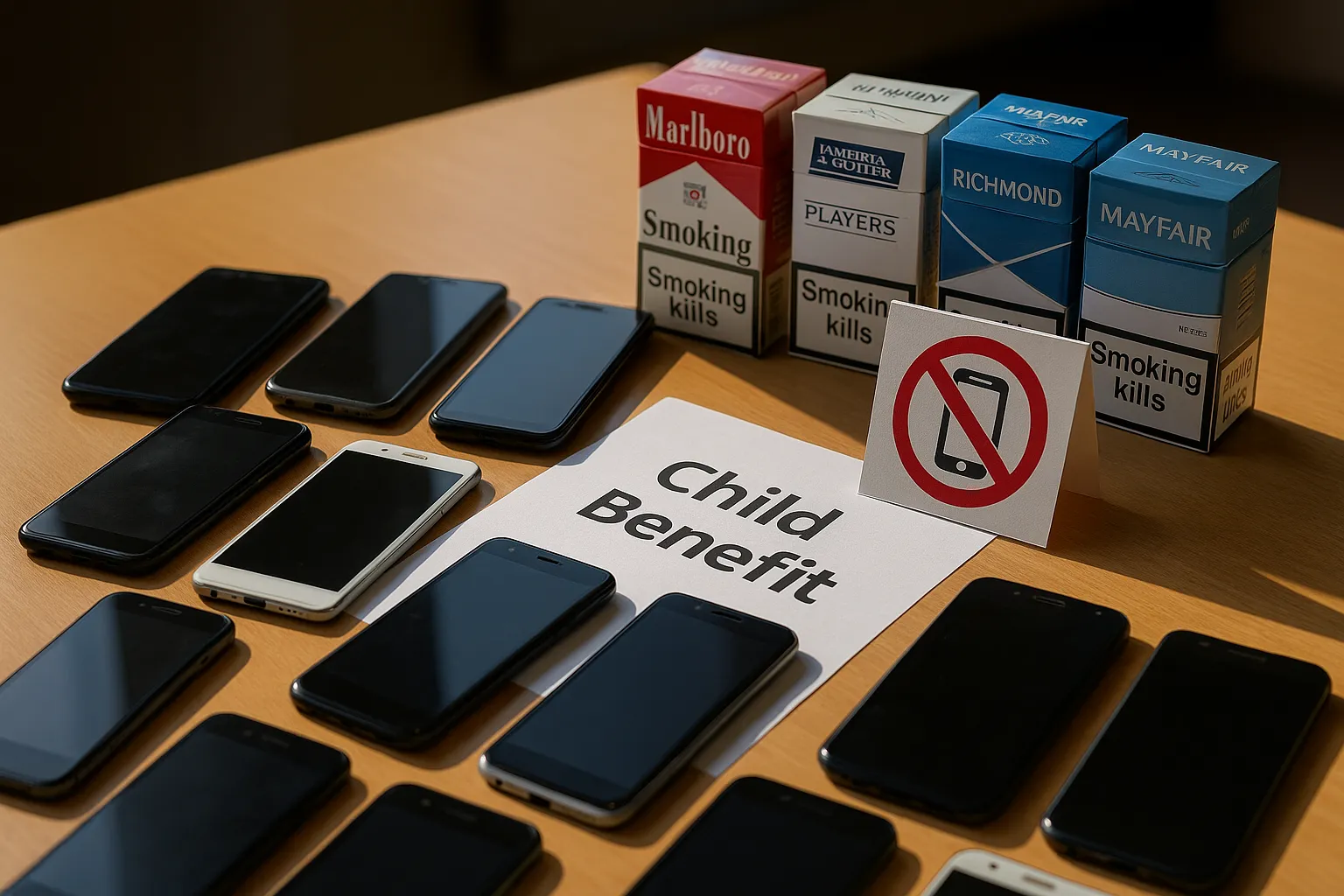
One of the most notable proposals is the impending legal ban on mobile phones in schools throughout England. The Government is looking to formalise this restriction by introducing an amendment to the Children’s Wellbeing and Schools Bill in the House of Lords. A representative from the Department for Education (DfE) stated that this amendment will convert current guidance regarding mobile phone usage into a legal requirement. The spokesperson affirmed, “We have been consistently clear that mobile phones have no place in schools, and the majority already prohibit them.” This measure aims to enhance the enforcement of such policies, with Ofsted set to evaluate school mobile phone rules during inspections starting this month. The overarching goal is to prioritise the safety and welfare of children as part of what is believed to be the most significant piece of child safeguarding legislation in recent history.
In addition to the mobile phone ban, parents earning above £60,000 have received a crucial alert from HM Revenue and Customs (HMRC) regarding a specific Child Benefit regulation. Although Child Benefit is not means-tested, it does come with a High Income Child Benefit Charge for families when one partner’s earnings exceed the given threshold. HMRC communicated the warning via a post on social media platform X, highlighting, “Attention parents! Recently had a pay rise? If you’re now earning over £60k and you get Child Benefit you may need to pay some of it back.” Parents in this situation could be impacted as the funds are reclaimed through tax returns, necessitating careful financial consideration.
Another significant development for children’s health is the new legislation prohibiting smoking for individuals born after 2008. Health Secretary Wes Streeting described this initiative as a “historic moment for the nation’s health” following the passage of the Tobacco and Vapes Bill through Parliament. The law aims to create a “smoke-free generation” by restricting tobacco sales to those born on or after January 1, 2009. Once this measure receives royal assent, the Government will gain new regulatory powers concerning tobacco, vaping, and nicotine products, including their packaging and flavours. This legislative shift is intended to shield children from long-term addiction and the associated health risks.
Critically, another financial adjustment is the abolition of the two-child limit on Universal Credit claims. This change became effective on April 6, 2026, allowing families to receive additional support for every child in their care. Although the policy is already in place, recipients should be aware that the increased payments may not be available immediately, with many expecting to see the enhancements reflected in accounts from May or June. The timing of these adjustments varies according to each family’s monthly assessment period for Universal Credit.
Furthermore, Child Benefit rates have recently been amended, providing financial relief to millions of families. From April 2026, the benefit for the first child has increased to £26.05 per week, while additional children will receive £17.25 weekly, marking a 3.8% uplift from previous rates. Such adjustments aim to support families in managing their financial obligations amidst ongoing economic challenges.
In conjunction with these policy changes, the Government has released new guidance aimed at regulating screen time for children under the age of five. Parents are encouraged to restrict screen exposure to no more than one hour daily for children aged two to five. The Prime Minister, Sir Keir Starmer, reinforced the commitment to support families in navigating the challenges of media consumption, emphasising the importance of fostering healthy habits from a young age. The guidance further suggests that children under two should avoid screens entirely unless used for interactive activities with caregivers. It also recommends keeping mealtimes and bedtimes screen-free, advocating alternatives such as background music, storytelling, and creative play.
Amid these reforms, parents have been advised about two product recalls that pose health risks. A batch of HiPP Organic UK’s baby food jars, specifically the Vegetable Lasagne aimed at those aged seven months and older, is being recalled due to an allergen risk associated with undisclosed celeriac. Consumers are urged not to feed this product to infants and to check for the affected batch, which carries a best before date of January 31, 2027.
Additionally, concerns have arisen surrounding a children’s craft kit sold by retailers including John Lewis and Hobbycraft, which may contain asbestos. The Office for Product Safety and Standards (OPSS) reported that the Galt Nature Craft Kit, available from 2024 until April 2026, has been recalled due to potential health risks associated with the included yellow sand. This product does not comply with safety regulations due to the hazardous nature of asbestos, prompting a call for consumers to dispose of the item safely.
As these changes come into effect, they illustrate a concerted effort by the Government to enhance the safety, health, and financial support for families across the UK. Parents are encouraged to stay informed and engage with these new policies to ensure their children benefit from the measures being implemented.
Our Thoughts
The article highlights several new legislative changes affecting children and families, including the introduction of a smoking ban for those born after 2008 and planned mobile phone bans in schools.
One key incident within the article is the recall of children’s craft kits due to potential asbestos contamination. This situation underscores a significant safety oversight. Relevant health and safety regulations, such as the Toys (Safety) Regulations 2011, were breached, as the product did not meet the required safety standards due to contamination with a prohibited substance.
To prevent similar incidents in the future, manufacturers and retailers should enhance their product safety validation processes to ensure compliance with safety legislation before products reach consumers. Regular audits and robust quality control measures can help identify risks early. Additionally, better communication and swift recall processes can protect public health and ensure that affected products are quickly removed from the market.
Overall, these incidents demonstrate the importance of regulatory compliance and proactive safety measures to safeguarding children’s health and wellbeing.