














Story Highlight
– Food Standards Agency issues nationwide product recalls.
– Asda recalls cod fishcakes due to possible contamination.
– Marks & Spencer yoghurt recall over undeclared gluten risk.
– Aldi recalls salmon fillets due to incorrect use-by date.
– MOMA Foods porridge recalled over potential mouse contamination.
Full Story
**Food Safety Alerts Prompt Recalls of Popular Products Across UK Supermarkets**
Consumer alert notices have been issued by the Food Standards Agency (FSA) following the recall of numerous food items sold in major supermarkets across the United Kingdom. The recalls are primarily due to potential contamination risks that could pose serious health issues for consumers.
Among the products under scrutiny are various porridge items, which have been flagged for potential contamination by pests, leading to urgent advisories against use.
**Recalls Affecting Popular Supermarkets**
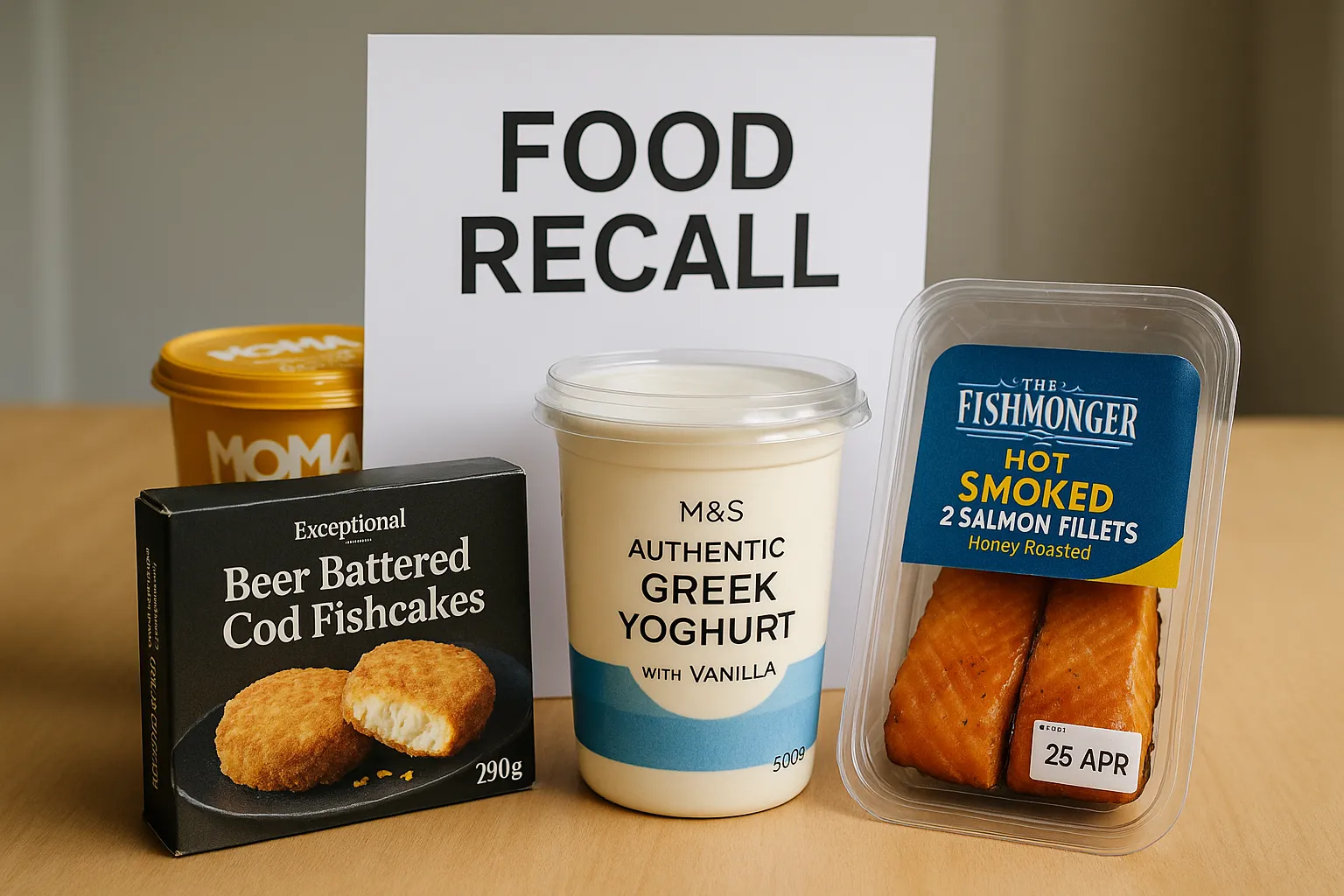
Asda, a leading supermarket chain, has announced the recall of its Exceptional by Asda Beer Battered Cod Fishcakes after discovering possible contamination with fragments of plastic or metal. The FSA has mandated that these fishcakes, packaged in 290g portions with use-by dates from May 1 to May 5, should not be consumed under any circumstances.
An Asda spokesperson apologised for the inconvenience and outlined the necessary steps for customers: “If you have purchased Exceptional by ASDA Beer Battered Fishcakes with the specified use-by dates, please return the product to your nearest store where you will be issued a full refund. You do not need your receipt.” Point-of-sale notices explaining the recall will be displayed prominently in all affected stores.
**Marks & Spencer Takes Swift Action on Yoghurt Recall**
In a separate incident, Marks & Spencer has initiated an urgent recall of its Authentic Greek Yoghurt with Vanilla, as it was found to contain gluten, which does not appear on the product label. Consumers who have gluten allergies, intolerances, or coeliac disease are advised against consuming this product, packed in 500g containers with a use-by date of May 12, 2026.
The FSA has echoed the advice that consumers should return the implicated yoghurt to their local Marks & Spencer store for a complete refund to mitigate health risks.
**Aldi Responds to Labelling Error**
Aldi shoppers are also at risk following a recall related to The Fishmonger Hot Smoked 2 Salmon Fillets – Honey Roasted. An incorrect use-by date has been printed on the packaging, indicating that consumption could be unsafe as it predates the correct date by two months. The affected products display a use-by date of June 25 instead of the right date of April 25.
A spokesperson for Aldi stated: “As a precautionary measure, our supplier is recalling the fish because the incorrect use-by date is printed on the pack. Customers are asked to return the product to their nearest store for a full refund, and we appreciate your understanding.”
**Health Risks Linked to Porridge Products**
Potential health risks were brought to light due to “mouse contamination” in multiple porridge products manufactured by MOMA Foods. The FSA has noted this contamination alert, highlighting the need for consumers to discard products that may include certain batch codes from the brand. Shoppers are urged to check their pantry to ensure their safety.
The contamination concern affects several varieties, including Almond Butter & Salted Caramel and Apple, Cinnamon & Brown Sugar porridge pots, with batch codes available on the FSA website. Although MOMA Foods deemed the probability of contamination as low, they have opted to recall these products as a safety measure.
**Walkers’ Crisps Recalled Over Allergen Mislabeling**
Walkers, the renowned crisps manufacturer, has issued a recall for its six-pack of Hot Honey crisps due to mislabelling. Some packets may contain Mild Cheese & Onion seasoning, which contains milk, posing a significant risk for those with a milk allergy. The affected batch includes bags with a best before date of May 16, 2026, and is marked with the batch code GBB 584 031.
A representative from PepsiCo, who owns Walkers, confirmed: “We sincerely apologise for the error. Our commitment to product safety is paramount, and we are partnering with the FSA and retailers to inform consumers adequately.” Those impacted are encouraged to return the crisps to the store of purchase for a refund.
**Guidance for Consumers**
Consumers who have purchased these problematic food items are strongly advised to adhere to the guidance provided by the FSA, which typically involves either returning the item for a refund or properly disposing of it. The agency has emphasised the importance of consumer awareness concerning food product recalls to safeguard public health.
Further, a number of point-of-sale notices will be visible in supermarkets to ensure customers are adequately informed regarding these food safety concerns.
Additionally, the FSA provides opportunities for consumers to keep abreast of product recall notices through their official platforms, catering to those who wish to stay informed about potential food safety hazards.
It is crucial for consumers to remain vigilant and informed regarding food labels and recalls to ensure a safe shopping experience. If any concerns arise regarding previously purchased products, contacting the respective supermarket’s customer service team, or referring to the FSA’s announcements can provide clear guidance on actions to take.
Our Thoughts
The recent food recalls highlight several lapses in safety protocols that could have been addressed to prevent contamination and mislabeling issues. Key lessons include the need for stringent quality control measures at food production facilities to avoid contamination, such as the reported “mouse contamination” and physical hazards like plastic or metal fragments. Regular audits and risk assessments as mandated by the Food Safety Act 1990 could improve compliance and reduce potential hazards.
Moreover, accurate labeling practices are crucial, particularly for allergenic ingredients. The failure of Marks & Spencer and Walkers to declare gluten and milk allergies respectively contravenes the Food Labelling Regulations 1996. Implementing better communication between suppliers and retailers, alongside comprehensive training on allergen management, could mitigate these risks.
To prevent similar incidents, manufacturers should embrace the principles of Hazard Analysis and Critical Control Points (HACCP) as part of their food safety management systems. Frequent checks throughout the supply chain, alongside transparent recall procedures, are vital to swiftly address any issues and maintain consumer safety.