













Story Highlight
– Online petition calls for review of health board governance.
– Incidents include mortuary mix-ups and unsterilised instruments.
– Petition highlights distress to patients and families.
– Whistleblower alleges a culture of fear and bullying.
– Campaigners stress patient safety over reputations must come first.
Full Story
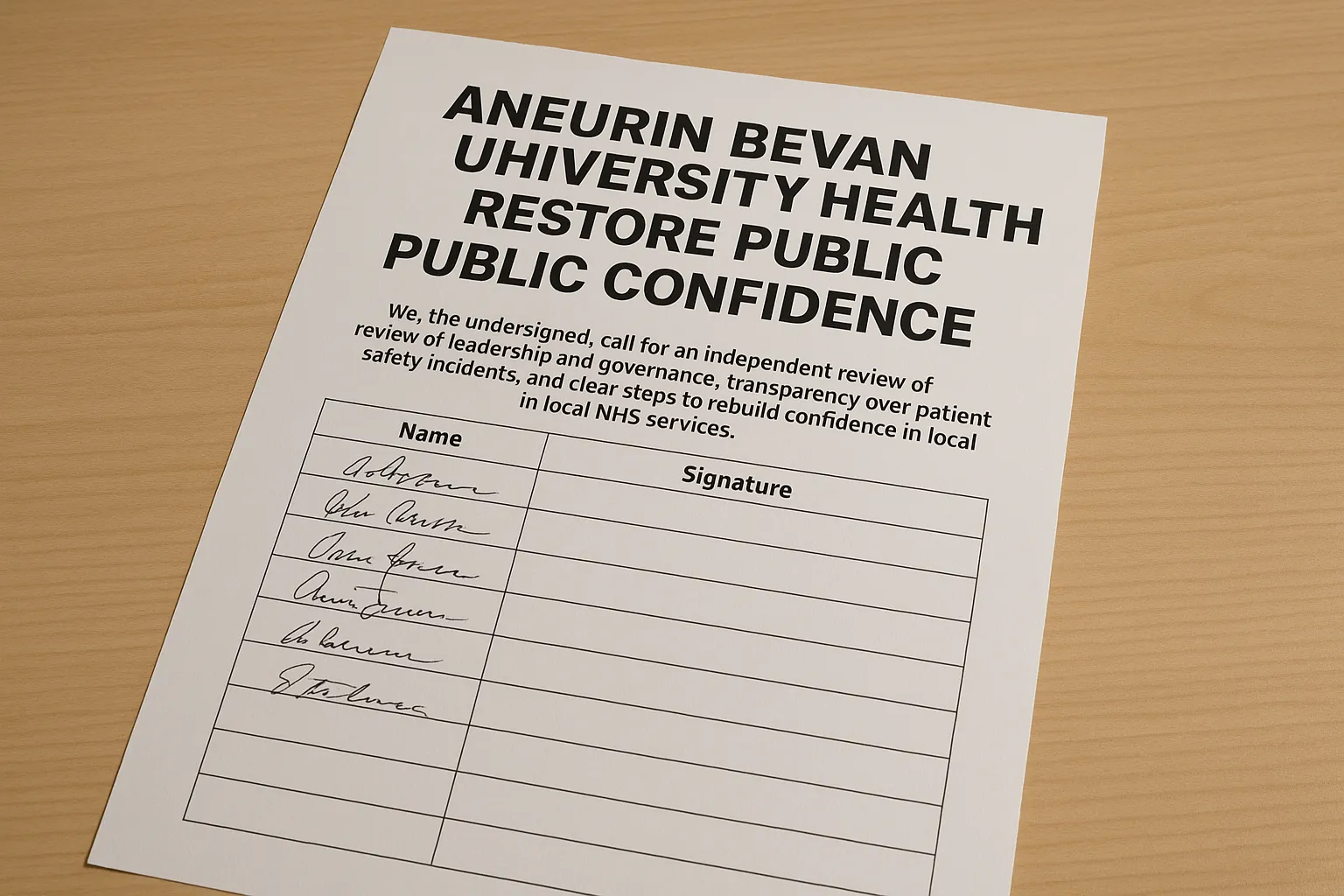
In Gwent, a significant online petition titled “Aneurin Bevan University Health Board: Restore Public Confidence” has gained momentum since its launch in March, amassing hundreds of signatures from concerned citizens. This initiative seeks to prompt an independent inquiry into the governance and leadership structure of the Aneurin Bevan University Health Board (UHB), along with demands for improved transparency surrounding patient safety issues and whistleblower protections within the organisation.
The health board asserts that it handles millions of patient interactions annually, with the majority of care being of a high standard. However, proponents of the petition contend that a series of troubling incidents under the current executive team have contributed to a growing distrust among the community. Among these incidents are reported mix-ups at the mortuary facilities of Grange University Hospital, resulting in bereaved families receiving the incorrect bodies. Additionally, there was the tragic case of nine-year-old Dylan Cope, whose untimely death was attributed to missed opportunities for sepsis treatment. The board has also come under scrutiny for its financial challenges and performance issues, prompting interventions from the Welsh Government.
The latest public outcry involves revelations that, in February, 21 patients at Newport’s Royal Gwent Hospital were treated with unsterilised surgical instruments over two consecutive days. Alarmingly, these patients were not informed of the potential risks related to blood-borne infections for almost three weeks following the incident. In response, the health board has issued an apology and downplayed the risks, asserting that they remain low while promising a thorough investigation into the matter. Nonetheless, internal concerns have been raised as a whistleblower claims that staff were discouraged from speaking with the media, adding to public anger and distress.
The petition’s text highlights the “understandable distress” that these incidents have caused not only to patients and their families but also to the wider community. It raises “serious concerns about governance, safety, and accountability.” In light of this, the petition calls for government officials to initiate an independent review aimed at assessing the health board’s leadership and organisational culture, as well as the release of information on past whistleblowing efforts. The petitioners assert, “We cannot remain silent on this health board, waiting for the next safety incident.”
This current movement comes on the heels of an anonymous letter sent to UK Health Secretary Wes Streeting and Welsh First Minister Eluned Morgan in October 2025. The letter, which was also shared with patient advocacy group Llais, labelled Aneurin Bevan UHB as “unsafe” and warned of a potential scandal “of unprecedented proportions.” The letter’s author, identifying as a staff member acting in the interests of patients and colleagues, detailed a deep-seated culture of fear, alleging that whistleblowers faced bullying and that the environment mirrored the alarming accounts described in the Francis report regarding the failings at Mid Staffordshire.
Specific concerns were also raised about Grange University Hospital, which had been under scrutiny following a 2021 visit from the Royal College of Physicians. Reports emerged from the visit that trainees deemed the facility “unsafe,” while consultants expressed feelings of demoralisation, with many contemplating departure. The author of the letter claimed that a powerful chief operating officer had effectively disempowered clinical leaders, leading to the removal of managers who voiced concerns about performance. It was suggested that systematic “board to ward” governance failures resulted in crucial red-flag risks not being appropriately escalated for further action.
Advocates behind the petition argue that this perfect storm—including early warnings, the recent scandal regarding unsterilised surgical instruments, and historical grievances—demonstrates the urgent need for an independent examination of the health board’s leadership and operational conduct. They are calling upon residents in Gwent who depend on local NHS services to support and disseminate the petition, emphasising the belief that “patient safety must come before reputations.”
In a response to the petition and allegations, a spokesperson for Aneurin Bevan University Health Board remarked, “We are aware of the petition that has been created and we recognise that people care deeply about their local NHS services.” They highlighted that the health board serves over 600,000 individuals and facilitates millions of patient interactions each year across various facilities, including hospitals, community services, and primary care settings.
The spokesperson continued, “The overwhelming majority of that care is of the highest quality and provided by staff who work tirelessly, often under sustained pressure, to do their very best for patients.” They acknowledged that “any serious incident is one too many” and affirmed that whenever care does not meet established standards, the board commits to openness and transparency regarding the actions taken to rectify issues and prevent recurrence. “We remain committed to open and transparent communication and encourage concerns to be raised and addressed through established processes,” the spokesperson concluded, reiterating their priority for the well-being of the communities served and the staff dedicated to their care.
As the debate continues, it remains to be seen how the health board will respond to the growing calls for reform and the implications of the incidents that have influenced public perception of NHS services in Gwent. Community leaders and healthcare professionals alike are now engaged in conversations about the best paths forward to restore trust and ensure the safety and efficacy of health services in the region.
Our Thoughts
The incidents at Aneurin Bevan University Health Board highlight significant failings in patient safety and governance, suggesting several key lessons and potential improvements. Firstly, adherence to the Health and Safety at Work Act 1974 is crucial, emphasizing the need for a safe environment for patients. Implementing rigorous controls and oversight over medical procedures, especially regarding the use of sterilised equipment, is imperative to comply with the Care Quality Commission (CQC) standards.
Additionally, the board’s culture appears to discourage open communication and whistleblowing, which is a breach of the Public Interest Disclosure Act 1998. Creating a supportive environment where staff feel safe to report concerns could avert future crises.
Regular independent audits of leadership effectiveness and patient safety protocols would ensure compliance with the Management of Health and Safety at Work Regulations 1999, potentially preventing similar incidents. Lastly, increased transparency in reporting both incidents and responses to ensure accountability could help to rebuild public trust and confidence in NHS services.