














Story Highlight
– Abandoned asbestos factory poses serious health risks.
– Site nicknamed “Rochdale’s Chernobyl” by locals.
– Kids swim in potentially contaminated River Spod.
– Residents demand urgent action and site cleanup.
– Factory’s history linked to thousands of asbestos-related deaths.
Full Story
Title: Safety Concerns Mount Over Infamous Asbestos Site in Rochdale
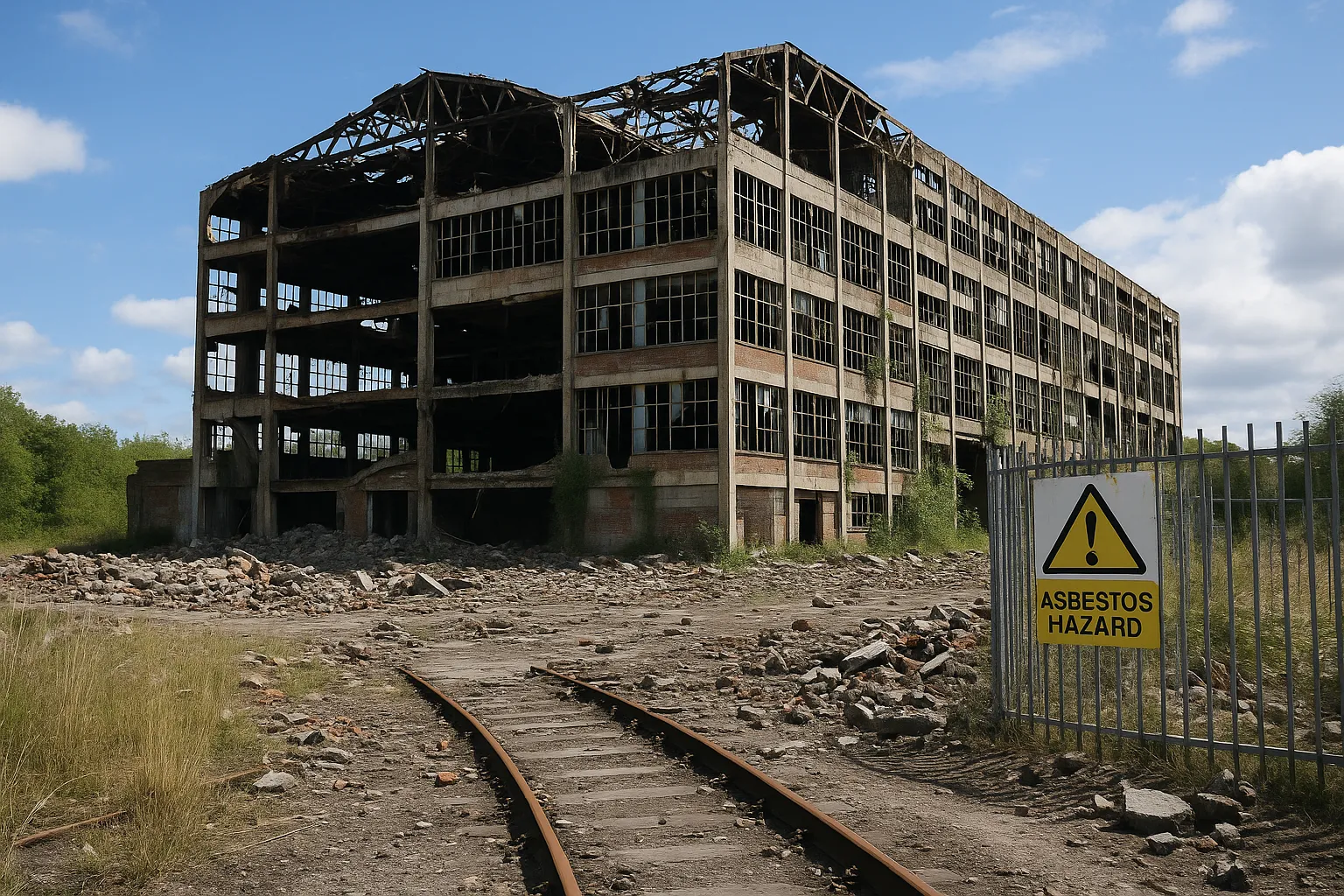
A former asbestos manufacturing facility in Rochdale, often referred to as “Britain’s Chernobyl,” has become a source of alarm for local residents, particularly concerning the safety of children who explore the area, including a nearby river contaminated with hazardous materials.
The Turner Brothers Asbestos (TBA) factory, which occupies a sprawling 72-acre site, has remained derelict for more than two decades. It was once a bustling hub of activity, producing asbestos from the 1870s until its closure in the late 1990s. However, local residents are now struggling with the dual threats of environmental degradation and potential health risks posed by the decaying industrial complex.
The TBA site’s deterioration has prompted growing concerns amongst the community, who fear that the abandoned structures and surrounding land have become an eyesore and a hazard. Efforts by local officials to address these concerns have reportedly progressed at a disappointingly slow pace, leaving residents feeling neglected.
Nearby, the River Spod has become a notorious gathering place for children, who have affectionately dubbed a weir within the river “Paradise.” Unfortunately, many locals are deeply apprehensive about the safety of this activity. The presence of asbestos, a known carcinogen, in both the soil and potentially the water, raises legitimate alarm for those who allow their children to play in the area.
Health experts have long warned of the dangers associated with asbestos. Exposure may lead to severe illnesses, including mesothelioma and various types of cancer. Despite this, a council-commissioned investigation carried out ten years ago revealed no detectable asbestos fibres exceeding the threshold of 0.01f/ml. The findings, while reassuring to some, have done little to quell local unease, as the owners of the site continuously urge the public to stay away.
Mick Coats, a retired health and safety professional, has lived adjacent to the TBA site for over three decades and actively campaigns for enhanced safety protocols. He expressed concern regarding the carefree manner in which children explore the area, stating, “They are putting themselves at serious risk of harm. If they had unexploded bombs on the site, or exposed chemicals, the council would have to act.”
Coats suggests that the land could be repurposed as a country park, with efforts made to securely cover existing asbestos with clay to mitigate health risks. His vision reflects a broader desire among residents to reclaim the abandoned space for the benefit of the community.
The tragic legacy of the TBA site stretches back to 1924, when Nellie Kershaw, a 32-year-old woman, became one of the first recorded victims of asbestosis linked to her work at the factory. Annually, asbestos-related diseases are estimated to claim the lives of around 100,000 people worldwide, underscoring the lasting impact of such industrial sites.
Andy Mason, an IT consultant residing next to the factory, echoed the sentiments of community activism, stating, “We need to take ownership and put it right – we can’t just pass on an environmental disaster from generation to generation.” His family, which includes four young children, represents a demographic particularly vulnerable to environmental hazards.
Conor Hart, 30, whose home is in close proximity to the factory entrance, shared chilling stories of neighbours afflicted with serious respiratory issues linked to past exposure. “Generations of people went into that factory as teenagers and came out crippled with diseases down to their jobs,” he lamented.
The danger of unwittingly exposing children to harmful environments became personal for Rebecca Turner, 23, who enjoyed walking her dogs near the river. “I had no idea this was one of the world’s biggest asbestos factories,” she shared. “It’s shocking that it is so accessible – the children are always in that river on warm days.”
Graham Hobson, a 73-year-old allotment owner, recalled a conversation with a young individual who ventured into the factory and discovered a room still filled with asbestos products. He remarked on the stark ignorance of young people regarding the risks associated with such sites, highlighting the contrast between the adventurous allure of the site and the grim reality of asbestos exposure.
Local residents, including Adrian and Kerry Parkinson, voiced their concerns regarding the lack of any security measures that might prevent public entry to the site. They reminisced about witnessing clouds of white asbestos dust drifting through the streets during summer months, and fear that similar recklessness could endanger current generations.
Younger activists, like Melissa Grimes, aged 27, have taken issue with what they perceive as a lack of urgency in addressing the pressing safety concerns. “This is a real threat to residents and wildlife,” she exclaimed. “Instead of investing £9 million into a bike path that I don’t think anyone asked for, invest in Rochdale’s safety.”
Vince Kelly, a former factory worker who laboured there for seven years, provided historical context regarding the depth and scale of asbestos disposal practices. He recounted how, in 1975, materials were buried and subsequently covered, yet concerns linger over their potential return to the surface.
In response to ongoing community anxiety, a spokesman for the local council stressed that the safety of residents remains their top priority. While an independent assessment concluded that the dangers posed by asbestos fibres on the site were minimal, officials acknowledged that further measures could be pursued in collaboration with Spodden Park Ltd, the current owners of the land.
The firm has reportedly taken steps to monitor site security and mitigate risks from trespassing. Nonetheless, the appeal made to the public to stay clear of the location underscores the ongoing tension between community wellbeing and the historic legacy of the industrial past.
As calls for action grow louder, residents hope that both the council and the landowners will take necessary steps to ensure that future generations are not left to navigate the dangers of the TBA site.
Our Thoughts
The situation surrounding the abandoned Turner Brothers Asbestos factory highlights significant breaches of UK health and safety regulations, particularly the Health and Safety at Work Act 1974, which mandates the management and identification of hazards to ensure public safety. The continued accessibility of the site poses a serious risk of asbestos exposure, contradicting duties under the Control of Asbestos Regulations 2012.
To prevent such incidents, the site should have been adequately secured, with robust fencing and monitoring to deter trespassers—responsibilities shared by both the site owners and local authorities. Regular risk assessments must be conducted to evaluate any potential dangers, including the waterway’s contamination risk.
Key safety lessons include the need for proactive engagement with the community regarding awareness of hazards and the importance of remediating contaminated sites promptly. Instead of intermittent monitoring, immediate action should have been taken to decontaminate and safely repurpose the area, as suggested by local residents. This approach could help protect public health while alleviating community concerns over the hazardous legacy of the factory.