














Story Highlight
– Aintree Equestrian Centre cancels show due to weather.
– Decision prioritizes welfare of horses and riders.
– Refunds processed automatically via Horse Monkey.
– No need to contact office for refunds.
– Upcoming shows scheduled for 16th, 17th, and 19th July.
Full Story
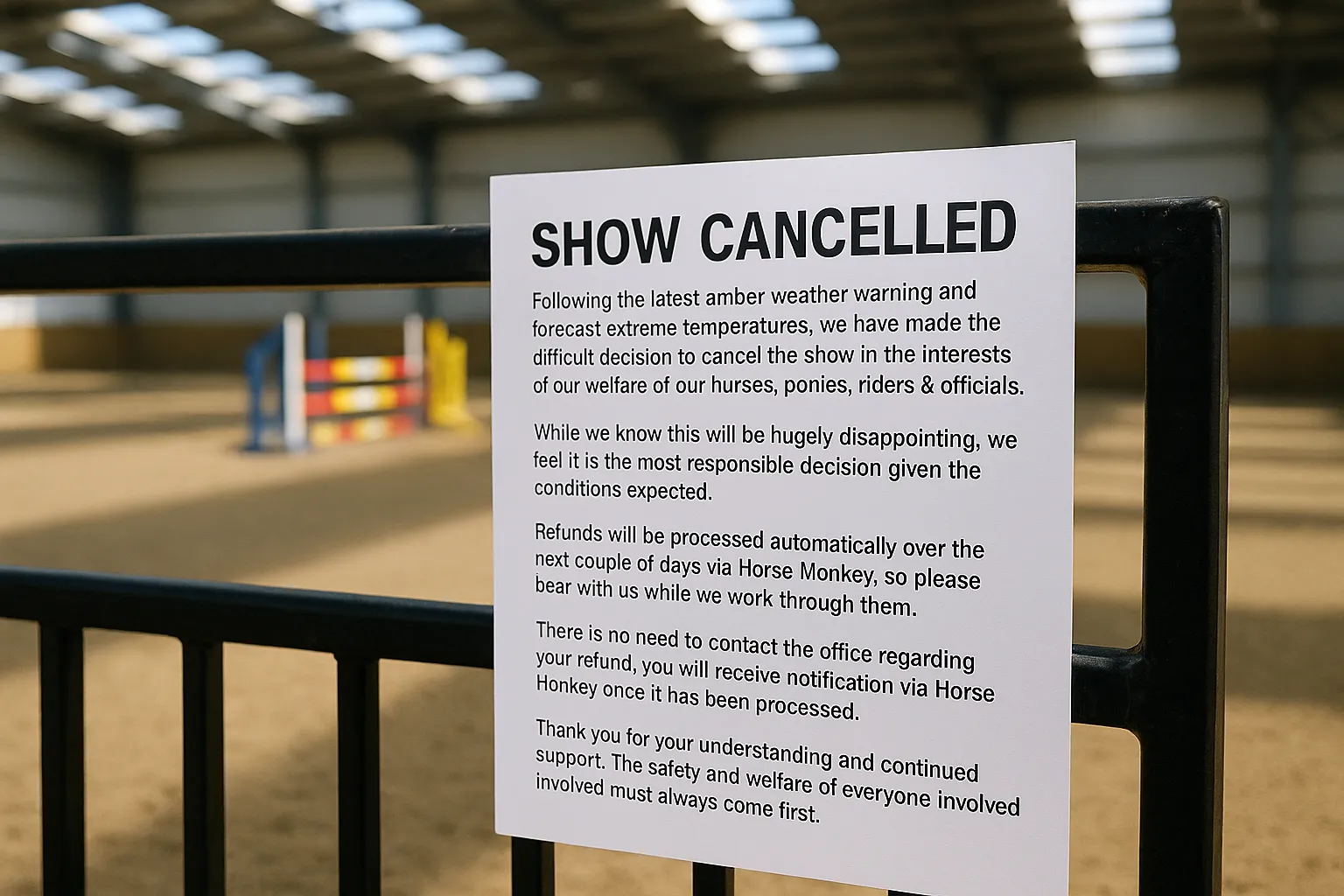
Aintree Equestrian Centre has announced the cancellation of an upcoming show due to severe weather warnings, prioritising the health and safety of participants and animals. In a statement, the Centre explained that an amber weather alert had been issued, predicting extreme temperatures that would render holding the event inappropriate.
The Centre’s decision underscores a commitment to equine welfare, as the management stressed it took into account the well-being of horses, ponies, riders, and event officials. “While we know this will be hugely disappointing, we feel it is the most responsible decision given the conditions expected,” a spokesperson for Aintree Equestrian Centre stated.
Attendees affected by the cancellation will receive automatic refunds processed through Horse Monkey, the platform used for entries. The Centre urged participants to refrain from contacting the office about their refunds, noting that notifications regarding the processed refunds will be sent via Horse Monkey within the coming days. “Thank you for your understanding and continued support,” the Centre added, highlighting its focus on safety as a priority.
Looking ahead, the Aintree Equestrian Centre is set to resume activities with scheduled shows later in July. Entries are currently open for competitions on Thursday 16th, Friday 17th, and Sunday 19th. The Centre confirmed that the RoR (Retraining of Racehorses) and Side Saddle Show planned for Friday to Sunday is still expected to proceed as scheduled, subject to ongoing assessments of weather conditions.
The cancellation reflects a growing trend in the equestrian community to make decisions that prioritise animal welfare in adverse weather conditions. Many organisers and competitors recognise the impacts of extreme heat on both horse wellbeing and rider performance, leading to pre-emptive measures being put in place to safeguard all involved.
Equestrian events often rely heavily on weather forecasts, and the impact of climate-related issues is becoming an increasingly important consideration for event organisers. The decision by Aintree Equestrian Centre serves as a reminder of the responsibility that comes with hosting events in open-air venues, where fluctuating weather can pose challenges.
Horse welfare advocates have welcomed the decision, praising the Centre for its proactive approach. Animal welfare organisations frequently highlight the importance of ensuring comfortable conditions for horses during competitions, particularly during periods of extreme heat. The move aligns with best practices recommended by industry standards for equestrian events.
As the situation continues to develop, stakeholders within the equestrian community are being urged to remain vigilant and prepared for further changes to the event calendar. With the safety of all participants—human and equine—being paramount, the discussions surrounding suitable practices during adverse weather will only intensify.
In a time of increasing uncertainty regarding weather patterns, the equestrian community must continuously adapt and prepare for such occurrences. Ensuring adequate hydration, providing shade, and making necessary adjustments to event schedules are becoming standard practices to promote animal welfare.
Aintree’s management has indicated that they will continue monitoring the situation closely. The Centre reevaluates upcoming events based on multiple forecasts and input from relevant authorities, a process that seeks to ensure the best possible outcomes for all participants.
The equestrian community can also take significant lessons from this incident. Organisers are being encouraged to create contingency plans, thus allowing them to implement rapid responses to changing weather forecasts. The emphasis on communication with participants regarding such changes also underscores the importance of transparency within the community.
In summary, while the cancellation of the event at Aintree Equestrian Centre will undoubtedly disappoint competitors and fans alike, it stands as a testament to an industry increasingly prepared to prioritise the welfare of its animals. As equestrian activities move forward in July, stakeholders will be watching closely, not only to ensure a safe return to competition but also to reflect on how future events are structured in light of evolving climate phenomena. The collective response from the equestrian community will be essential in framing the discussion on animal welfare standards and procedural protocols for weather-related challenges in upcoming events.
Our Thoughts
The cancellation of the equestrian show due to adverse weather conditions highlights the importance of proactive risk assessment and management in accordance with the Management of Health and Safety at Work Regulations 1999. The Aintree Equestrian Centre demonstrated a responsible approach by prioritizing the welfare of horses, riders, and officials. However, to prevent similar incidents, event organizers could implement contingency plans for extreme weather, which may include predefined thresholds for cancellation.
Key safety lessons include the need for clear communication protocols and immediate updates regarding weather dangers to all participants and stakeholders. Additionally, following the Health and Safety at Work Act 1974, organizers should carry out thorough risk assessments that consider weather impacts, ensuring that safety measures and alternative arrangements are established well in advance.
To prevent future occurrences, venues should establish a comprehensive weather monitoring system and have guidelines in place for appropriate responses to various weather alerts, which would ensure that safety decisions can be made swiftly and effectively.