















Story Highlight
– UK faces record-breaking heatwave with 40C temperatures.
– Rare red heat alert issued for parts of England, Wales.
– Petition for maximum working temperature of 25C launched.
– School closures and travel advisories in effect this week.
– Employers must provide cooling measures in extreme heat.
Full Story
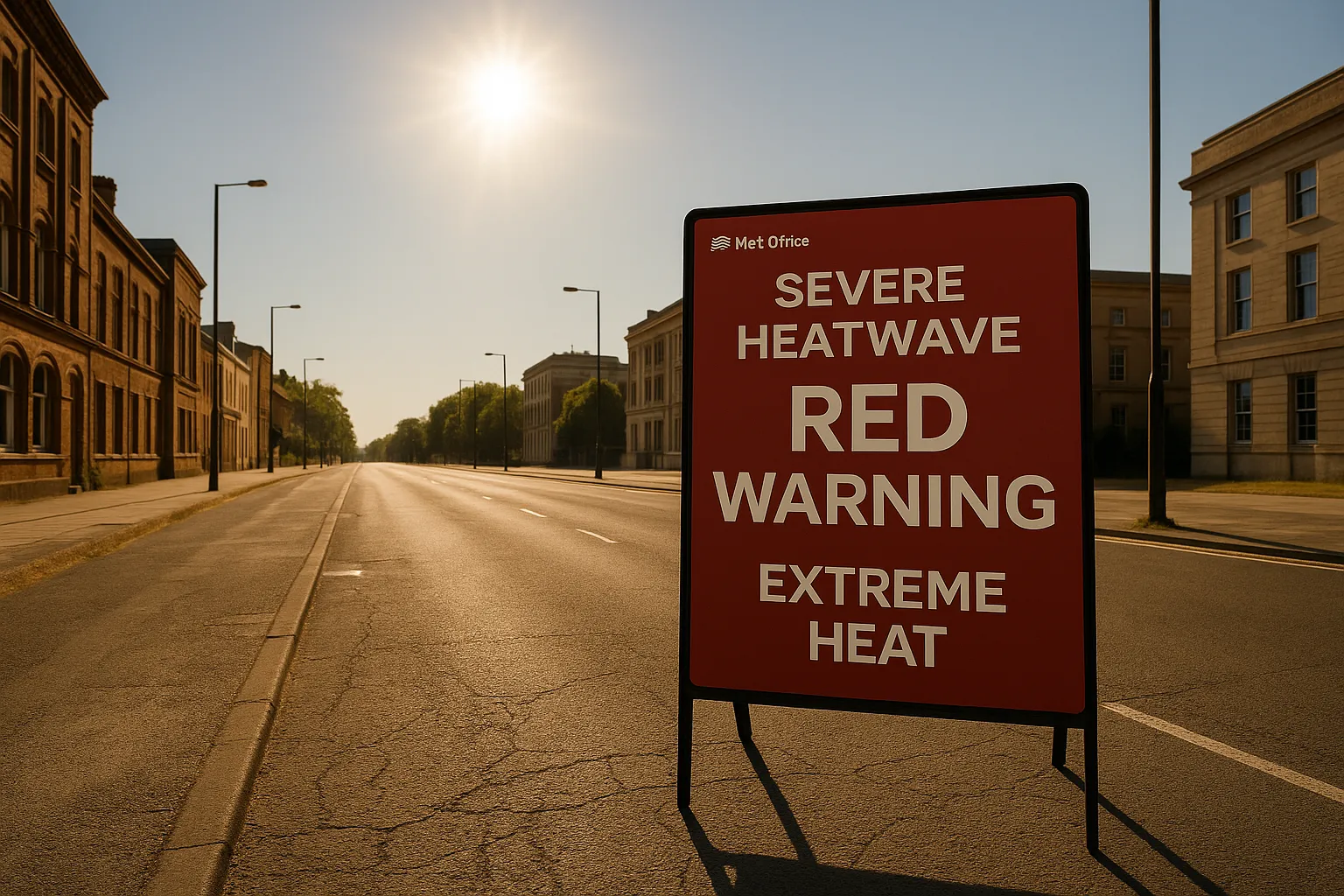
The United Kingdom is preparing for an unprecedented heatwave, with temperatures set to soar to 40 degrees Celsius in various regions of England and Wales. The Met Office has taken the unusual step of issuing a red heat warning, signalling the severity of the impending weather event. This warning comes only for the second time in its history, underscoring the extreme conditions that are expected.
In response to these alarming climatic conditions, a petition has emerged, calling for the government to establish a maximum working temperature legally enforceable across all workplaces. Launched by Andrew Haddock, the petition aims to garner enough support to prompt a governmental response and potentially parliamentary debate. As of now, it has garnered over 555 signatures and will remain open for public support until December 19, 2026. Should it reach 10,000 endorsements, a government response will be mandated, and a threshold of 100,000 signatures may lead to a formal discussion in Parliament.
The petition advocates for a legally binding cap on working temperatures, suggesting a maximum threshold of 25 degrees Celsius for all workplaces, both indoors and outdoors. Currently, the law sets a minimum temperature but lacks a defined upper limit, leaving workers susceptible to dangerous heat levels. The petitioners highlight the necessity for protective measures once temperatures reach 25 degrees, advocating for provisions that would include cooling systems or mandatory work pauses, especially for jobs that involve physical exertion. They argue that the existing guideline of “reasonable comfort” is inadequate, and more stringent thresholds are required to safeguard employee well-being.
This week, temperatures are forecasted to reach exceptional highs, prompting school closures and travel advisories across the country. The heatwave, attributed to a “heat dome” phenomenon, is expected to affect parts of western Europe significantly. The Met Office’s red weather warning is in effect from 9 am on Wednesday to 9 pm on Thursday, encompassing regions from London to Swansea and extending from Somerset to Birmingham.
Grahame Madge, a representative from the Met Office, emphasised that the high temperatures are compounded by elevated humidity levels. This dual factor is likely to make the already oppressive heat even more unbearable for many. The forecast suggests that the current heatwave could threaten the UK’s record high temperature, which was set at 40.3 degrees Celsius in Lincolnshire in July 2022. Furthermore, it is anticipated to exceed the June record of 35.6 degrees Celsius established in Hampshire in 1976.
While there is no legal maximum temperature defined for working conditions in the UK, employers are required to ensure that indoor workplace temperatures remain at a reasonable level, as outlined in the Workplace (Health, Safety and Welfare) Regulations 1992. Heat is recognised as an occupational hazard, compelling employers to address it with the same diligence as any other safety issue.
The rights and responsibilities regarding working in extreme heat can vary considerably based on the type of environment and individual circumstances. As such, what may be considered “reasonable comfort” differs among sectors, such as an office setting versus a commercial kitchen, leading to the absence of a universal cap on working temperatures.
To mitigate the impact of heat on employees, organisations such as the Health and Safety Executive (HSE) and Acas recommend several measures. These include ensuring adequate ventilation, providing easy access to drinking water, implementing air conditioning, adjusting dress codes, and offering flexible working schedules to help staff cope with the hot conditions.
This anticipated heatwave serves as a stark reminder of the increasing challenges posed by climate change and the need for comprehensive strategies to protect workers and citizens alike during extreme weather events. The debate surrounding a maximum working temperature is likely to amplify as more people voice their concerns about health and safety in the workplace during such extreme climatic conditions.
As the country braces for the rising temperatures, experts urge individuals and families to take precautions against heat-related illnesses. Staying hydrated, seeking shade, and limiting outdoor activities during the hottest parts of the day are advised strategies to ensure safety.
The forthcoming days will see the UK uncharted territory in terms of weather patterns, with the potential for record-setting temperatures. As society adapts to these new realities, the conversation surrounding employee rights in extreme heat is set to take centre stage, highlighting the necessity for proactive measures in the face of climate change.
Our Thoughts
To prevent the safety risks associated with extreme heat as highlighted in the article, the UK could benefit from implementing a legally binding maximum working temperature. Currently, the lack of a defined upper limit leaves workers vulnerable during heatwaves, breaching the spirit of the Health and Safety at Work Act, which mandates that employers ensure a safe working environment.
Key safety lessons include the necessity for employers to proactively assess heat-related risks and implement mitigating measures. While there is an advisory minimum temperature, clear regulations stipulating maximum temperatures would clarify employers’ obligations to provide suitable cooling measures, thereby better protecting workers’ health.
Additionally, the Workplace (Health, Safety and Welfare) Regulations 1992 require maintaining indoor temperatures at a reasonable level, yet without specified maxima, enforcement becomes challenging. As a preventive measure, the introduction of a formal temperature cap, as called for in the petition, along with the establishment of enforceable lower thresholds for physically demanding roles, would facilitate better compliance and worker safety.
In conclusion, defining maximum temperature limits and providing clear guidance on risk management would significantly enhance workplace safety during extreme weather conditions.