














Story Highlight
– Three hospitals declared critical incidents due to extreme heat.
– UK recorded hottest June day, reaching 36.4C.
– Queen Alexandra Hospital’s chillers failed amid high temperatures.
– MRI scanner cooling systems failed at Norfolk and Norwich Trust.
– Hospitals prioritizing urgent cases and rescheduling canceled appointments.
Full Story
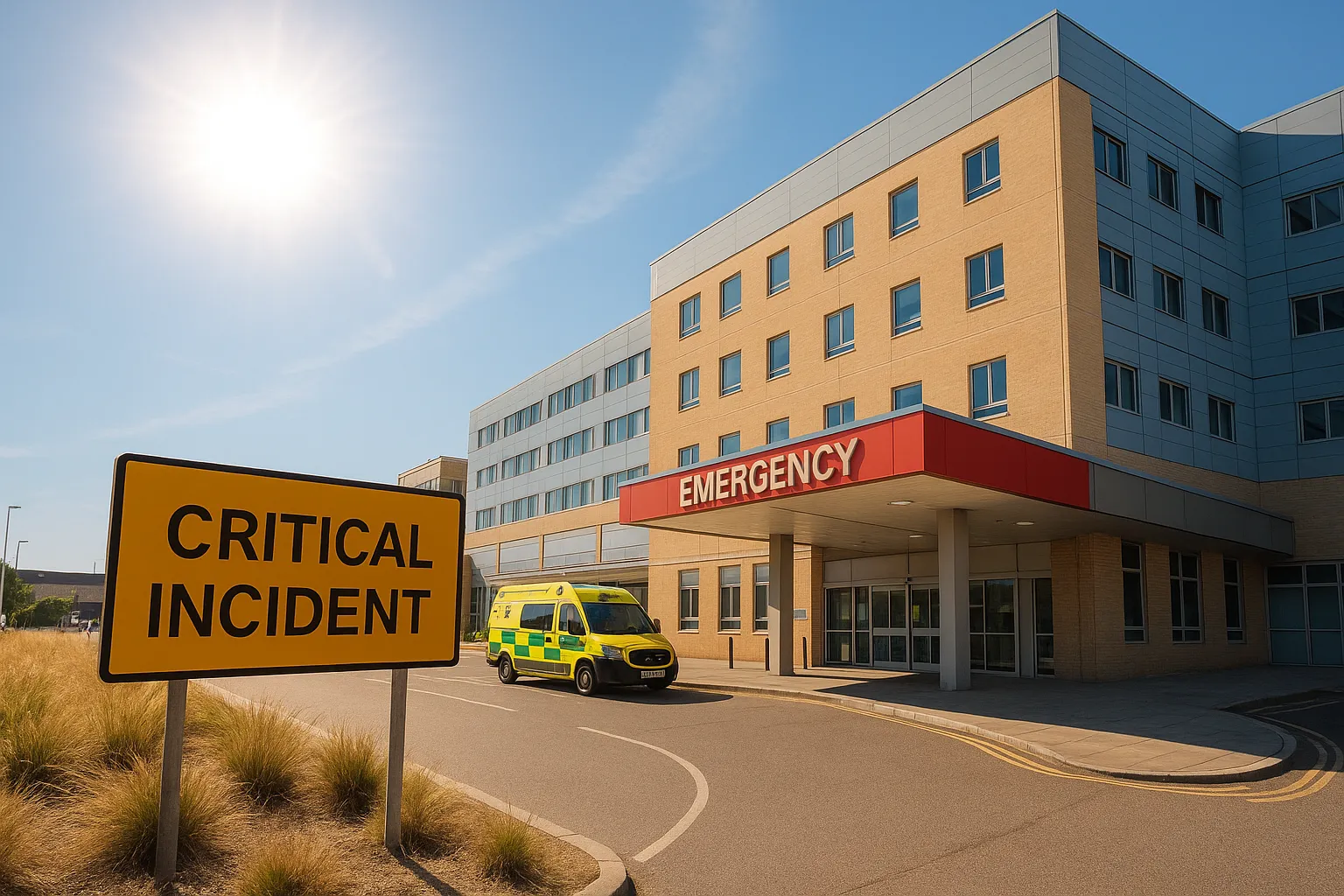
At least three hospitals in England have officially designated critical incidents following a rare red weather warning for extreme heat, as the country endures record-breaking temperatures for June. The current heatwave has been particularly intense, prompting severe operational challenges for healthcare services.
On Wednesday, both Queen Alexandra Hospital in Portsmouth and the Norfolk and Norwich University Hospitals NHS Foundation Trust announced that they were declaring critical incidents due to the unprecedented conditions. University Hospital Southampton later followed suit, officially requesting support to manage the substantial strain on their services.
The Met Office has reported that the UK experienced its hottest June day on record for two consecutive days. On Thursday, temperatures reached a blistering 36.4C in Yeovilton, Somerset, surpassing the previous record set just a day earlier at 36.1C in Gosport, Hampshire. These new figures not only break past temperature highs for June but also eclipse records that have stood since the famously sweltering summer of 1976.
A critical incident is declared when health services confront excessive demand, necessitating special measures to ensure the safety of patients and the restoration of regular operations. In its announcement, Queen Alexandra Hospital explained that their decision stemmed from the “failure of several chiller units supporting critical infrastructure” amidst the severe heatwave. Due to these failures, the hospital has had to pause certain planned care services and appointments until the situation is resolved.
According to updates from the hospital, while some chiller units have been repaired, the extreme ambient temperature is impeding the cooling of essential infrastructure at a normal pace. As a result, the trust has extended its critical incident declaration to facilitate a safe and controlled restoration of services.
Portsmouth Hospitals University NHS Trust’s acting chief executive, Michelle Stanley, conveyed gratitude towards regional partners for providing support during this difficult period. “Our teams have worked hard to fix the initial issue and our chillers are now back and working,” she mentioned. “However, the extreme heat means the process of cooling key infrastructure is taking longer than hoped. With temperatures still high, we are working to bring back services in a controlled manner to ensure the safety of our patients and staff.”
In Norwich, the situation at the Norfolk and Norwich University Hospitals NHS Foundation Trust has also been challenging. The trust reported significant issues, particularly with the cooling systems within their MRI scanners. This prompted the declaration of a critical incident as they struggled to maintain operational services. Following consultations, a mobile unit was introduced on Thursday to aid them in addressing these problems. The trust expressed its commitment to reappoint all 362 outpatient appointments that had been cancelled due to the heat emergency.
Chris Cobb, the chief operating officer of NNUH, provided an update indicating that they had made substantial progress in restoring the scanners. “Due to the hot and humid weather, the cooling systems in our MRI scanners within the hospital building and at the Community Diagnostic Centre failed, and as a result, a critical incident was declared,” he stated. He elaborated that efforts had been made tirelessly over the past day to restore functionality in some scanners. “This morning we have received a mobile unit and we now have working scanners across the trust, including the Community Diagnostic Centre, which we are prioritising for inpatients and patients on suspected cancer two-week waiting lists.”
Cobb also assured that the hospital’s emergency department and patients requiring urgent care remained unaffected. They are working diligently to reappoint all cancelled outpatient appointments, prioritising cases based on urgency. He acknowledged the distress caused by the incident, issuing an apology to those who have had their appointments disrupted. He urged patients to attend their appointments as scheduled unless notified otherwise.
University Hospital Southampton has taken similar steps, having to cancel numerous planned operations and outpatient visits as the heatwave compromised its infrastructure and services. In an official statement, the hospital underlined its commitment to patient safety and the well-being of its staff, requesting the public’s understanding as they contend with these unprecedented circumstances.
As the UK grapples with these exceptional summer temperatures, the consequential strain on the health system is evident. Hospitals are rallying to adjust to the new normal, implementing emergency protocols to safeguard patient care. Local health authorities continue to monitor the situation closely, seeking collaboration among regional services to mitigate the impact of the heatwave on healthcare provision.
As temperatures are expected to stay elevated in the coming days, hospitals and healthcare providers are urging everyone to take precautions, particularly vulnerable populations like the elderly and those with pre-existing health conditions. The overarching message is one of resilience and collaboration among healthcare professionals as they navigate these challenging times, ensuring that patient care remains their utmost priority.
Our Thoughts
The series of critical incidents at UK hospitals during the recent heatwave highlights several areas for improvement in health and safety management, particularly in relation to extreme weather conditions. To prevent such incidents in the future, hospitals should conduct regular risk assessments, specifically focusing on climate-related risks and the robustness of cooling systems in critical infrastructure, which would fall under the Management of Health and Safety at Work Regulations 1999.
Regular maintenance and testing of chiller units and cooling systems are essential to ensure they can withstand extreme temperatures, in compliance with the Health and Safety at Work Act 1974. Establishing contingency plans for extreme weather events could further mitigate risks and facilitate quick responses. Training staff to recognize early warning signs of system failures and implementing protocols for emergency operations could also enhance safety.
Lastly, communication with stakeholders and the public regarding service disruptions should be consistent and clear, ensuring that all parties are informed and can prepare accordingly. By addressing these areas, future incidents of this nature could be significantly reduced, safeguarding both patient care and staff well-being.