















Story Highlight
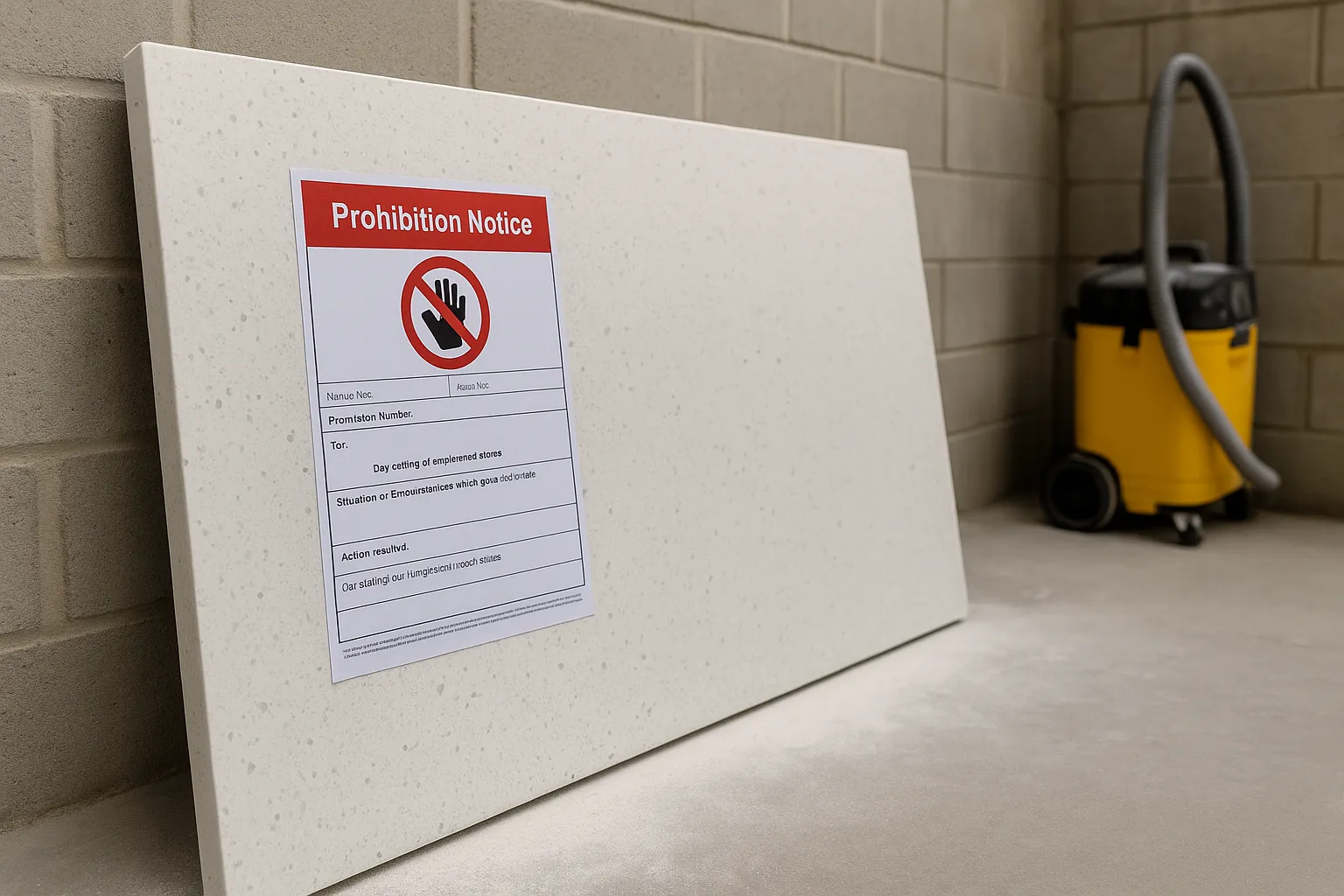
– HSE issued first Prohibition Notices for engineered stone work.
– Four companies ordered to stop work due to safety failures.
– Silicosis risks highlighted after young worker deaths.
– Nationwide inspection campaign aims for 1,000 business visits.
– New guidance emphasizes low-silica materials and safety controls.
Full Story
Four companies have been mandated to halt operations involving engineered stone following inspections by the Health and Safety Executive (HSE), marking the agency’s first issuance of Prohibition Notices as part of a larger health and safety initiative focused on preventing exposure to hazardous silica dust. This enforcement action stems from a targeted inspection campaign launched by HSE to address concerns over the serious health risks associated with engineered stone dust, particularly silicosis, a preventable but life-threatening lung condition.
As part of its ongoing commitment to workplace safety, the HSE had released new guidance stating that dry-cutting of engineered stone poses significant health risks. This initiative follows alarming statistics revealing a troubling trend in the health and safety of young workers, leading to the formulation of a comprehensive plan that includes an extensive inspection programme projected to span until 2026. Inspections conducted recently revealed substantial inadequacies in safety protocols across the four companies, prompting HSE to enact immediate prohibitions against further work with engineered stone.
The enforcement mechanism of the Prohibition Notices aims to compel these companies to enhance safety measures to protect workers from the dangers posed by respirable crystalline silica (RCS). Under the newly instituted guidance, businesses are required to implement specific controls when working with engineered stone. This includes transitioning to lower-silica engineered stone or employing adequate water suppression methods at the point of cutting to mitigate dust emission. The HSE’s first instance of enforcement also highlighted various deficiencies, including the improper provision of respiratory protective equipment (RPE) and insufficient health surveillance protocols for employees.
Harvey Wild, the Head of Operations at HSE, commented on the gravity of the situation, stating, “Our inspectors are visiting businesses across Great Britain to ensure that employers have implemented the correct controls to keep their employees safe.” He further emphasised the irreversible nature of silicosis, underscoring the necessity of proactive measures to ensure worker safety. “No worker should lose their life to a lung disease caused by their job, and that is why we have taken this action,” he said.
Sir Stephen Timms, the Minister for Social Security and Disability, reinforced the government’s commitment to worker safety during his remarks on the enforcement actions. He stated, “Every worker deserves to come home safe, without fear of losing their life to a preventable, deadly lung disease caused by their job.” Timms urged businesses engaged with engineered stone to adhere strictly to HSE’s guidelines, highlighting that businesses need to take immediate corrective actions to mitigate risks.
One of the critical findings from HSE’s research indicates that dry fabrication processes often expose workers to RCS in concentrations five to ten times higher than safer wet methods. This alarming revelation prompted HSE to take decisive action, advocating for a shift towards engineered stone alternatives with lower silica content while ensuring that appropriate safety measures are in practice.
As part of the regulatory update, HSE has published clear and detailed guidance to help businesses understand their responsibilities. This includes recommended practices like using engineered stone with lower silica levels, effective dust control measures such as on-tool water suppression, and regular health surveillance for workers at risk of exposure. Importantly, businesses that continue to implement unsafe practices face the potential for enforcement actions, further underscoring HSE’s zero-tolerance stance on safety violations.
In addition to addressing silica dust hazards, HSE’s enforcement notices have identified broader issues surrounding worker safety, including inadequate health surveillance and insufficient protective equipment measures. The regulatory body is dedicated to supporting businesses through the provision of comprehensive guidance and resources aimed at ensuring the safe handling of engineered stone products.
The extensive campaign is poised to encompass over 1,000 inspections within the next few years, reinforcing the imperative for compliance with safety standards. HSE is also collaborating with manufacturers and suppliers to promote the availability of low-silica engineered stone products. Such initiatives align with existing health and safety regulations requiring manufacturers to provide adequate information about the risks associated with their products.
For those working within the stone processing industry, it is critically important to stay informed about HSE’s requirements and recommendations. As the agency continues to prioritise worker safety, it is essential that businesses acknowledge their roles in safeguarding their staff from preventable health risks. The HSE guidance against dry cutting is not merely a recommendation but reflects a broader commitment to achieving a safer working environment for all employees.
In conclusion, the proactive measures taken by HSE serve as a clear signal to the construction and stone cutting industries regarding the importance of stringent health and safety practices. As the campaign progresses through 2026, ongoing inspections and compliance efforts will play a pivotal role in reducing the risks associated with engineered stone, particularly the insidious dangers posed by silica dust. The health and well-being of workers remain a top priority, and as echoed by HSE officials, addressing these risks effectively is not just a regulatory concern but a moral imperative for safeguarding lives.
Our Thoughts
The enforcement actions taken by the HSE highlight critical failures in managing health risks associated with engineered stone, particularly regarding respirable crystalline silica (RCS). To prevent similar incidents, companies must implement robust safety measures, including adhering to Control of Substances Hazardous to Health (COSHH) regulations, which require a thorough risk assessment and appropriate control measures for hazardous substances.
Key safety lessons include the necessity for businesses to switch to engineered stone with lower silica content and utilize on-tool water suppression to mitigate dust exposure. Companies must also ensure proper provision of respiratory protective equipment (RPE) and conduct regular health surveillance for workers. Furthermore, the repeated use of dry-cutting methods indicates non-compliance with guidance and shows a lack of commitment to worker safety.
Relevant regulations breached include the Health and Safety at Work etc. Act 1974, particularly sections concerning providing a safe working environment and adequate safety information. Similar incidents can be prevented by enforcing stricter compliance with HSE guidance, fostering a culture of safety, and emphasizing manufacturers’ responsibilities under Section 6 of the Health and Safety at Work etc. Act 1974 to ensure adequate risk communication. Regular inspections and enforcement could drive adherence to these standards effectively.