
Story Highlight
– AI summaries miss serious hotel issues like food poisoning.
– Users report poor hygiene and unsafe food conditions.
– Tripadvisor defends AI, emphasizing user-generated content.
– Investigations find discrepancies in reported hotel experiences.
– Consumers advised to read individual reviews for safety.
Full Story
An investigation by consumer advocacy group Which? has raised significant concerns regarding Tripadvisor’s newly implemented AI-generated review summaries for hotels. The findings indicate that these summaries often overlook serious complaints, including instances of food poisoning, allegations of sexual harassment, and hygiene failures, leading to a potentially misleading portrayal of hotel conditions.
Tripadvisor has recently introduced an AI tool designed to condense user reviews into concise summaries that can be found in the reviews section of listed hotels. While the intention is to provide prospective travellers with an efficient overview of guest experiences, Which? has found that the AI-generated snapshots fall short of accurately representing significant issues reported by hotel guests.
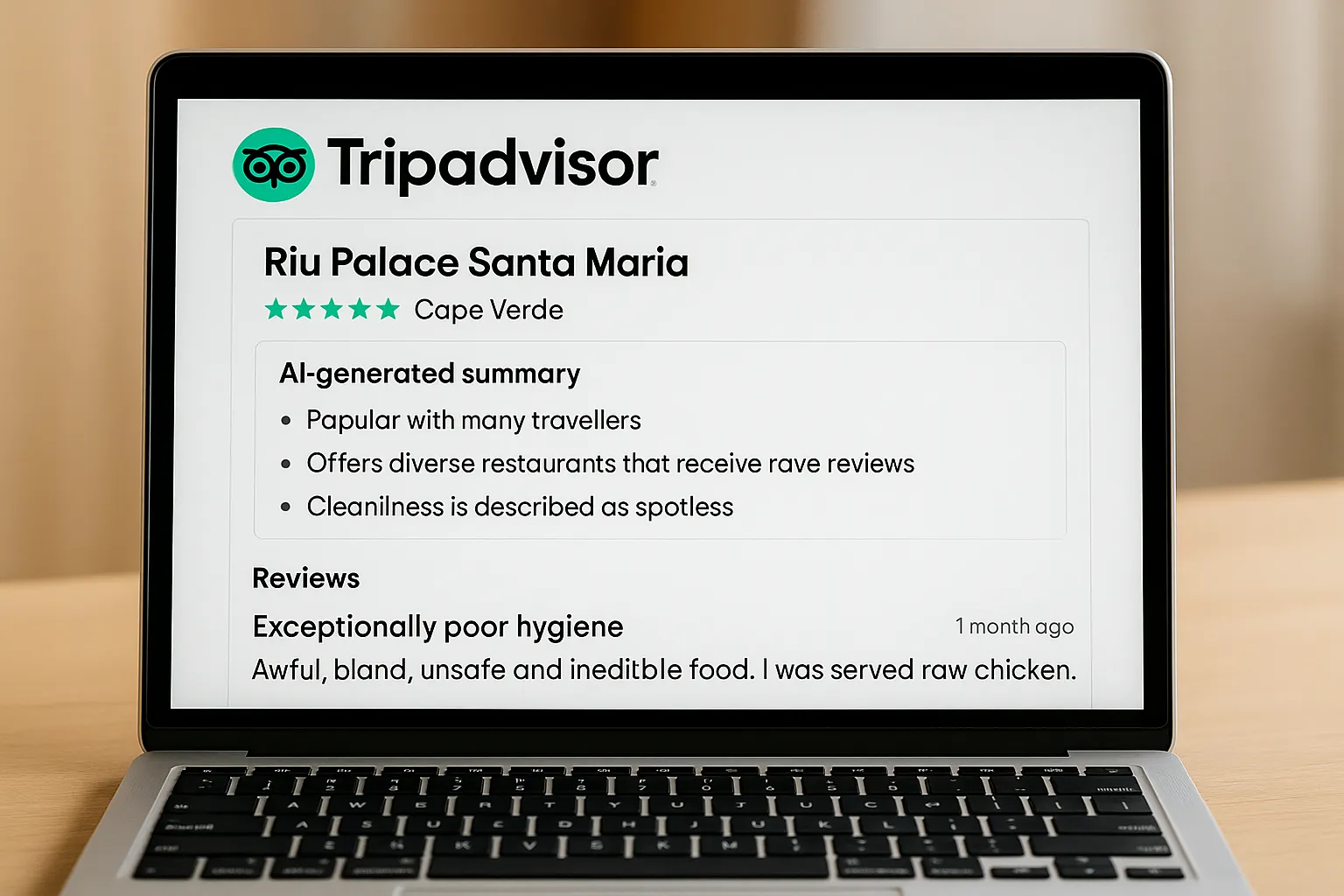
In their assessment, Which? examined a variety of establishments across different countries and highlighted specific shortcomings. For instance, the summaries of Riu Palace Santa Maria, a five-star all-inclusive hotel in Cape Verde, presented a depiction that didn’t align with some guests’ experiences. The AI touted the hotel as “popular with many travellers,” with mentions of its “diverse restaurants” receiving “rave reviews” and a cleanliness standard described as “spotless.”
However, those who stayed at the resort conveyed a starkly contrasting reality. Recent visitors have described the hotel’s hygiene as “exceptionally poor,” and food served on-site as “awful, bland, unsafe, and inedible.” Disturbing accounts included reports of guests being served raw chicken, alongside troubling images shared online showing flies and birds in the buffet area. One particularly unsettling review recounted a holiday marred by the discovery of “dead little roasted mice” near a sitting area.
Further examining the Riu Palace, Which? reported that there were 102 mentions of food poisoning in March 2023 alone, alongside 32 one- and two-star reviews posted from December 2025 to April 2026, many of which detailed serious illness due to food consumption.
In response, a spokesperson for RIU Hotels & Resorts emphasised that the “health and safety of our guests is always our main priority.” They affirmed that the hotels adhere to high operational standards, including rigorous hygiene practices, assured by independent consultancy firms specialised in health and safety compliance.
The AI system’s shortcomings did not end with the Riu Palace. An investigation into another hotel in the Dominican Republic revealed that while the AI highlighted “abundant” amenities, it vaguely mentioned “inconsistent” cleanliness and “maintenance issues.” Guest feedback, however, painted a more concerning picture, as some reported a lack of running water, leading to situations where visitors had to shower with bottled water. Others expressed dissatisfaction over unpleasant odours reminiscent of sewage or mould permeating the establishment.
Moreover, Which? also flagged concerns regarding a hotel in Turkey, where numerous reviews from last summer indicated that some guests felt unsafe due to reported sexual harassment from male staff members. Complaints included inappropriate comments, unwanted physical advances, and continual requests for guests to engage in social media connections—a situation grossly minimised in the AI summaries, which described service at the hotel as merely “friendly” and acknowledged only “lapses [in service] noticed by a few.”
In light of this disparity between AI-generated content and actual guest experiences, Tripadvisor responded robustly, stating that it “fundamentally disagrees” with the findings of the Which? investigation. A representative from the company reiterated that the AI summaries are meant to reflect “integrity and transparency,” serving merely as snapshots derived from the extensive user-generated reviews available on their platform. Users are encouraged to delve into the traveller quotes that accompany each review element for a fuller understanding of individual experiences.
Tripadvisor also highlighted safeguards in place to ensure that significant safety information is adequately reflected on their site. Their AI systems are designed to capture a wide range of traveller feedback and are continuously revised based on user input. Additionally, the company maintains strict protocols, automatically suppressing summary content for listings that involve reports of serious incidents, including severe safety concerns.
Furthermore, Which? assessed Tripadvisor’s AI chatbot and reported that it too failed to adequately advise users about hygiene issues affecting certain hotels. The spokesperson for Tripadvisor addressed these claims, explaining that their chatbot utilises a selection of recent and detailed reviews, aligning them by language and context.
Despite the controversies surrounding these AI tools, Tripadvisor maintains that no reviews have been obscured or omitted since their introduction. They assert that any implications suggesting a risk to travellers arising from these tools are unsubstantiated and aimed at stirring controversy, rather than enlightening the public. The company expressed confidence that their community understands the evolving nature of AI technology and possesses the discernment to verify AI suggestions against their extensive database of reviews and contributions.
Reacting to the findings, Rory Boland, Editor of Which? Travel, urged Tripadvisor to reassess the reliability of its AI-generated summaries and chatbot functionalities. He advised prospective users to circumvent these automated summaries and instead engage directly with guest reviews, particularly one-star ratings. He emphasised the importance of cross-checking information with reviews on alternative platforms to ensure safe and satisfactory travel accommodation.
The issue raises broader questions about the reliance on AI tools in consumer decision-making and the ongoing need for accountability among platforms offering user-generated content.
Our Thoughts
The investigation by Which? into Tripadvisor’s AI-generated review summaries highlights serious shortcomings in safety information dissemination. To avoid such issues, improved oversight and quality control of AI outputs are essential, aligning with the Health and Safety at Work Act 1974, which mandates ensuring the health and safety of guests. Regular audits of AI systems to assess their accuracy in reflecting critical safety concerns, like food hygiene and harassment, should be implemented.
The Consumer Protection Act 1987 also plays a role, as failure to provide accurate information could mislead consumers into unsafe situations. Tripadvisor’s summaries inadequately represented risks reported by consumers, potentially breaching this legislation.
Key lessons include the importance of integrating user-generated content verification into AI systems to ensure safety implications are prominently displayed. Establishing robust feedback mechanisms and safeguards can further enhance user trust and safety.
To prevent similar incidents, companies must prioritize transparency and accurate representation of guest experiences, encourage users to report safety issues, and provide clear guidance on potential hazards. Regular training for staff on handling reviews and customer feedback might also ensure compliance with safety regulations.