














Story Highlight
– Steven Tervit, 32, died after falling from a lift.
– Incident occurred during panel dismantling at technology centre.
– Company fined £50,000 for safety violations and negligence.
– HSE found inadequate risk assessment and safety measures.
– Firm failed to inform workers about structural dangers.
Full Story
A tragic workplace incident in Renfrew has resulted in the death of a 32-year-old father, Steven Tervit, who suffered severe injuries after being thrown from a scissor lift. The incident occurred on November 9, 2023, while Mr. Tervit was engaged in dismantling work at the National Manufacturing Institute Scotland (NMIS), located in Westway Business Park on Porterfield Road.
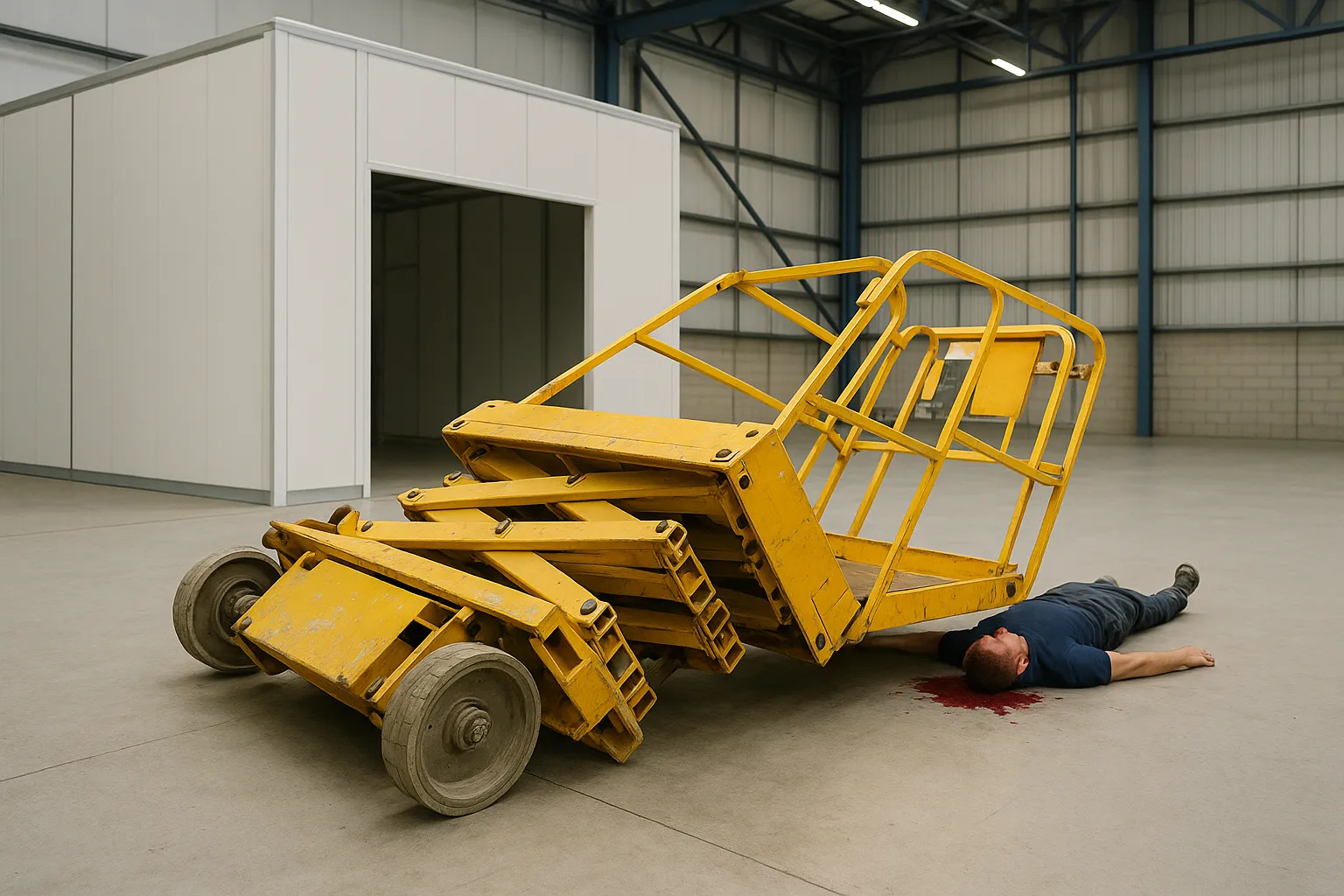
Mr. Tervit was operating the scissor lift at a height of around four metres, removing wall panels from a facility previously designated for cleanroom operations. During the dismantling process, several panels unexpectedly collapsed, leading to a catastrophic chain of events. As the panels fell, Mr. Tervit was forcefully ejected from the lift, landing heavily on the concrete floor below.
Immediate medical attention was provided, and Mr. Tervit was transported to the Queen Elizabeth University Hospital in Glasgow. There, doctors diagnosed him with multiple critical injuries, including a traumatic brain injury, broken ribs, lung contusions, and fractures in both his right thigh and left shin. Tragically, despite efforts to save him, he succumbed to his injuries the following day.
The incident has prompted scrutiny of workplace safety regulations and adherence to risk management protocols. The scissor lift operation had been part of a wider project overseen by Food Process Engineering Limited, a Hamilton-based firm contracted to remove the panels. The cleanroom that Mr. Tervit was working in had previously housed a welding robot and consisted of a steel-framed structure, with walls and roofing made from polyurethane panels that stood approximately 6.1 metres high.
An investigation by the Health and Safety Executive (HSE) revealed significant failings in how Food Process Engineering managed the risks associated with dismantling structures they did not originally construct. Key concerns included a lack of proper assessment of the risks involved in the demolition work. The remaining wall panels were inadequately supported after the roof had been removed, creating an unstable environment.
HSE officials found that the firm’s risk assessment and method statement did not sufficiently address the risks of potential collapses stemming from structural instability. Furthermore, while the company’s documentation mentioned the necessity of installing ‘A-frame’ props for additional support, no such props were present on site at the time of the tragic incident.
The company’s oversight extended to their failure to share essential safety documents and procedures with the workers actively engaged in the project. This lack of communication left employees unaware of the potential hazards associated with their role, which contributed to the unsafe working conditions.
In recognition of these failures, Paisley Sheriff Court imposed a fine of £50,000 on Food Process Engineering Ltd. for their role in Mr. Tervit’s death. Additionally, the court mandated that the company pay a victim surcharge of £3,750. The ruling serves as a critical reminder of the importance of workplace safety and the obligation firms have to ensure adequate training and protective measures for their employees.
HSE inspector Amna Doherty articulated the gravity of the situation, stating, “The failings of this company cost a much-loved husband, father and son his life. Falls from height remain the leading cause of workplace death and injury. There was a lack of planning in terms of the risk and those being tasked with the job were not aware of the dangers posed to them. We will not hesitate to take action against those who fail to protect their workers.”
This unfortunate incident highlights the ongoing need for rigorous adherence to safety protocols, particularly in construction and demolition operations where workers are exposed to significant risks. As investigations continue, the emphasis remains on fostering a culture of safety and accountability within the workplace to prevent such tragedies from reoccurring in the future.
As the community mourns the loss of Mr. Tervit, there is a broader conversation developing about workplace responsibility and the imperative of ensuring that all employees return home safe from their jobs. The need for companies to rigorously assess and manage potential hazards is critical in safeguarding the well-being of workers across all industries.
Our Thoughts
The tragic incident involving Steven Tervit highlights critical failures in health and safety management. A thorough assessment of the risks associated with dismantling a structure not originally constructed by the company is essential. According to the Health and Safety at Work Act 1974, employers must ensure the health and safety of employees by conducting proper risk assessments and implementing adequate control measures.
Key lessons learned include the necessity for comprehensive risk assessments that identify potential structural instability, particularly when dealing with existing structures. In this case, the lack of proper props or supports to stabilize the wall panels was a significant oversight. Employers must communicate risk assessments and method statements effectively to all workers involved in hazardous tasks, ensuring they are aware of and understand the inherent risks.
The company breached regulations by not implementing adequate safety measures and not sharing safety documentation with employees, violating the Management of Health and Safety at Work Regulations 1999. To prevent similar incidents, employers must prioritize safety training, proactive risk management, and the enforcement of safety protocols when working at heights or with hazardous structures.