















Story Highlight
– UK advises train travel only if essential this week.
– New heatwave in south-east England exceeds 28°C criteria.
– Temperatures may reach up to 35°C, causing disruptions.
– Some trains cancelled or running at reduced speeds.
– Health alerts issued due to risks from extreme temperatures.
Full Story
A fresh heatwave sweeping across the UK has prompted authorities to advise people to limit travel to essential journeys only this week. The Met Office confirmed that as of Monday evening, regions in south-east England met the official criteria for a heatwave, registering three consecutive days of temperatures exceeding 28C. Forecasts suggest that temperatures could rise further, with the potential for areas to experience highs of up to 35C.
High temperatures pose unique challenges for rail travel, such as the possibility of rails buckling due to heat stress, sagging overhead electric wires, and increased risk of fires adjacent to the tracks. The Met Office has cautioned that as air temperatures reach 30C, steel rails could exceed 50C. The agency has also alerted the public to the likelihood of “tropical nights,” where evening temperatures may remain above 20C, especially in the south.
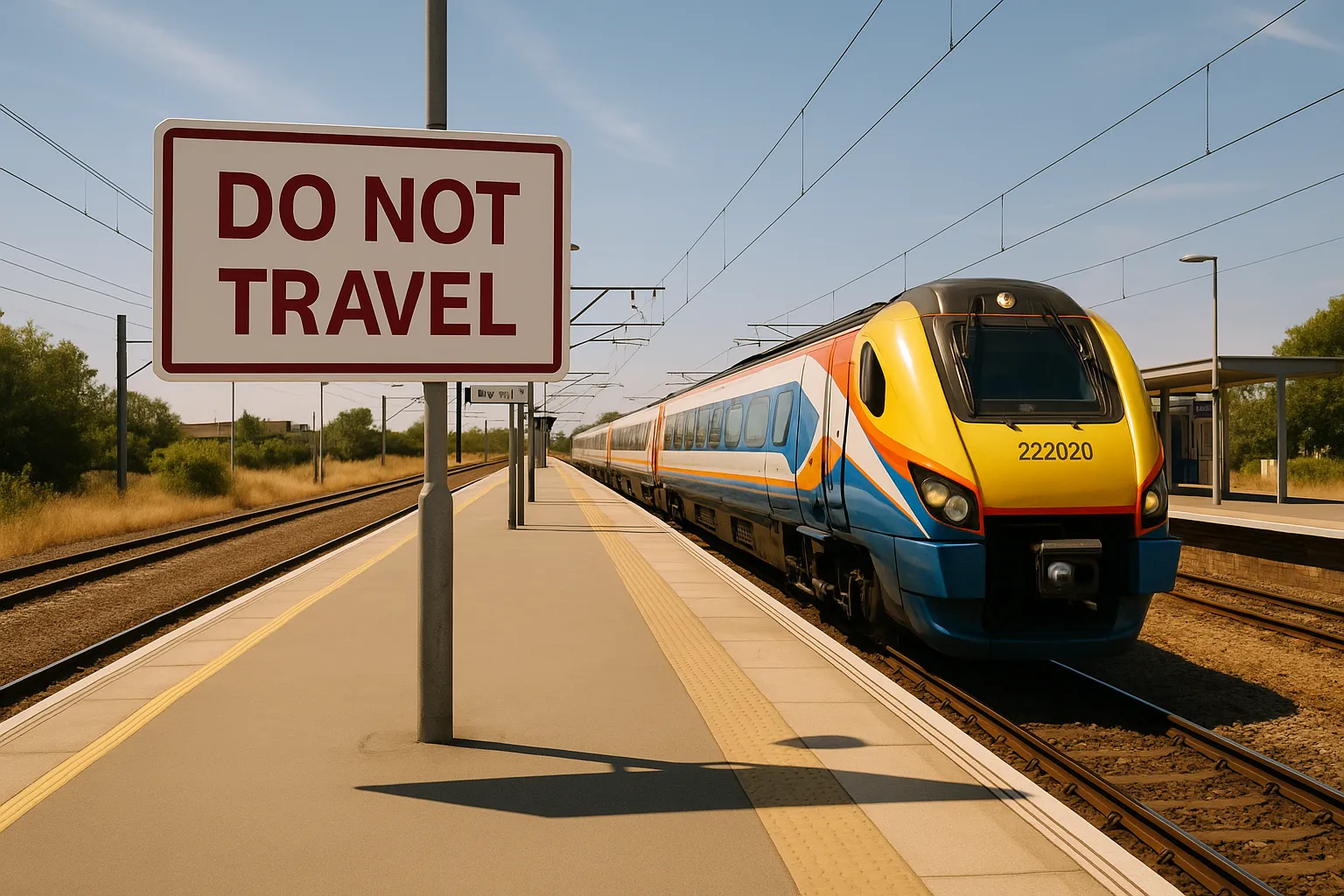
In response to the escalating temperatures, several train services have scheduled cancellations or reduced speeds. East Midlands Railway (EMR) has issued a specific warning, suggesting that customers should undertake travel only if it is essential. The company indicated that this week marks the onset of the UK’s third heatwave in as many months, with predictions of mid-30s temperatures in certain regions.
Passengers using EMR services are advised to embark on journeys prior to noon to avoid peak heat conditions. The company has announced that specific regional train routes, notably those between Nottingham and Worksop, along with Nottingham and Leicester, will cease operations from midday on Wednesday to mitigate the effects of extreme weather on railway infrastructure. Additionally, some other lines will operate at reduced speeds to ensure safety.
Philippa Cresswell, the customer experience director at EMR, addressed travelers, stating, “The hot weather means we’ll need to make some temporary changes to our services to keep the railway operating safely. If you do need to travel and the journey is essential, we’d recommend travelling before midday and checking your journey before setting off. We appreciate these changes may inconvenience some customers and we’d like to thank everyone for their patience and understanding while we work to keep people moving safely.”
Plans for EMR services on Thursday and Friday remain under evaluation, and patrons are encouraged to check for relevant updates prior to their journeys. Predicted temperatures in southern England are set to reach around 33C on Wednesday and 34C on Thursday, with certain areas potentially experiencing the highest forecast of 35C later in the week.
While southern regions have begun to feel the full impact of the heat, the forecaster noted a north-south divide will continue for the initial part of the week. Scotland, for instance, is expected to experience some rain and stronger winds by Tuesday evening, keeping temperatures more in line with seasonal averages. However, as the weekend approaches, it is anticipated that warmer air will extend to northern areas, increasing humidity levels and possibly resulting in showers or isolated thunderstorms.
In a joint statement, Great Western Railway (GWR) and Network Rail reassured travelers that “customers can and should still travel as normal,” but recommended that they remain vigilant about their well-being by staying hydrated and allowing extra time for their journeys. Daryn McCombe, performance director for GWR and Network Rail, stressed the importance of customer safety during this heatwave, stating, “We want to keep our customers safe during this next heatwave, which is why we are taking the precautionary step of amending a small number of services at the hottest times of day. We know this could be disruptive to a few people and we’re sorry for the inconvenience it will cause, but customer safety must come first. We’d encourage everyone planning to travel this week to check their journey beforehand.”
In light of the soaring temperatures, the UK Health Security Agency (UKHSA) has issued amber heat health alerts for the Midlands and southern England from 9am on Wednesday until 9pm on Sunday. This advisory indicates that significant impacts on health and social care services are anticipated, particularly affecting older adults and those with pre-existing health conditions, as the risk of heat-related illnesses, including increased mortality, rises significantly.
The UKHSA has also issued yellow heat health alerts for Yorkshire and northern England during the same period, cautioning that these regions may also face similar challenges. Additionally, the agency warned of the potential for a rise in water-related incidents across England, underscoring risks from cold water shock and accidental drownings as more individuals seek relief from the heat.
As temperatures climb, public safety measures and awareness will play a crucial role in navigating the challenges presented by this heatwave, as communities brace for its effects in the coming days.
Our Thoughts
To prevent the disruptions experienced during the recent heatwave in the UK, several proactive measures could have been taken. Rail companies could have implemented a more robust heat management strategy aligned with the UK Health and Safety Executive (HSE) guidelines, particularly those regarding the safe operation of transport services in extreme weather conditions.
Regulations such as the Health and Safety at Work Act 1974 obligate employers, including rail operators, to ensure the health and safety of employees and passengers. By conducting risk assessments and preparing for extreme weather proactively, such as reinforcing rail infrastructure to withstand higher temperatures and minimizing service disruptions in advance, the impact on commuters could have been reduced.
Key lessons also include the importance of effective communication with the public regarding safety measures and travel advisories well ahead of the heatwave forecast. Regular maintenance and inspections of track and rolling stock during heat events could mitigate the risks of buckling rails and overhead wire sagging.
In summary, enhanced planning, regular safety audits, and timely public alerts could help prevent similar incidents in future heatwaves, ensuring compliance with UK health and safety legislation.