
















Choose an AI chat
Man in his 70s dies after cattle incident at Norfolk estate
UK Health and Safety Latest

Man in his 70s dies after cattle incident at Norfolk estate

by Ellie Cartwright
July 14, 2026
0

A man in his seventies has tragically died following a cattle-related incident at Felbrigg Hall, a popular National Trust estate...

Read moreDetails
NHS pandemic PPE crisis reveals £10bn waste and planning failures

NHS pandemic PPE crisis reveals £10bn waste and planning failures

July 14, 2026
Climbing centre admits safety breach after father's tragic death

Climbing centre admits safety breach after father’s tragic death

July 14, 2026
Parents warned of safety risks from counterfeit squishy toys

Parents warned of safety risks from counterfeit squishy toys

July 14, 2026
NHS aims to reduce sepsis deaths through innovative monitoring initiatives

NHS aims to reduce sepsis deaths through innovative monitoring initiatives

July 13, 2026

Archives

  • July 2026
  • June 2026
  • May 2026
  • April 2026
  • March 2026
  • February 2026
  • January 2026
  • December 2025
  • November 2025
  • October 2025
  • September 2025
  • July 2025
  • August 2009

Categories

  • Health and Safety Help
  • News
  • Policies
  • UK Health and Safety Latest
  • About
  • Advertise
  • Policies
    • Privacy Policy
    • Editorial Policy
    • Corrections & Complaints policy
  • Useful Documents
    • Understanding RIDDOR
    • 10 Workplace Safety Failures
    • A Complete Guide to Reporting Safety Incidents in the UK
    • Fire Risk Assessment: Meeting the Regulatory Reform (Fire Safety) Order
    • COSHH Basics: A Practical Guide to Control of Substances Hazardous to Health
    • Working at Height in the UK: The Essentials (WAH Regulations 2005)
    • Asbestos in the Workplace: Control of Asbestos Regulations 2012 (CAR) Essentials
    • Managing Contractors Under CDM 2015: Roles, Duties & Controls
    • DSE & Ergonomics: Healthy Workstations for Office & Hybrid Teams
    • Lock out Tag out LOTO
    • Workplace Transport Safety: Forklifts, Pedestrians & Traffic Management
    • Noise & Vibration at Work: Practical Controls (2005 Regulations)
    • Confined Spaces in the UK: Safe Entry under the Confined Spaces Regulations 1997
  • Contact
  • Agent
Tuesday, July 14, 2026
29 °c
London
23 ° Wed
23 ° Thu
23 ° Fri
  • Login
UK Safety News
  • Home
  • News
    • All
    • UK Health and Safety Latest
    Man in his 70s dies after cattle incident at Norfolk estate

    Man in his 70s dies after cattle incident at Norfolk estate

    NHS pandemic PPE crisis reveals £10bn waste and planning failures

    NHS pandemic PPE crisis reveals £10bn waste and planning failures

    Climbing centre admits safety breach after father's tragic death

    Climbing centre admits safety breach after father’s tragic death

    Parents warned of safety risks from counterfeit squishy toys

    Parents warned of safety risks from counterfeit squishy toys

    NHS aims to reduce sepsis deaths through innovative monitoring initiatives

    NHS aims to reduce sepsis deaths through innovative monitoring initiatives

    Tragedy at Felbrigg Hall as man in 70s dies following incident

    Tragedy at Felbrigg Hall as man in 70s dies following incident

    Man dies after cattle incident at National Trust property

    Man dies after cattle incident at National Trust property

    New law enhances tenant protections against hazards in social housing

    New law enhances tenant protections against hazards in social housing

    Flame retardants: balancing fire safety and health concerns

    Flame retardants: balancing fire safety and health concerns

    UK battles major wildfire threat amid record heatwave

    UK battles major wildfire threat amid record heatwave

    Trending Tags

No Result
View All Result
UK Safety News
No Result
View All Result
Home News UK Health and Safety Latest

NHS aims to reduce sepsis deaths through innovative monitoring initiatives

Tara Rowden by Tara Rowden
July 13, 2026
in UK Health and Safety Latest
Reading Time: 4 mins read
0
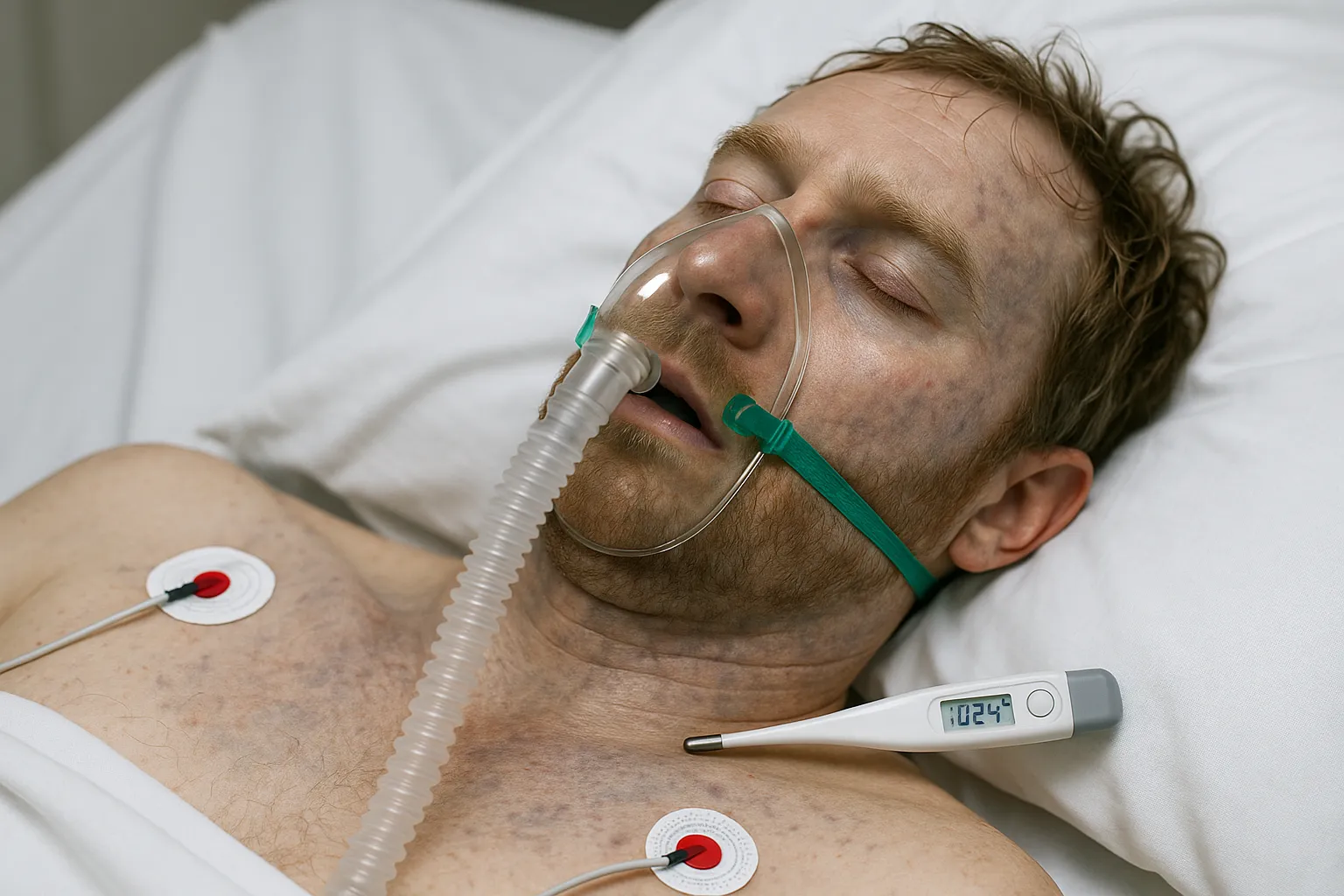
NHS aims to reduce sepsis deaths through innovative monitoring initiatives

Story Highlight

– Sepsis causes over 48,000 UK deaths annually.
– NHS aims to reduce sepsis deaths by 2035.
– Wearable devices will monitor at-risk patients’ vital signs.
– Early detection improves survival chances significantly.
– New framework emphasizes patient safety and innovation.

Full Story

Sepsis, a severe and often life-threatening response to infection, is primarily caused by bacterial infections. The condition manifests in various symptoms, especially in adults, which can include disorientation, shivering, muscle aches, and respiratory difficulties. Individuals may also exhibit changes in skin colour, such as a bluish, pale, or blotchy appearance, and may experience temperature fluctuations, reduced urine output, or elevated heart rates. In younger populations, the indicators may vary; infants and children can present with rapid breathing, erratic temperatures, abnormal skin discolouration, excessive drowsiness, and vomiting, along with a noticeable lack of urination.

The UK Sepsis Trust has highlighted the gravity of this public health issue, noting that sepsis contributes to approximately 48,000 fatalities annually in the UK, many of which could be avoided with timely intervention and better management strategies. In response, NHS England has announced its commitment to significantly reduce the number of sepsis-related deaths by 2035, focusing on enhanced monitoring and treatment protocols.

Current statistics suggest that in England alone, sepsis is responsible for around 4,000 direct deaths each year, with experts estimating that around 25% of these lives could be saved through improved healthcare practices and quicker diagnoses. A notable initiative in this regard is the distribution of innovative wearables, such as health-monitoring watches and bracelets, which are crucial for high-risk groups. This group primarily includes individuals receiving immunosuppressive therapy—common among cancer patients—elderly patients, those with urinary catheters, and individuals suffering from severe mental health disorders, all of whom have a heightened susceptibility to sepsis.

Recent figures from the NHS revealed that there were over 118,000 emergency admissions related to sepsis during the 2024/25 period. The speed with which sepsis is diagnosed and treated can dramatically affect patient outcomes; for every hour that treatment is delayed, the risk of death increases by as much as 8%. According to Professor Ramani Moonesinghe, Deputy Medical Director at NHS England, it is critical to identify sepsis promptly to prevent serious health consequences or death. He stated, “Every year, sepsis causes tens of thousands of deaths and leaves thousands more with long-term disabilities, so it’s vital the NHS has an ambitious plan to reduce this harm over the next decade.”

In a bid to enhance early detection, the NHS is embarking on trials involving advanced wearable technology designed to continuously monitor vital signs within a patient’s home. If those signs indicate a deterioration in the individual’s condition, they can be swiftly assessed for sepsis. Some healthcare facilities have already begun integrating such technologies. For instance, cancer patients at the University College London Hospitals (UCLH), undergoing CAR T-cell therapy, are now equipped with devices that continuously track their heart rate, respiratory rate, and temperature to identify sepsis and cytokine release syndrome (CRS), which presents similar symptoms. If these devices detect troubling signs, NHS clinicians receive immediate alerts, allowing for rapid assessments and appropriated antibiotic administration.

Preet Gill, the UK’s Minister for Patient Safety, acknowledged the emotional toll of sepsis, remarking, “Sepsis is a devastating and sometimes fatal condition. Behind every case is a patient and a family, and we have heard too many heartbreaking examples where signs of deterioration were not recognised quickly enough.” He praised the efforts of families who have transformed their grief into actionable change, advocating for enhanced patient safety measures. This evolving framework aims to improve the identification and response processes associated with sepsis, leveraging both technological innovation and a more profound understanding of patient needs to save lives.

Dr Ron Daniels, the founder of the UK Sepsis Trust, remarked on the significance of these developments, asserting that the new initiatives are pivotal for advancing patient safety, saving lives, and improving recovery outcomes for those who survive severe sepsis.

In reaffirmation of these efforts, experts are coordinating with NHS England to craft a comprehensive strategy that encompasses customer feedback and seeks to learn from past errors. This strategic plan aims to reshape public awareness and strengthen healthcare providers’ preparedness to combat this critical health issue. The initiative underscores a growing recognition of sepsis as a major concern not only for medical professionals but also for society as a whole, as the implications of sepsis extend deeply into the lives of families and communities nationwide.

In conclusion, the ambition set forth by NHS England to halve sepsis-related deaths by 2035 demonstrates a commitment to improving healthcare outcomes through innovation, education, and responsive care. As we navigate the complex landscape of infection-related illnesses, early detection and prompt treatment remain the best defences against the devastating effects of sepsis, instilling hope in the lives of countless individuals at risk of this serious condition.

Our Thoughts

To prevent deaths from sepsis as mentioned in the article, several key actions and lessons can be identified. First, early recognition and response to sepsis symptoms can significantly reduce mortality rates, highlighting the importance of effective training for healthcare professionals on sepsis identification as mandated by the Health and Safety at Work Act 1974. This training should include understanding the legal obligations to provide safe care and promptly act on patient deterioration, as prescribed in the Care Quality Commission (CQC) standards.

The implementation of technology, such as wearable devices for monitoring vital signs, is a proactive measure that could help in early detection and should be expanded across healthcare settings. Additionally, regular audits and assessments of sepsis management protocols could ensure compliance with the General Medical Council’s guidelines.

Ensuring that healthcare providers have adequate resources and support to recognize and act on early signs of sepsis is essential to prevent similar incidents. By integrating improved monitoring practices and reinforcing training, adherence to the Health and Safety at Work Act can be achieved, thereby safeguarding patient welfare.


Tags: Health and Safety
SummarizeShare34Share197SendSend
ADVERTISEMENT
Tara Rowden

Tara Rowden

Tara Rowden covers health, safety, and environmental news for UK Safety News, focusing on product safety, consumer health warnings, and occupational hazards. She reports on alerts from bodies including the MHRA, HSE, and local authorities, helping workers and employers stay informed about emerging risks.

Related Posts

Farming's mental health crisis prompts urgent suicide prevention campaign

Farming’s mental health crisis prompts urgent suicide prevention campaign

by Michael Harland
February 9, 2026
0

Mental health among UK farmers has reached a critical low, marking the worst decline in four years. A staggering 47...

Supermarkets issue recall warnings over food safety concerns

Supermarkets issue recall warnings over food safety concerns

by Michael Harland
June 28, 2026
0

Consumers across the UK are urged to check their kitchens as multiple food products have been recalled due to serious...

Leave a Reply Cancel reply

Your email address will not be published. Required fields are marked *

I agree to the Terms & Conditions and Privacy Policy.

Useful Documents

  • Understanding RIDDOR
  • 10 Workplace Safety Failures
  • A Complete Guide to Reporting Safety Incidents in the UK
  • Understanding RIDDOR
  • Fire Risk Assessment: Meeting the Regulatory Reform (Fire Safety) Order
  • COSHH Basics: A Practical Guide to Control of Substances Hazardous to Health
  • Working at Height in the UK: The Essentials (WAH Regulations 2005)
  • Lock out Tag out LOTO

Recent Posts

  • Man in his 70s dies after cattle incident at Norfolk estate
  • NHS pandemic PPE crisis reveals £10bn waste and planning failures
  • Climbing centre admits safety breach after father’s tragic death
  • Parents warned of safety risks from counterfeit squishy toys
  • NHS aims to reduce sepsis deaths through innovative monitoring initiatives

Recent Comments

  1. Piper Douglas on Worker dies due to inadequate machinery safety measures
  2. Natalie Coleman on New housing laws aim to tackle damp and mould crisis in England
  3. Simon Barrett on Honeymoon ruined by illness as newlywed suffers severe infection in Cape Verde
  4. Nolan Barrett on Work-related ill health in Great Britain remains a concern after pandemic peak
  5. Dylan Reeves on Sickness rates among Scottish police officers soar to troubling levels
UK Safety News

Copyright © 2026
UK Safety News

Navigate Site

  • About
  • Advertise
  • Policies
  • Useful Documents
  • Contact
  • Agent

Follow Us

Welcome Back!

Login to your account below

Forgotten Password?

Retrieve your password

Please enter your username or email address to reset your password.

Log In
No Result
View All Result
  • Home
  • News

Copyright © 2026
UK Safety News

This website uses cookies. By continuing to use this website you are giving consent to cookies being used. Visit our Privacy and Cookie Policy.