














Story Highlight
– Man in his 70s died at Felbrigg Hall.
– National Trust closed estate to visitors after tragedy.
– Investigation ongoing by authorities and Health and Safety Executive.
– Previous fatality occurred in 2007, involving an 11-year-old.
– Felbrigg Hall has public access to extensive grounds.
Full Story
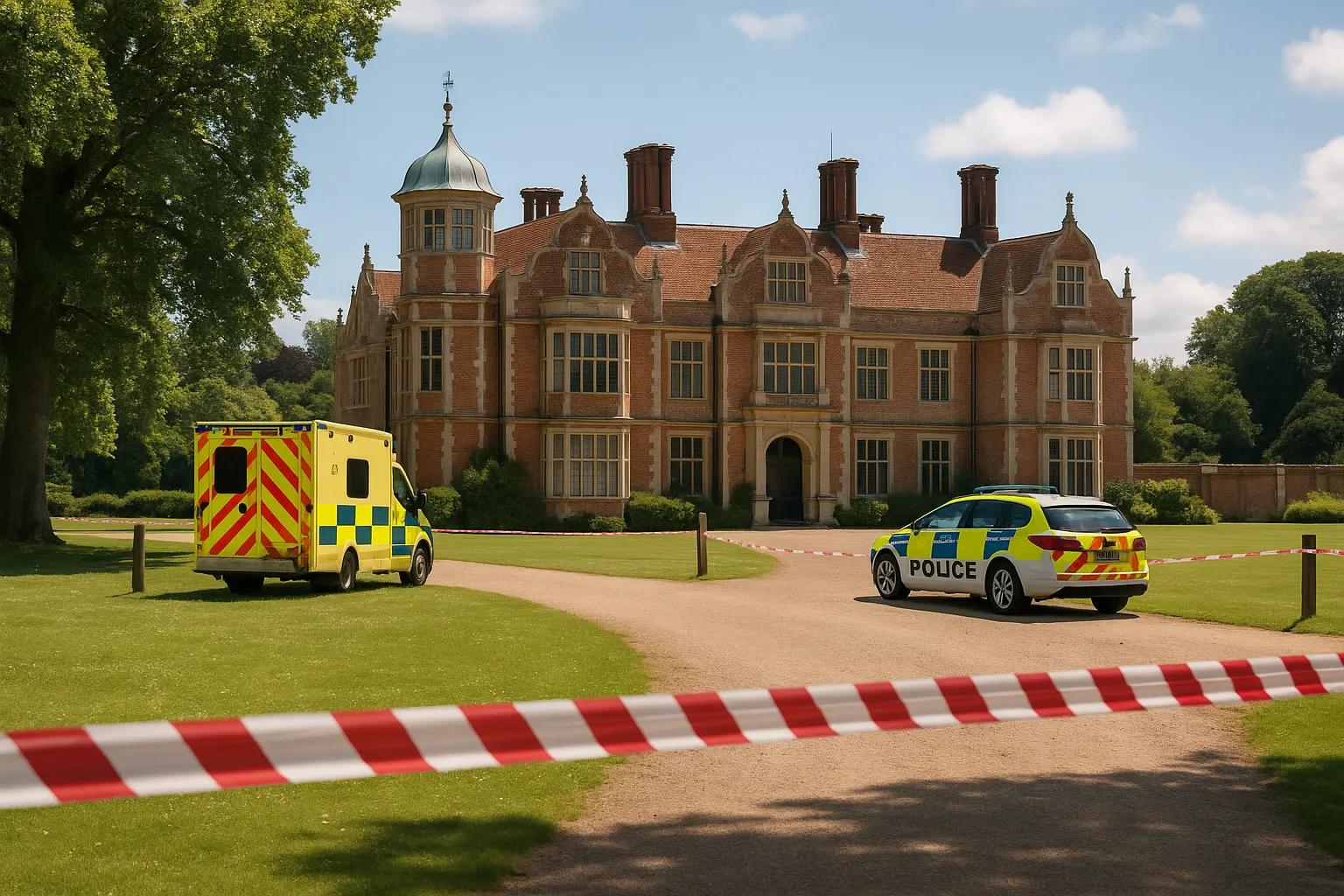
A tragic incident occurred at Felbrigg Hall, situated near Cromer, on Monday morning around 11:45 AM, resulting in the death of a man in his seventies. Emergency medical personnel responded to the scene; however, despite their efforts, the individual was pronounced dead at the location.
Following this heartbreaking event, the National Trust, which manages the estate, made the decision to close Felbrigg Hall to the public for the remainder of the day. A representative from the National Trust stated, “Emergency services were called to the parkland at Felbrigg Hall on Monday 13th July after a member of the public was seriously injured while walking. Despite the efforts of the paramedics, the person tragically died at the scene. We are shocked and deeply saddened by this news, and our thoughts and condolences are with their family and friends at this incredibly difficult time. As an investigation is underway, we are unable to comment further.”
Norfolk Constabulary confirmed that the deceased man’s next of kin had been notified and that a joint inquiry was underway with the Health and Safety Executive. It has been reported that the man was walking on the estate grounds when the incident occurred. Sadly, this is not the first fatality to occur at this location. In 2007, an eleven-year-old boy named Daniel Mullinger lost his life when a sizeable branch from a tree fell on him. This unfortunate accident took place while he was participating in an orienteering exercise at the National Trust property.
Statistics from the Health and Safety Executive indicate that an average of four to five human fatalities occur annually in Britain due to incidents involving cattle. This makes these animals, often seen grazing in rural areas, the second most dangerous species in the country, following dogs. Most of the reported cases involve people who are either farmers or walkers, particularly those who inadvertently disturb cows that are protecting their young.
Felbrigg Hall has an extensive history, having been constructed in the 17th century. The estate was entrusted to the National Trust in 1969, when it was passed down from its last owner, Robert Wyndham Ketton-Cremer. Following his passing, Robert’s brother, Richard, who had been his heir, was tragically killed during World War II. A memorial to Richard can be found nestled within the woods behind the hall, commemorating his sacrifice.
The extensive grounds of Felbrigg Hall, which encompass 520 acres of woodland and a picturesque lake, are equipped with several waymarked walking paths, including the Weavers’ Way long-distance footpath, appealing to those who enjoy exploring the outdoors. The estate has been a popular destination for both locals and visitors keen to experience its natural beauty and historical significance.
Following the recent incident, the community is reflecting on the implications of safety measures within outdoor spaces. A spokesperson from the Health and Safety Executive remarked, “We are aware of this incident and making enquiries, working alongside Norfolk Police.” This statement signifies the seriousness with which authorities are treating the matter and their commitment to ensuring the safety of visitors.
As investigations into the circumstances surrounding the man’s death continue, the local authority and community members are expressing their condolences. The loss has prompted not only mourning but also discussions surrounding the safety of visitors in outdoor recreational areas, particularly concerning the potential hazards posed by the wildlife inhabiting these environments.
With Felbrigg Hall’s lengthy history of tragedies, it serves as a reminder of the inherent risks associated with outdoor activities, especially in places where natural elements play a crucial role. The estate remains a popular site for walkers and nature enthusiasts, but this ongoing dialogue may lead to a reassessment of how safety is prioritized at such locations.
Overall, the community is grappling with the emotional weight of the recent loss while also considering the broader implications for visitor safety in natural spaces. As the investigation progresses, it is hoped that insights will be gained, which can help prevent similar occurrences in the future, ensuring that Felbrigg Hall remains a safe place for everyone to enjoy its beauty and history.
Our Thoughts
To prevent the tragic incident at Felbrigg Hall, the National Trust could have implemented several key safety measures. Regular risk assessments, as mandated by the Management of Health and Safety at Work Regulations 1999, are crucial for identifying and mitigating potential hazards within the parkland. Given the previous incident involving a falling branch, enhanced tree safety management protocols should have been established, following the guidance of HSE’s tree safety management.
Furthermore, clear signage indicating potential dangers, such as the presence of cattle and unstable trees, would alert visitors to risks. The Health and Safety at Work Act 1974 requires employers to ensure, as far as reasonably practicable, the health and safety of their visitors.
Education and training for staff on managing safe visitor experiences could also be improved, alongside a system for reporting and addressing safety concerns on-site. This would follow the Health and Safety (Information for Employees) Regulations 1989 which necessitates providing details of health and safety risks.
In summary, rigorous adherence to health and safety regulations and proactive measures could have mitigated risks and likely prevented similar incidents in the future.