














Story Highlight
– Major wildfire in North Wales amid heatwaves.
– Firefighters evacuate communities near Sychnant Pass.
– Southern England faces level 5 wildfire risk.
– Multiple wildfires reported in Durham and West Sussex.
– Health alerts issued due to extreme weather conditions.
Full Story
**Major Wildfire Threatens North Wales Amid Record-Breaking Heat Wave**
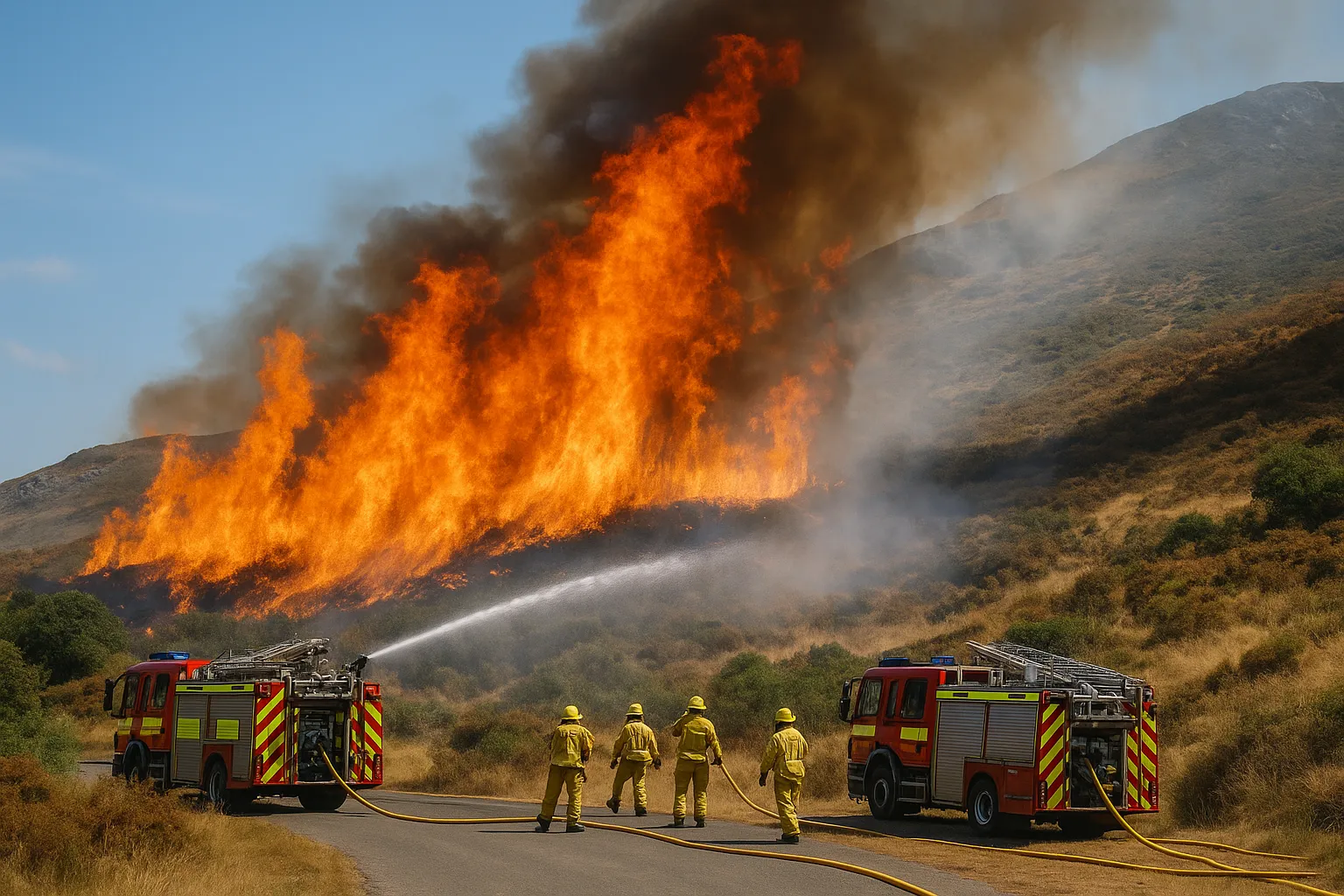
Emergency services are currently engaged in a substantial firefighting effort in North Wales, where a significant wildfire has ignited near the Sychnant Pass on Conwy Mountain. This incident arises as the UK grapples with an unprecedented heat wave, prompting warnings and advisories for local residents in the vicinity.
Firefighters are on the front lines, striving to contain the blaze and safeguard nearby communities. Jami Jennings from North Wales Fire and Rescue Service spoke to Sky News about the precarious situation, stating, “Firefighters remain on scene working in challenging conditions to contain the fire and protect surrounding communities, property, infrastructure and the environment.” Additionally, Jennings urged the public to stay clear of the affected areas to ensure that emergency personnel can operate as effectively and safely as possible. Residents have been advised to heed any road closures and evacuation instructions issued by local authorities.
The wildfire threat is further compounded by extreme weather conditions affecting much of southern England and parts of the south Midlands, where an “exceptional” level 5 risk for wildfires has been declared. As emergency crews manage the escalating situation in North Wales, the UK Health Security Agency (UKHSA) has issued amber health alerts for the West Midlands and South West regions, along with yellow alerts for areas including the East Midlands, North West, South East, East of England, and London. These alerts will remain in effect from 09:00 BST on July 12 until 21:00 BST on July 15.
The foreboding weather forecast suggests that the wildfire threat will persist, with predictions of continued high temperatures across England, particularly into Thursday, July 16. The UK has entered a second consecutive week of temperatures surpassing the heatwave threshold, raising concerns about the potential health impacts on the population. In a rather alarming note, the UKHSA has warned of potential water-related incidents, such as cold water shock and drowning, as these heat conditions unfold.
Several other fires have been reported across the country, with incidents in Durham and the South East covering areas comparable to the size of 14 football pitches that have recently been brought under control. Additional blazes have also been noted in West Sussex, near Eastbourne, and on Tintwistle Moor, indicating widespread challenges faced by firefighters during this period of high-risk conditions.
Dave Swallow, representing the National Fire Chiefs Council (NFCC), highlighted the importance of community awareness in preventing wildfires. Emphasising that human actions can significantly influence fire outbreaks, he remarked, “Whether it is a disposable barbecue left behind, a discarded cigarette, or even a glass bottle left in the sunshine, we all have a role to play in preventing them.” His comments underline the need for public vigilance and responsibility as conditions remain ripe for wildfires.
While there is a chance of rain providing some relief in the forecast, meteorological patterns indicate that high temperatures are likely to continue. The influence of lower pressure situated in the Bay of Biscay may bring a temporary respite by the weekend; however, significant heat is expected to still dominate the weather outlook in the coming days.
As the firefighting efforts continue in North Wales, local experts have urged residents to remain alert and compliant with safety measures. The impact of climate change and shifting weather patterns has made the frequency of such wildfires more likely, leading to an increased emphasis on education and preparation in affected communities.
Authorities remain vigilant in their monitoring of both the wildfire situation and the health risks associated with the ongoing heat wave. Community leaders are calling for cooperation from residents to help mitigate risks, and to contribute to efforts aimed at preventing future incidents.
In light of these mounting challenges brought on by extreme weather, all individuals are encouraged to take heed of safety recommendations and to stay updated with the latest guidance from relevant agencies. Engaging in preventive measures and supporting firefighting efforts will be vital in overcoming the current crisis and safeguarding public safety.
With many regions in the UK at a heightened risk for wildfires, the collaboration between community members and emergency services is more crucial than ever. As society grapples with the ramifications of climate variability, it is imperative that all residents understand their role in the stewardship of the environment and the preservation of safety for their families and neighbours during these increasingly challenging times.
Our Thoughts
To prevent the wildfires currently affecting North Wales and other regions in the UK, several measures could have been implemented. Key lessons include the importance of public awareness and compliance with fire prevention guidelines, especially during extreme heat warnings. The UK Health and Safety at Work Act 1974 mandates that employers and responsible parties ensure the safety of their environments, which extends to fire risks during heatwaves.
In this case, better public education on the risks associated with outdoor activities, such as barbecuing or littering, could have mitigated ignition sources for wildfires. The Health and Safety Executive’s guidance on managing fire safety could be referenced to reinforce these prevention measures.
Additionally, local authorities should enhance monitoring of high-risk areas to enforce regulations regarding outdoor fires, including potential breaches of the Environmental Protection Act 1990 related to the prevention of smoke emissions from uncontrolled fires.
Finally, a coordinated response plan between emergency services and local communities could improve preparedness, ensuring that residents are fully briefed on evacuation procedures and safety measures during such extreme conditions, thereby fostering a proactive approach to wildfire management.