














Story Highlight
– Peter Hutchinson fell 1.5m from loading ramp.
– Bertschi UK fined £425,000 for safety violations.
– No handrails installed despite manufacturer’s instructions.
– Investigation revealed inadequate risk assessment measures.
– HSE emphasizes prevention of work at height dangers.
Full Story
A significant safety breach has led to a £425,000 fine for Bertschi UK Limited following a tragic incident at their Middlesbrough facility, where a warehouse supervisor lost his life. The company was found guilty of failing to adequately plan a loading activity, which culminated in a preventable accident that resulted in the death of Peter Hutchinson, aged 60.
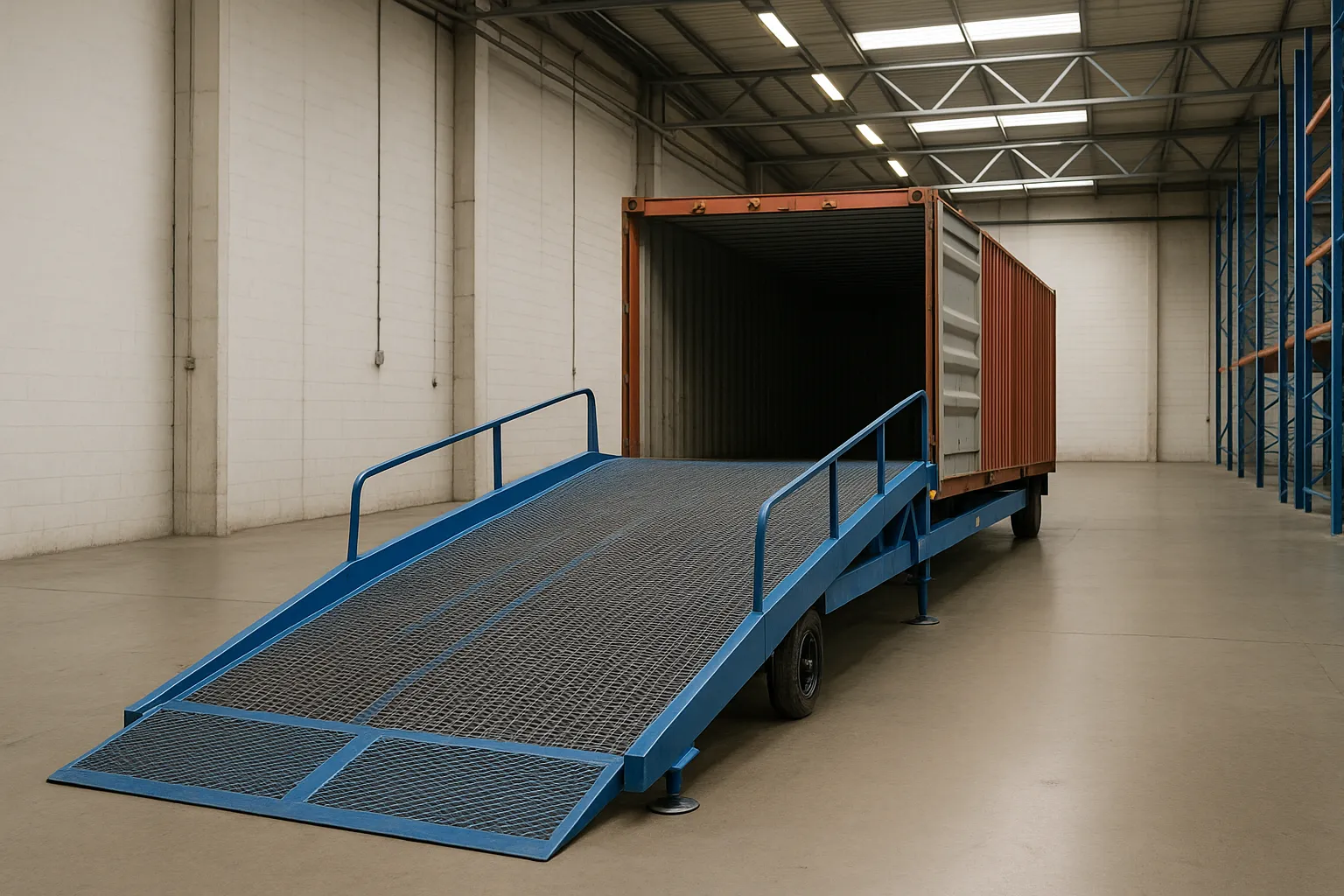
Hutchinson, who had been with Bertschi UK since 2009, was involved in loading plastic waste bales into a shipping container on 4 November 2021. During the operation, a bale slipped from the fork of a forklift truck, causing Hutchinson to retreat and fall roughly 1.5 metres onto the concrete floor beneath the mobile loading ramp.
Despite receiving prompt medical attention, Hutchinson subsequently passed away due to his injuries on 23 November 2021. The heartache felt by his family has been profound. His wife, Karen Hutchinson, shared heart-wrenching sentiments about her loss, stating, “My husband Peter was the family man and everything we did revolved around him. Everyone is struggling to come to terms with their dad, uncle and friend not being here. He did so much for so many people. To explain my feelings of loss is to try and explain the unthinkable – there are just simply no words. Peter was my husband and very best friend. He was my always and forever and he is my forever always.”
The Health and Safety Executive (HSE), which conducted an investigation into the circumstances surrounding Hutchinson’s death, determined that Bertschi UK failed in several crucial aspects of safety regulation. Notably, the company neglected to adequately assess the risks involved in the loading operation and disregarded the necessity of safeguards for pedestrian use of the mobile ramps. The manufacturer of the ramp had explicitly recommended that the ramps should not be used by pedestrians unless fitted with handrails—a precaution Bertschi UK neglected to implement.
In addition to this oversight, the investigation concluded that the company did not consider several reasonably practicable alternatives that could have eliminated the need for work at height. Options such as utilising existing loading bays or positioning containers on the ground before loading were not fully explored.
The HSE has asserted that employers have a statutory obligation to thoroughly assess and plan any work at height, ensuring such tasks are avoided wherever feasible. When unavoidable, appropriate protective measures should be in place to mitigate fall risks and safeguard workers.
In April 2026, following a trial at Teesside Crown Court, Bertschi UK Limited was convicted of breaching multiple regulatory standards, including Section 2(1) of the Health and Safety at Work etc Act 1974 and several clauses of the Work at Height Regulations 2005. During the sentencing hearing on 17 July 2026, the judge imposed a fine of £425,000 on the company and mandated payment of an additional £119,258 in costs.
HSE inspector Cain Mitchell emphasized the preventability of the tragedy, stating, “Peter Hutchinson lost his life in an incident that was entirely preventable. The manufacturers’ instructions were clear: no pedestrian should have been using the ramp without handrails being fitted. Employers should carefully assess work at height activities and always consider whether the task can be carried out without exposing workers to fall risks.”
Mitchell further noted that changes to established working practices can introduce unexpected risks, asserting that employers are responsible for identifying and controlling these risks prior to commencing work. He indicated that this prosecution serves as a crucial reminder that the HSE will act decisively against employers who neglect the safety of their workers.
This tragic case serves as a stark reminder of the importance of rigorous safety standards in the workplace. The impact of such an accident ripples far beyond the immediate area of the incident, affecting families, colleagues, and the broader community. It highlights the essential role of workplace safety regulations intended to ensure that incidents like this do not occur.
The Health and Safety Executive operates as the national regulator for workplace health and safety in the UK, with a commitment to promoting safe and healthy work environments. This incident underlines the critical nature of its oversight functions and the need for employers to prioritise safety above all else.
For further insight into workplace safety regulations, including guidelines on working at height, and to stay updated on the latest news from the HSE, members of the public and business owners can access extensive resources provided by the HSE through their official channels.
The case of Peter Hutchinson underscores not only the devastating consequences of safety negligence but also the imperative for organisations to scrupulously adhere to established safety guidelines to protect their workforce. The ongoing conversation surrounding workplace safety is vital, especially as lessons continue to emerge from incidents that should never have occurred.
Our Thoughts
Bertschi UK Limited’s failure to implement adequate safety measures during a loading operation led to the tragic death of Peter Hutchinson. To prevent such incidents, the company should have conducted a thorough risk assessment as mandated by the Health and Safety at Work etc. Act 1974, ensuring that all potential hazards were identified and controlled. The absence of a handrail on the mobile loading ramp, despite clear manufacturer instructions, represents a serious breach of Regulation 6(2) and Regulation 4(1)(a) of the Work at Height Regulations 2005, which require safety measures to protect workers from fall risks.
Employers must avoid work at height where reasonably practicable; in this case, alternatives such as using ground-level loading bays could have been considered. Additionally, the investigation highlighted that changes to established working practices necessitate a reassessment of risks, emphasizing the importance of ongoing training and communication regarding safety protocols. This incident reinforces the crucial need for compliance with safety regulations, thorough planning, and proactive risk management to safeguard employee welfare.