Story Highlight
– Nationwide ban on steam trains due to fire risks.
– Popular routes like Hogwarts Express now cancelled.
– Commuters frustrated with last-minute ride cancellations.
– Sparks from trains linked to recent wildfire incidents.
– Operators switching to diesel locomotives during heatwave.
Full Story
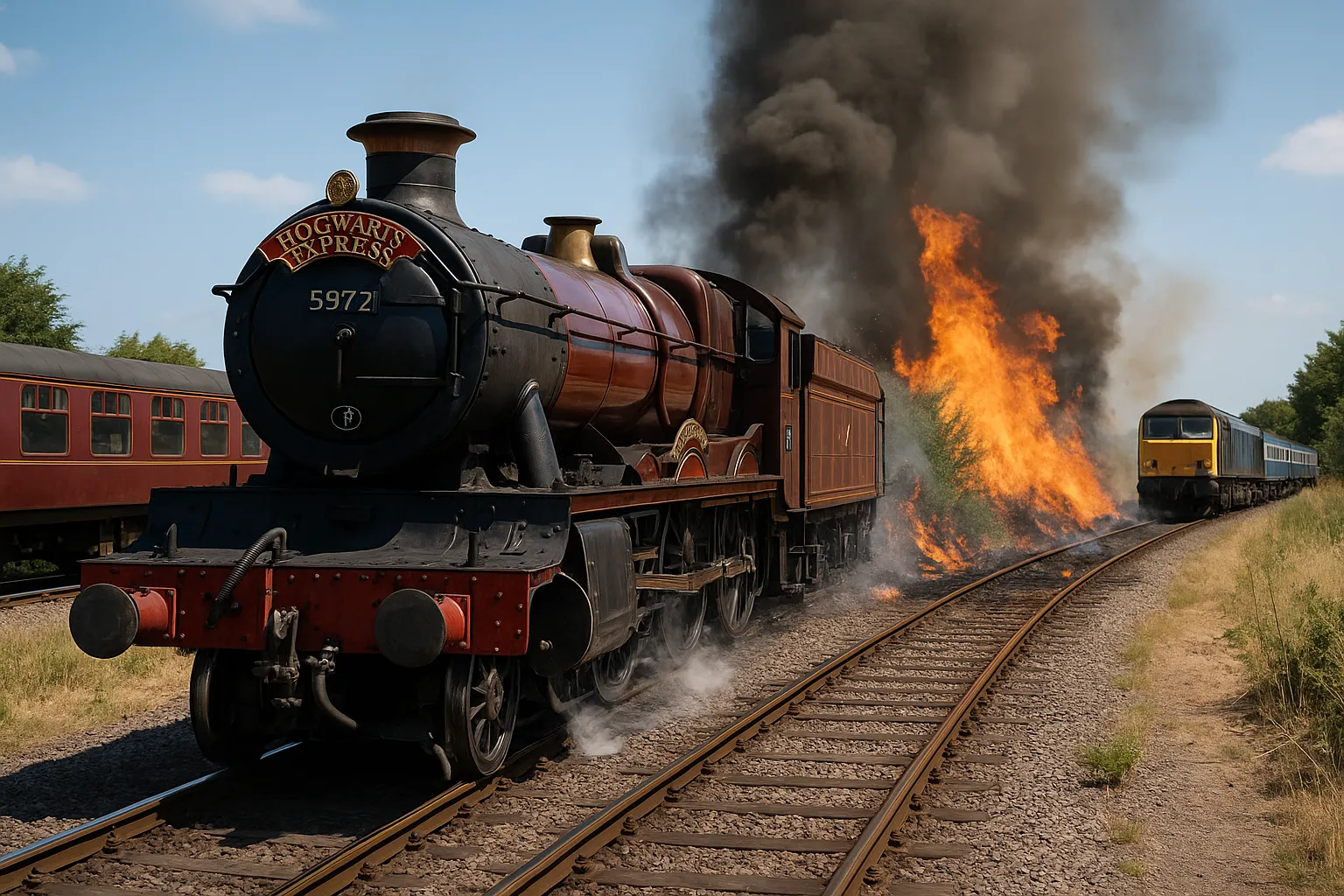
A comprehensive ban on steam locomotives has been implemented across the UK, affecting beloved rides such as the renowned Hogwarts Express. This decision by Network Rail arises from increased health and safety concerns linked to the ongoing heatwave, which raises risks of wildfires due to potential sparks emitted from train operations.
The announcement, which has left many rail enthusiasts disappointed, comes just days before the planned reopening of these classic steam journeys. One frustrated ticket holder expressed his dismay following the cancellation of his journey on the picturesque Jacobite Steam Train. He lamented, “Poor show for the price. No steam train the day we went and regular blue and white intercity carriages. A lot of disappointed kids the day we were there. Nothing Hogwarts about it.”
Network Rail’s move follows an incident in which sparks from a steam train were believed to have ignited a fire near Cheshire, resulting in significant disruptions. Specifically, the blaze delayed train services by approximately 4,800 minutes, causing substantial frustration for passengers, many of whom were left stranded. The steam train, after being incapacitated, was towed by a diesel engine for a distance of 70 miles back to Crewe.
In light of the incident and the prevailing hot, dry conditions, Network Rail announced that steam engines would be prohibited from operating on the tracks for at least a week. A spokesperson elaborated on the rationale behind this precautionary measure, stating, “The current long periods of hot dry weather have increased the risk of wildfires across the country. As a result, we have asked charter operators to replace steam engines with diesels in line with our steam charter fire risk policy.”
Operators have been directed to utilise diesel locomotives instead of steam, effectively mitigating the risk associated with burning embers and cinders emitted during steam operations. This adjustment is not limited to the Hogwarts Express, as other iconic services, including the luxurious Northern Belle, have also been impacted by the ban. Initially part of the prestigious Orient Express collection, the Northern Belle will now also be operating with heritage diesel locomotives to ensure safety.
A spokesperson for the Northern Belle acknowledged the disappointment caused to passengers. “Obviously this is a big disappointment for both us and many of our passengers,” they stated. “But there is a very high fire risk after all the recent hot weather, so we are using a heritage diesel locomotive instead.” To compensate for the inconvenience, the company is offering a £50 refund in addition to a complimentary cocktail for affected passengers.
The transition from steam to diesel not only affects the scenic routes often cherished by families and tourists but also highlights broader concerns regarding climate change and environmental safety. As the UK experiences unprecedented summer heat, the implications of such weather patterns become increasingly evident, raising questions about the sustainability and safety of traditional steam transport.
Rail enthusiasts, alongside families looking forward to nostalgic journeys, have taken to social media to express their discontent and share tales of their experiences. Many have emphasised the importance of maintaining these heritage services while balancing safety and environmental concerns.
This ban serves as a stark reminder of the ongoing challenges posed by extreme weather events, which have been recurrently linked to climate change. Efforts to preserve historical forms of transport must now navigate a landscape fraught with potential natural hazards. In a society that increasingly values eco-friendly alternatives, the need for innovation in transport safety becomes paramount.
As discussions surrounding this nationwide steam ban unfold, both the rail industry and regulators must consider a pathway that allows for both the preservation of heritage and the protection of public safety. Future strategies may involve incorporating advanced technologies into steam operations to greatly reduce fire risks, allowing classic journeys to recommence without compromising environmental stability.
In conclusion, while the immediate focus is rightly on ensuring public safety during this extreme heatwave, the hope remains that iconic steam experiences like the Hogwarts Express and Northern Belle can eventually return to the rails. Yet, as rail operators adapt to these evolving challenges, the nostalgia associated with steam trains may become juxtaposed against the pressing requirements for fire safety in a changing climate.
Our Thoughts
The recent ban on steam trains, including the iconic Hogwarts Express, highlights lapses in risk assessment and safety management. Prior to the heatwave, Network Rail could have implemented a clearer monitoring system for environmental conditions, in line with the Health and Safety at Work Act 1974, which emphasizes the duty to manage risks. The sparks from the steam locomotives that ignited a fire near Cheshire indicate a failure to adequately address fire hazards associated with this mode of transport, contravening the Regulatory Reform (Fire Safety) Order 2005.
Key lessons include the necessity of conducting thorough risk assessments and adhering to safety protocols during extreme weather conditions. Operators should have adopted a proactive approach, utilizing the steam charter fire risk policy more effectively to mitigate risks before incidents occur.
To prevent similar occurrences, operators should ensure robust training on emergency procedures for staff and regularly review their operational practices, particularly during adverse weather. Transitioning to lower-risk alternatives, such as diesel engines during hot spells, although a response to the current threat, should have been part of a contingency plan in anticipation of changing weather patterns.