
















Story Highlight
– Digital technologies improve patient safety in GP practices.
– 46% reduction in medication errors with digital tools.
– Non-medication safety processes improved by 77%.
– PINCER programme aids in preventing incorrect prescribing.
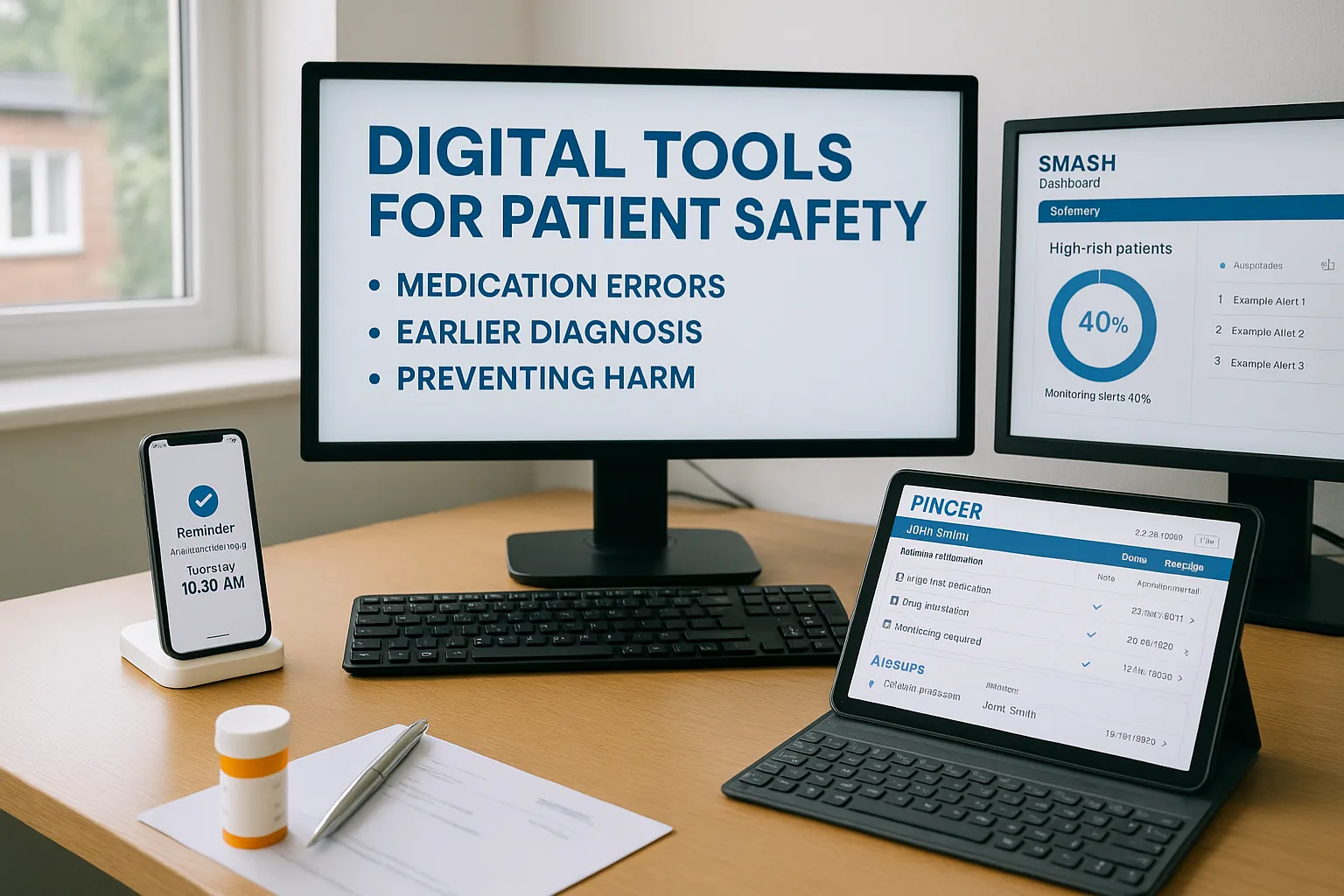
– SMASH tool achieved 40% reduction in hazardous prescribing.
Full Story
A comprehensive investigation led by researchers from The University of Manchester has revealed that the implementation of digital technologies within general practice can markedly enhance patient safety. This study, the most extensive of its kind to date, evaluates data gathered from 74 clinical trials spanning a period of 23 years and has been published in the journal BMC Medicine. The research was financially supported by the National Institute for Health Research (NIHR) Patient Safety Research Collaboration (PSRC) in Greater Manchester.
The findings underscore the profound impact that digital tools can have in primary care settings. The study indicates that the integration of various digital patient safety solutions yields considerable benefits, particularly when features such as automated prescribing, missed test alerts for healthcare professionals, and digital communication systems for patients are combined.
Among the significant results of the study, it was reported that digital interventions can lead to substantial enhancements in medication safety, achieving a 46% improvement compared to traditional care methods. This reduction specifically targets high-risk prescribing practices and dosing errors, thereby safeguarding patient health.
Moreover, non-medication safety processes saw a remarkable increase, with improvements of 77% compared to standard care protocols. This enhancement includes an acceleration in diagnostic procedures and more prompt laboratory monitoring. Additionally, the occurrence of physical patient harm and adverse events diminished by 17%, a crucial finding that highlights a decrease in unnecessary hospital admissions, asthma crises, and serious adverse drug reactions.
The study identified several digital tools that have proven effective in boosting patient safety, optimising communication, and facilitating informed treatment decisions while simultaneously shortening diagnostic timelines. Notably, the PINCER programme, developed in the UK, stands out as a key digital tool. This initiative leverages electronic health records to assist GPs and pharmacists in recognising and preventing incorrect prescribing practices. The PINCER programme has demonstrated that digital systems can enhance safety on a broad scale while aiding in the effective allocation of NHS resources.
The successful implementation of PINCER has paved the way for new digital solutions, including the SMASH (Safe Medication Audit and Safety in Healthcare) dashboard. This initiative is the result of collaborative efforts between researchers from the NIHR PSRC: Greater Manchester, NHS partners, and private sector stakeholders. SMASH serves as a digital tool designed to assist clinicians in pinpointing and mitigating medication risks promptly and consistently. An early assessment conducted in Salford, which encompassed over 235,000 patients across 43 GP practices, revealed a striking 40% reduction in instances of hazardous prescribing over the course of just 12 months.
By incorporating evidence-based safety indicators into routine clinical operations, SMASH empowers healthcare providers to swiftly identify and address potential medication-related risks. The effectiveness of these digital systems points towards a future where enhanced patient safety measures can be embedded into everyday healthcare practices.
The research findings indicate that the most significant improvements in patient safety stem from integrated systems that amalgamate numerous functionalities. This includes the employment of Clinical Decision Support Systems (CDSS), which provide real-time alerts to GPs regarding potential drug interactions or outstanding tests. When CDSS are used in conjunction with Audit and Feedback (A&F) mechanisms—allowing healthcare facilities to routinely evaluate their safety metrics—the results tend to be even more pronounced.
Furthermore, tools featuring patient-centric components, such as automated text message reminders or accessible patient portals, were noted to have a beneficial effect on non-medication safety. These enhancements significantly increased the likelihood of patients receiving timely investigations and follow-up care, with patients being nearly three times more likely to experience improved response times in their treatment processes.
Expert commentary on these findings suggests that the incorporation of such digital technologies into everyday clinical practice could herald a new era of patient care, where the risks associated with medication management and diagnostic delays are substantially mitigated. Incorporating technology not only streamlines communication between healthcare providers and patients but also fosters a more collaborative approach to healthcare delivery, ultimately leading to enhanced health outcomes.
As the healthcare landscape continues to evolve, the insights garnered from this research could serve as a cornerstone for future policy developments aimed at improving patient safety across primary care settings. The success of digital innovations, such as PINCER and SMASH, could thus provide a robust framework for the ongoing enhancement of patient safety and the efficient use of healthcare resources, ensuring a more resilient and responsive NHS.
Our Thoughts
The article highlights the positive impact of digital technologies in GP practices on patient safety, particularly in reducing medication errors and improving diagnostic processes. To further enhance safety and prevent incidents, practitioners should implement comprehensive digital systems that integrate various features, such as Clinical Decision Support Systems (CDSS) and patient communication tools, ensuring a more robust approach to safety management.
Key safety lessons include the necessity of ongoing training for staff on digital tools and their proper usage to mitigate risks associated with human error. Furthermore, adherence to the Health and Safety at Work Act 1974 mandates that employers must ensure, as far as is reasonably practicable, the health and safety of their employees and others affected by their work activities.
The article suggests that failure to utilize available digital interventions like the PINCER and SMASH programmes may constitute a breach of the Management of Health and Safety at Work Regulations 1999, which require risk assessments to include a consideration of available technology that could enhance safety.
To prevent similar incidents, ongoing evaluation of digital safety tools and their integration into routine practice must be prioritized, alongside organizational strategies that foster a culture of safety within healthcare settings.