














Story Highlight
– UK faces fifth heatwave, temperatures up to 33C expected.
– Health risks with medications in hot weather announced.
– Proton pump inhibitors linked to skin reactions from sun.
– Yellow heat health alerts issued across several regions.
– Record heatwaves caused over 2,800 excess deaths this year.
Full Story
A prominent medical authority in the UK has raised alarms regarding the impact of soaring temperatures on certain medications as the country prepares for a potentially intense heatwave. Temperatures could escalate to as high as 33 degrees Celsius in some regions on Sunday. This marks the onset of the fifth heatwave anticipated over the week, with health alerts already established across various parts of the nation.
As of 9am on Saturday, yellow heat health alerts were put in place as temperatures surged. Regions in the South and South East recorded temperatures nearing 28 degrees Celsius, while much of central England experienced highs around 27 degrees Celsius.
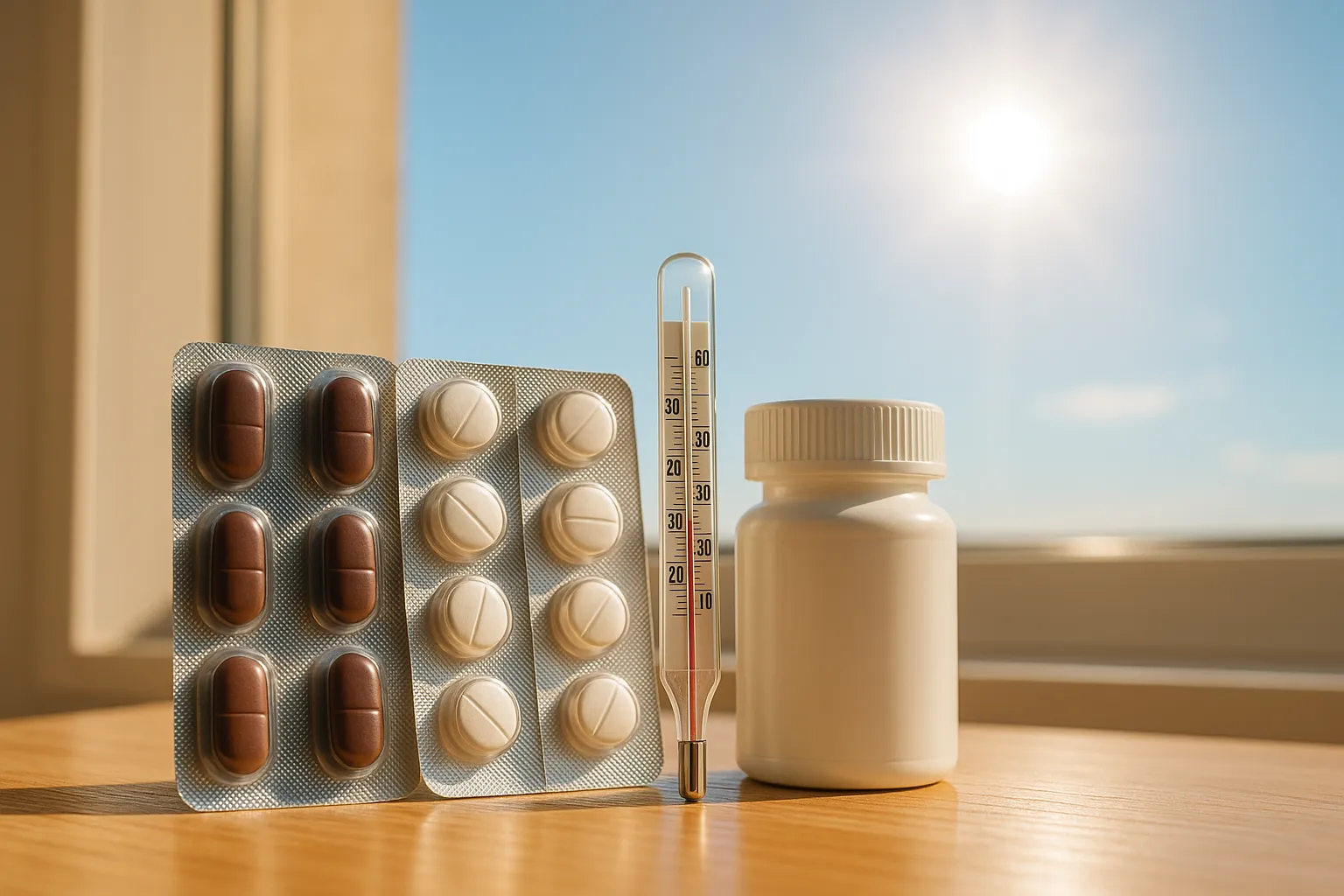
Authorities in health sectors have expressed concerns regarding the implications of heat on the effectiveness and safety of certain medications. Notably, common pain relievers such as ibuprofen might inhibit the body’s ability to regulate temperature, remain hydrated, and manage exposure to high levels of sunlight. Dr Alison Cave, who serves as the chief safety officer at the Medicines and Healthcare products Regulatory Agency (MHRA), highlighted specific medications of concern. She noted that “Proton pump inhibitors (PPIs), commonly used to treat acid reflux and heartburn, have also been linked to a very low risk of a lupus-like skin reaction triggered by sun exposure, and common painkillers such as ibuprofen and naproxen may also increase sun sensitivity.”
The prediction of high temperatures extends particularly to the southern and southeastern parts of England, where the Met Office anticipates temperatures could soar into the low thirties, reaching as high as 33 degrees Celsius in the South East. Despite the rising heat, the Met Office has forecast periods of rain in Scotland, Northern Ireland, and northern England, as well as sporadic showers potentially emerging in the South East. However, the majority of the country is expected to enjoy dry and sunny conditions, with many areas seeing temperatures in the upper twenty degrees Celsius range.
Given the extreme temperatures, the Fire Severity Index has indicated that the risk of wildfires will be exceptionally severe across almost all of East and South East England on Sunday. This “exceptional” severity categorisation represents the index’s highest warning level. The index analyses conditions such as rainfall, temperature, and humidity to evaluate the potential severity of wildfires should they occur, although it does not measure the likelihood of such fires starting in the first place.
In response to the impending heatwave, the UK Health Security Agency (UKHSA) has issued yellow heat health alerts extending to regions including the East Midlands, West Midlands, South East, South West, East of England, Yorkshire and the Humber, and London. These alerts will remain active until 9pm on Tuesday and serve as a warning that the extreme heat may adversely impact public health and place additional strain on healthcare facilities.
Furthermore, the Met Office has indicated that heatwave conditions are likely to persist into the following week, with predictions of temperatures reaching 36 degrees Celsius in areas of East Anglia and the South East by Thursday. Earlier heatwaves this summer, particularly those in May and June, were linked to over 2,800 excess fatalities. Additional heatwaves in July have contributed to ongoing drought conditions and increased wildfire incidents.
In light of these challenges, the National Trust has initiated a petition urging the Government to prioritise climate change mitigation as a national imperative. The overarching message is a call for comprehensive action to address the underlying factors contributing to such extreme weather events and their associated public health ramifications.
As the UK braces for the upcoming heat, citizens are urged to stay informed and take precautionary measures to protect their health during this sweltering period. Emphasising the need for awareness around medication and temperature regulations will be crucial as individuals navigate the health implications of high temperatures in conjunction with their treatment regimens.
Our Thoughts
To mitigate risks associated with medication during heatwaves, several preventive measures could be implemented. Firstly, enhanced public information campaigns before predicted heatwaves should emphasize the importance of recognizing the effects of heat on medication, particularly for substances like ibuprofen and PPIs that can exacerbate heat-related issues.
Improved labeling on medication regarding heat sensitivity could also help users make more informed choices. Additionally, healthcare providers should be prompted to include heat-related risks during patient consultations, especially for vulnerable populations.
Regarding regulations, a potential breach could stem from a lack of adequate risk communication under the Health and Safety at Work etc. Act 1974, which mandates employers to ensure the health and safety of employees and the public. In this context, failing to address how environmental factors (like extreme heat) interact with medication use represents a gap in maintaining safety standards.
Lastly, similar incidents can be avoided through routine monitoring of public health and environment interactions, alongside establishing clear guidelines for pharmaceutical companies regarding advising users on heat sensitivities associated with their products.