






Story Highlight
– Government warns to view eclipse safely to avoid blindness.
– Partial solar eclipse on 12 August; 1999’s most complete.
– South West sees up to 95% sun coverage.
– Ordinary sunglasses insufficient; special eclipse glasses required.
– Royal Observatory to livestream eclipse; peak at 7:05pm.
Full Story
A solar eclipse is set to cast its shadow across the UK today, 12 August, with significant portions of the sun obscured as the moon moves between it and the Earth. This astronomical event is anticipated to be the most complete eclipse experienced in the UK since 1999, according to Royal Museums Greenwich, which manages the Royal Observatory.
In the South West region, observers can expect up to 95% of the sun to be concealed by the moon, while those in London can look forward to approximately 90% coverage. As excitement builds ahead of this celestial phenomenon, the government has issued stern warnings regarding safely viewing the eclipse to prevent potential eye injuries.
The UK Health Security Agency (UKHSA) has cautioned the public that serious eye damage can occur within moments if appropriate safety measures are not adhered to. Their guidance emphasises the importance of using specific protective gear when observing the sun during the eclipse. Traditional sunglasses, regardless of how dark the lenses might be, are not satisfactory for protecting the eyes during this event. Instead, it is recommended that viewers obtain dedicated eclipse glasses that conform to safety standards, notably marked by the ‘ISO 12312-2’ or ‘ISO 12312-2:2015’ certifications.
Experts underscore the risks associated with attempting to look directly at the eclipse. “During an eclipse, the sun appears dimmer than usual,” a spokesperson explained. “This reduced brightness can deceive the eyes, impairing the natural reflex to look away and resulting in intense sunlight damaging the retina.” Compounding this risk is the fact that any harm to eyesight may occur without pain, meaning affected individuals might remain unaware of their injury until substantial damage has been done.
Historical data underscores these concerns; following the eclipse in 1999, the Royal College of Ophthalmologists documented around 70 cases of vision impairment associated with improper viewing. Alarmingly, approximately 40% of those affected had gazed at the eclipse for less than a minute, highlighting the speed at which eye damage can occur.
In light of these warnings, the agency has discouraged the reuse of older eclipse glasses. “Be cautious if you’re planning to use an old pair of eclipse glasses,” advised Royal Museums Greenwich. If the lenses are scratched or creased, the protective qualities may be compromised, which could result in serious eye injury. “Don’t take risks – buy a fresh pair,” they reiterated.
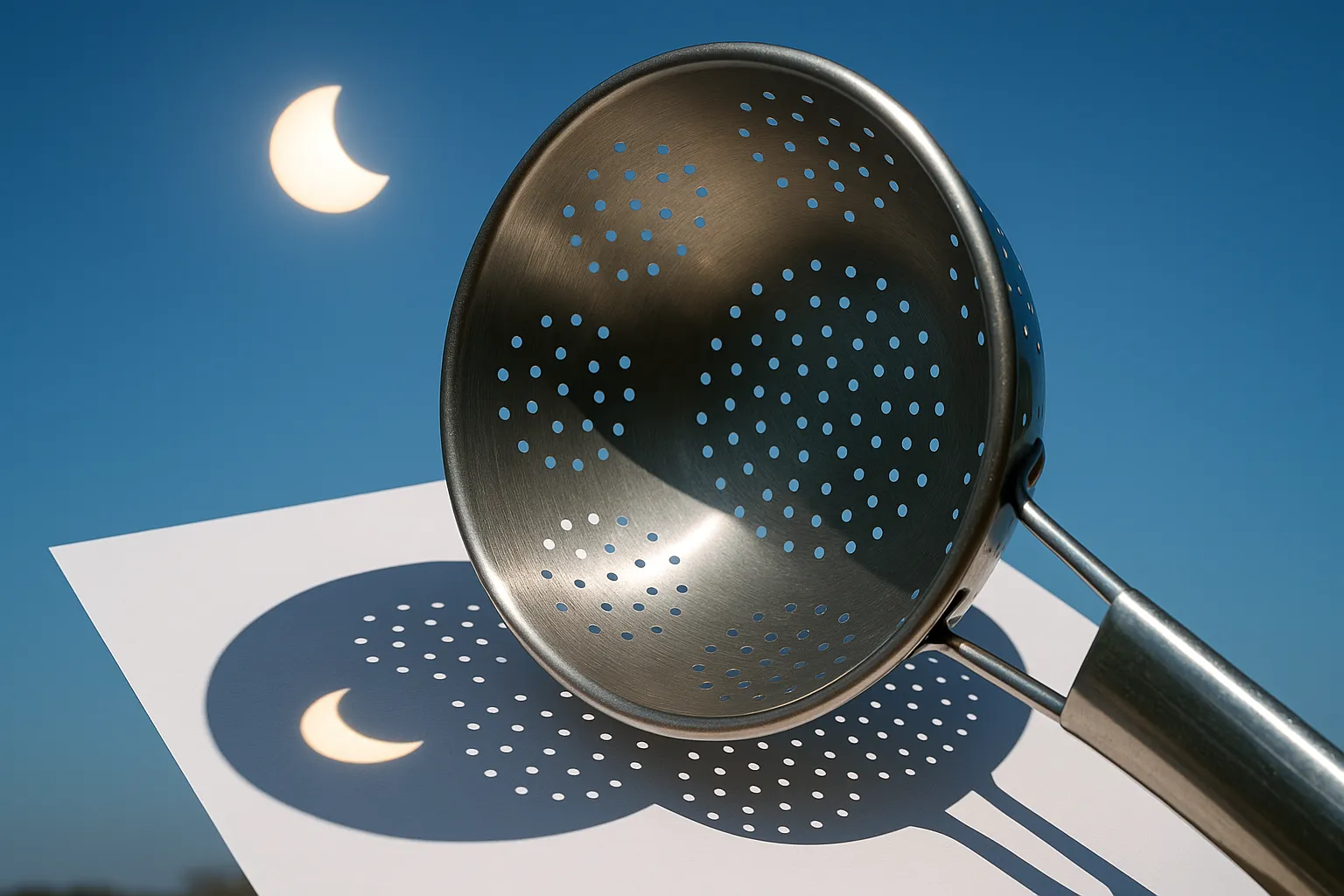
For those unable to secure eclipse glasses before the event, the UKHSA has provided alternative methods to safely witness the eclipse. One option is to create a pinhole viewer or projector. This can be achieved by using common household items, such as a colander, to cast shadows that depict the eclipsed sun. Similarly, observers can find natural pinhole projectors in their environment—gaps between leaves in trees can create shadow images on the ground.
As the phenomenon unfolds, Royal Observatory will provide a livestream of the event for those who wish to watch it online. For on-site viewers, the timeline for the eclipse begins in Scotland at 6.08 pm when the phenomenon first begins with what is termed ‘first contact’. Observers in Manchester and Liverpool will experience this stage at 6.13 pm, while those in London, Bristol, and Cardiff will see it at 6.17 pm. In Cornwall, ‘first contact’ will occur at 6.18 pm.
The apex of the eclipse is expected to take place between 7.05 pm and 7.16 pm, contingent upon geographic location, with the entire event concluding for UK observers by 8.10 pm.
As the day approaches, excitement surrounding the solar eclipse continues to grow, with many eager to witness a remarkable natural occurrence. However, individuals are reminded of the paramount importance of safeguarding their eyesight during the event, echoing the government’s message of safety first amidst the anticipation of the skies darkening.
Our Thoughts
To prevent eye injuries during the solar eclipse, several key safety measures could have been implemented. The government and health agencies should have coordinated a more comprehensive safety awareness campaign ahead of the event, emphasizing the dangers and required precautions. Ensuring that guidance on using appropriate eye protection, such as ISO 12312-2 certified eclipse glasses, was widely disseminated could have reduced the likelihood of misuse of ordinary sunglasses. Additionally, local authorities could host educational sessions or workshops regarding safe viewing methods and the risks associated with improper viewing techniques.
Relevant UK regulations that may be implicated include the Health and Safety at Work Act 1974, which mandates employers to ensure the health and safety of the public in relation to work activities. Furthermore, the Management of Health and Safety at Work Regulations 1999 requires assessing risks and implementing suitable measures to mitigate them, which could apply to events involving public gatherings.
The primary lessons learnt include the importance of proactive communication about safety risks during astronomical events and ensuring the public is equipped with the right knowledge and tools for safe viewing, thereby potentially preventing similar incidents in the future.