











Story Highlight
– Man in coma after spider bite led to severe infection.
– Doctors warned of possible arm amputation due to infection.
– Peter endured four operations for necrotising fasciitis recovery.
– He and wife lost over 10 stone after lifestyle change.
– Now healthy, they support charity through sponsored events.
Full Story
A man from the UK has experienced a life-altering health crisis after being bitten by a spider in his own home. Peter Murphy, a 61-year-old health and safety manager based in Mansfield, found himself in a precarious situation that saw him slipping into a coma for four days, ultimately leading to a significant lifestyle transformation.
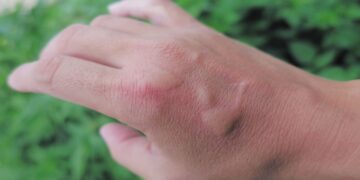
The troubling incident began when Murphy discovered an unusual spider on his bed. Taking what he believed to be the right action, he carefully removed the arachnid from his bedroom, placing it outside without a second thought. However, the following day brought discomfort that would escalate into a grave medical emergency. Murphy noticed swelling and redness around his right wrist, and soon his condition deteriorated to the point where he was struggling to speak.
Recognising the severity of his symptoms, his wife Toni, aged 62, rushed him to the hospital. There, doctors assessed the situation and informed her that the best course of action was to place Peter into a medically induced coma due to the advancing infection. The situation grew dire, with medical professionals cautioning Toni that if the infection spread further up Peter’s arm, amputation would become a necessity.
Reflecting on those dark moments, Peter recalled: “At this point, my life was flashing before my eyes. I turned to Toni, managed a smile, and said: ‘I don’t think I’m going to make it through this. This could be goodbye.’” The emotional toll of that experience was profound as he faced the terrifying uncertainty of his fate.
Describing the spider that triggered this ordeal, Murphy noted it had a “see-through skeletal body with red eyes.” Following his four-day coma, medical examinations revealed he had contracted necrotising fasciitis, commonly known as a flesh-eating infection. Alongside this, he developed severe cellulitis and sepsis, complications he was forced to confront during what he termed a ‘fight for life’.
Adding to the heaviness of his hospital stay, Peter was met with the devastating news of his brother’s death just a week before his own health crisis, and shortly after awakening, he learned that his sister had also been admitted to the same hospital. He poignantly recounted a farewell he shared with her: “When talking to one of the nurses, I remembered my sister had just been admitted, too. After checking, she found out she was in the ward right above me. When I got to her room, I found all the family around her hospital bed, as she was not in a good way. I suppose, in my mind, I said my goodbyes, and that was the last time I saw her, as she passed away shortly afterwards.” He viewed the spider’s bite as a twisted piece of fate that brought him closer to his sister during her final moments.
The path to recovery was long and arduous. Following multiple surgical procedures, including skin grafts, Peter dedicating himself to physiotherapy, striving to regain movement in his injured hand and fingers. As the weeks unfolded, he began to rebuild his strength, but he also faced the stark reality of his health post-hospitalisation. Weighing in at 18 stone 7lbs before his medical crisis and having gained an additional two stone during his recovery, he discovered that everyday activities became more challenging, making him out of breath and causing sleep disturbances.
This realisation spurred Peter and Toni into urgent action regarding their health. The couple, both recognised for their love of hearty meals, found themselves reevaluating their dietary choices, which primarily consisted of full English breakfasts, takeaway kebabs, and sugary snacks. Opting for healthier alternatives, they integrated meals such as poached eggs, tuna salad, and low-calorie snacks into their routine.
By 2025, the couple took a decisive step to a healthier lifestyle by joining Slimming World, a weight loss support group. Their determination bore fruit as they collectively managed to shed over ten stones within the year; Peter lost an impressive 6 stone 9 lbs while Toni lost 3 stone 7 lbs.
The change brought a renewed zest for life. They embraced more active hobbies, including playing badminton three times a week. Peter shared his prior doubts about sustaining weight loss, saying, “I was very sceptical at first, as I have lost weight many times during my life and always put it back on.” Nevertheless, Toni’s resolve played a crucial role in their success. “Today, all my symptoms have disappeared, and I’ve fully recovered,” he said, reflecting on how it feels to emerge from such a dark period. “We were in our sixties, growing old together. But now, it feels like we’re staying young together. Joining Slimming World was the best thing we ever did.”
As they continue their healthy journey, Peter urges others to focus not solely on weight loss, but rather on the quality of food consumed daily. “It’s not too late to make that change. Reflecting back on what happened puts me through every emotion [possible]. From thinking that I might not see my family again to the pain of rehabilitation,” he said.
Peter and Toni are now keen advocates for Slimming World’s charity, SMILES, which supports various health-related causes. Their efforts have already raised £500 through sponsored events, further enhancing their commitment to healthy living and community support. Their journey, marked by struggle and triumph, serves as a compelling reminder of resilience and the capacity to reclaim one’s health against all odds.
Our Thoughts
The incident involving Peter Murphy highlights several safety lessons and potential preventive measures that could align with UK health and safety legislation. Firstly, there should be increased awareness regarding the risks associated with animal bites, including spiders, particularly for those with specific health conditions that may heighten susceptibility to infections.
Employers and public health bodies can foster safety through educational campaigns that inform the public about the proper handling of wildlife and the symptoms of bite-related infections, which could encourage timely medical intervention. The Control of Substances Hazardous to Health (COSHH) Regulations could also be considered in such instances to assess and manage biological risks posed by wildlife.
Moreover, establishing clear guidelines and responses for animal bites could help mitigate severe outcomes. In this case, Mr. Murphy could have been advised to seek medical attention promptly after the bite, emphasizing prompt reporting and treatment, as outlined in the Reporting of Injuries, Diseases and Dangerous Occurrences Regulations (RIDDOR).
To prevent similar incidents, enhancing public awareness about the importance of seeking medical advice for unusual or severe reactions post-bite is crucial, alongside implementing community health initiatives focused on wildlife safety.