















Story Highlight
– NHS Lothian requires £90m for Royal Infirmary upgrades.
– £86m set aside by Consort for maintenance improvements.
– Significant fire safety and system upgrades still needed.
– PFI contract costs taxpayers over £1bn by December 2024.
– Experts criticize handover deal as insufficient for public needs.
Full Story
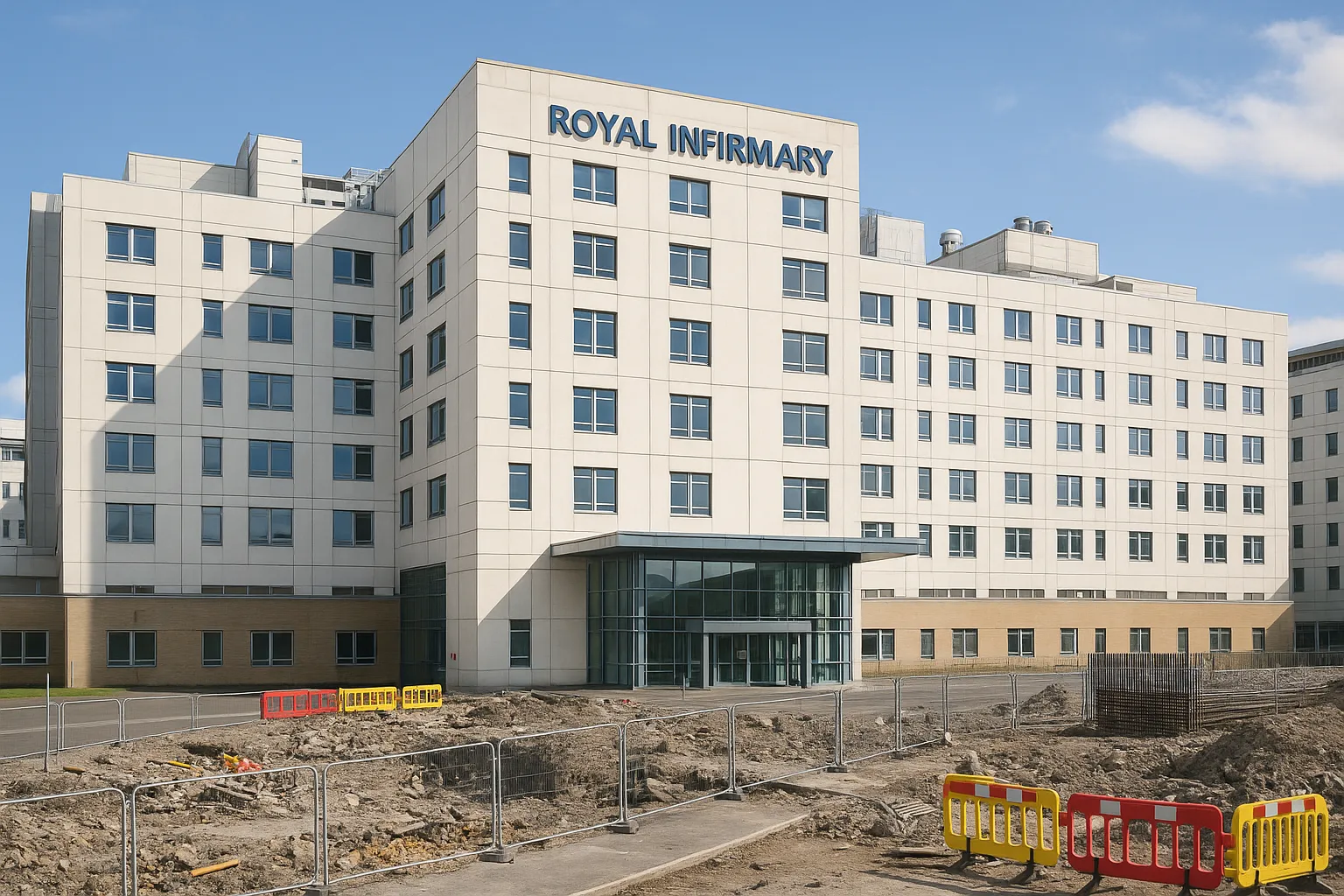
Tens of millions of pounds in taxpayer funding are anticipated to be necessary for the Royal Infirmary of Edinburgh (RIE) as it transitions to public ownership next year. This revelation underscores ongoing concerns regarding the hospital’s infrastructure and maintenance issues.
Constructed in 2002 under the Private Finance Initiative (PFI), the RIE was built and is managed by Consort Healthcare, a private consortium that received approximately £1 billion to construct the facility and maintain it for a duration of 25 years, after which it is to be handed back to the NHS.
NHS Lothian, which oversees the hospital, has been embroiled in a protracted four-year dispute with Consort concerning maintenance standards and obligations. However, an agreement has now been reached, whereby Consort is expected to allocate up to £86 million for essential upgrades. Despite this arrangement, NHS Lothian has expressed concern that this amount will likely be “well short” of the actual financial requirements.
The financial assessment conducted by NHS Lothian highlights that compliance with safety regulations has necessitated numerous upgrades in recent years, particularly as the hospital has faced several enforcement notices due to safety concerns from Scotland’s fire service. The estimated cost to address these safety issues alone is projected to exceed £90 million. Required enhancements include improvements to lighting, ventilation, and electrical systems. Some remedial work commenced earlier, while other tasks will extend beyond the scheduled handover date to NHS Lothian.
Experts in healthcare finance have raised scepticism regarding the benefits this deal presents for taxpayers, suggesting that it represents an inadequate response to significant concerns that have persisted over time. They have commented that the agreement was “too little, too late”. This reflects a lack of transparency about what the public might be receiving in return for their investment, particularly considering that the costs associated with the PFI scheme, initiated under Tony Blair’s Labour government, are anticipated to surpass £1 billion by the time it concludes in December of the upcoming year.
Since the RIE’s inception, maintenance-related difficulties have been an ongoing theme, with notable instances such as multiple power outages shortly after its opening in 2003. NHS Lothian furnished Consort with a detailed list of necessary infrastructure updates in 2022.
According to reports, the multitude of infrastructure issues that have arisen in recent years has prompted what is known in PFI terms as a “serious issue event.” This clause would have provided NHS Lothian with the option to terminate its contract with Consort and seek a different service provider. Ultimately, however, the decision was made against pursuing this option due to the potential disruption it could cause to clinical care and ongoing maintenance programmes.
As part of the recently negotiated deal, while Consort will continue to receive monthly PFI payments until December 2027, the private consortium is prevented from distributing dividends to shareholders or incurring further debts. The amount designated for addressing outstanding maintenance, termed the “Available Sum,” is set at £86.3 million. However, it is vital to note that £23.4 million of this sum has already been allocated for immediate improvements.
A report to NHS Lothian’s finance committee indicated that the funds available might fall significantly short of what is necessary for required fire safety works. It highlighted that the projected expenditure, when considered alongside current known requirements, could reveal a deficit of up to £9.7 million. This figure does not account for additional costs related to fire safety measures, which the report indicates could greatly surpass the funds allocated.
Anne Stafford, a professor of accounting and finance at the University of Manchester, has commented on the inadequacy of the agreement, stating it underscores a case of “too little, too late.” Prof. Stafford pointed to the accumulation of extensive infrastructure risks and maintenance liabilities that had reached critical levels, with essential systems, like fire safety and ventilation, being only addressed in the final years leading up to the transition back to public sector management.
Stafford’s analysis suggests that a considerable portion of the financial burden associated with restoring the hospital to an acceptable standard will ultimately fall on the shoulders of the public sector after the conclusion of the contract. This raises significant concerns regarding the additional pressure on public finances and the potential delays it could impose on broader service improvements throughout the health system.
Craig Marriott, the Director of Finance at NHS Lothian, provided further insight into the assessment conducted in 2022, which aimed to ensure that necessary contractual obligations would be fulfilled before the handover. Marriott explained that this assessment revealed several shortfalls in fire safety measures, which were communicated to the Scottish Fire and Rescue Service, Consort, and various stakeholders.
After extensive discussions informed by legal, technical, and financial expertise, NHS Lothian settled on the handback agreement as the most prudent option available, notwithstanding the associated risks, which included potential disruption to patient services.
While it is acknowledged that the funding agreed upon may not comprehensively cover all identified issues, Marriott asserted that it represents a significant investment in the RIE that would likely not have been available otherwise.
Consort Healthcare, when approached for comment, declined to provide a statement on the matter. As the situation develops, stakeholders continue to watch closely, mindful of the critical importance of ensuring that Edinburgh’s Royal Infirmary is equipped to meet the needs of its patients while navigating the complexities of its financial and infrastructural challenges.
Our Thoughts
The issues arising from the Royal Infirmary of Edinburgh (RIE) highlight significant failures in health and safety practices concerning maintenance and fire safety regulations. To avoid the current situation, a proactive approach to regular risk assessments and maintenance checks could have been implemented, adhering to the Regulatory Reform (Fire Safety) Order 2005 and the Management of Health and Safety at Work Regulations 1999.
Key lessons involve the importance of continuous evaluation of infrastructure to ensure it meets safety standards and the need for effective communication between public health bodies and private contractors. The delays in addressing maintenance issues suggest breaches of the duty of care under the Health and Safety at Work Act 1974, jeopardizing the safety of occupants.
Furthermore, the failure to act on the “serious issue event” in the PFI contract could point to a lack of robust contractual enforcement mechanisms, resulting in deferred responsibilities that now burden the public sector. Future incidents could be mitigated by ensuring thorough and regular inspections, and a more responsive framework to address safety concerns promptly, including the establishment of clearer accountability mechanisms for private partners involved in public health infrastructure.