














Story Highlight
- Edge Hill hosted the Foundation to Frontline conference for medical training.
- The conference focused on patient safety and compassionate practice.
- Participants included medical schools, healthcare organisations, and patient safety leaders.
- Workshops aimed to improve handling of patient encounters and complaints.
- Speaker Paula Sussex emphasised the importance of listening to patients.
Full Story
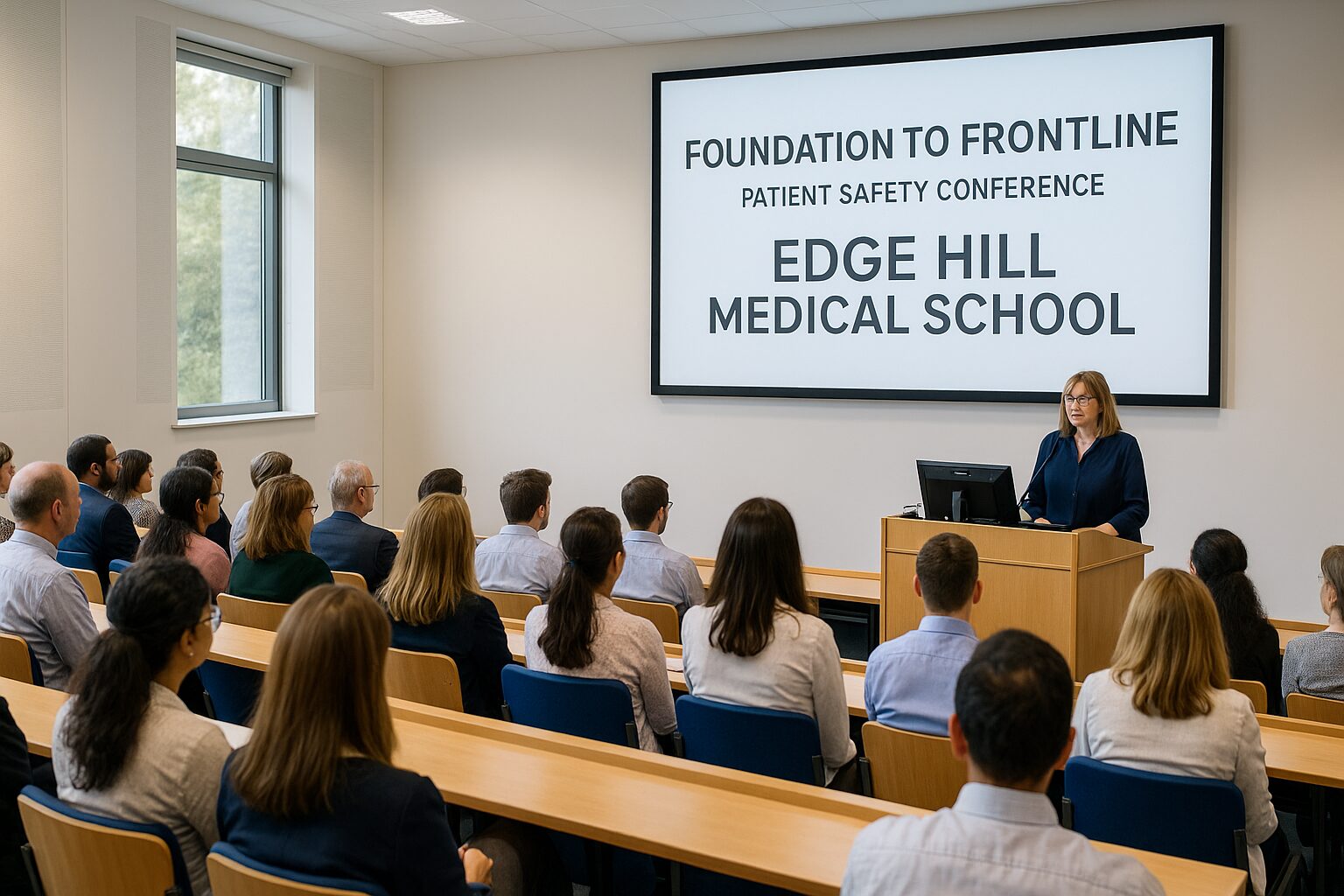
Medical training for future doctors now encompasses essential skills for managing patient interactions, as highlighted during the recent Foundation to Frontline conference at Edge Hill University’s Faculty of Health Medical School. This significant event, dedicated to improving the human side of healthcare, brought together medical schools, healthcare organisations, patient safety leaders, educators, and aspiring doctors.
Organised in collaboration with the Parliamentary and Health Service Ombudsman (PHSO) and supported by The Della Fish Foundation, the conference focused on empowering students and Foundation doctors transitioning from academic training to practical roles in healthcare. The primary aim was to enhance patient safety and compassionate practice, providing a platform for sharing best practices on effectively managing challenging patient encounters and formal complaints.
Participants learned strategies to approach conflicts with professionalism and empathy, reinforcing Edge Hill’s mission to develop patient-centred leaders in healthcare. Attendees reported gaining actionable insights to deliver high-quality care in the evolving medical landscape.
The conference featured presentations from the PHSO, the General Medical Council (GMC), and various stakeholders, emphasising the necessity of incorporating patient feedback into medical education. Dr June Jones, project lead and senior lecturer in Medical Education at Edge Hill, remarked on the significance of integrating patient concerns into the training process, stating, “This event demonstrated the power of bringing together patients, educators, healthcare organisations and regulators to support future doctors at a pivotal stage in their careers.” She added that such initiatives foster professional resilience and a culture of continuous improvement within healthcare.
The day also highlighted the ongoing collaboration between Edge Hill Medical School and the PHSO, featuring immersive workshops on practical preparation and self-regulation. The conference concluded with a panel discussion aimed at fostering a network of professionals dedicated to enhancing education and resources for emerging healthcare workers.
Paula Sussex CBE, Parliamentary and Health Service Ombudsman, commented on the importance of patient communication. She stated, “A failure to listen to the patient voice is the most common theme we see in health complaints referred to the Ombudsman” and highlighted the need for comprehensive training in such areas to better equip future clinicians.
Source: read the original report.
What this means for your site
Although the article discusses medical training rather than a specific incident or workplace safety issue, it provides valuable insights into enhancing patient safety and communication in healthcare settings. A proactive approach to integrating patient feedback into training could prevent misunderstandings and improve care quality. To better prepare medical professionals, training programs could incorporate elements that align with the Health and Safety at Work etc. Act 1974, which emphasizes the duty of care towards patients as part of health and safety obligations.
Healthcare organizations should consider implementing structured communication training that covers active listening and empathy. This would not only align with the aims of the General Medical Council but also adhere to the principles of the Management of Health and Safety at Work Regulations 1999 by fostering a safe and responsive environment for patients. Regular workshops that simulate patient interactions and the handling of complaints can strengthen the resilience and professionalism of healthcare staff, addressing the core concerns raised about communication failures in the article.