












Story Highlight
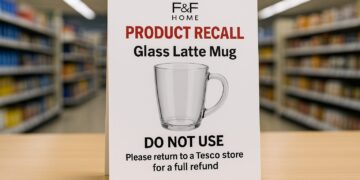
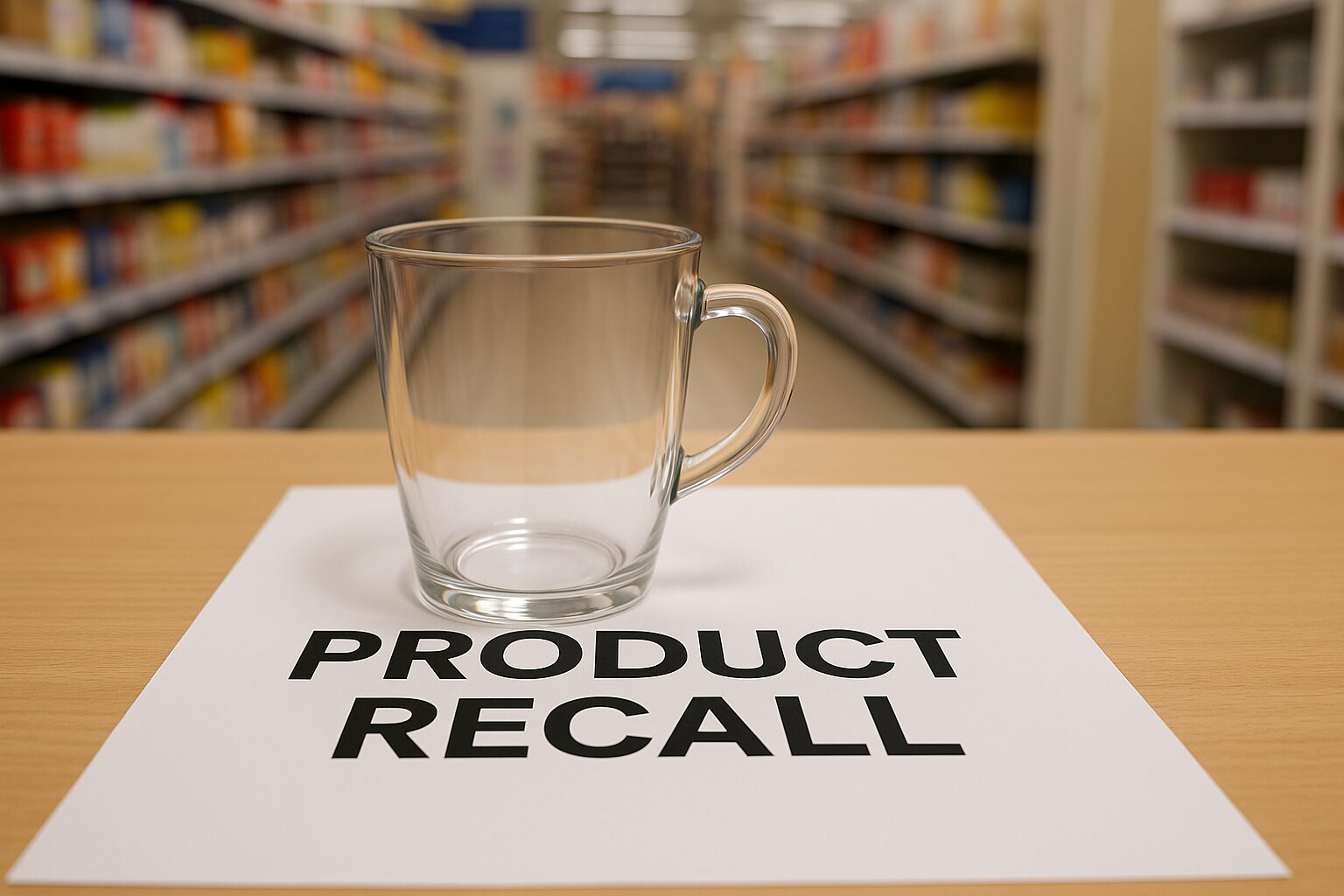
- Tesco recalls F&F Home Glass Latte Mug due to manufacturing fault.
- Sainsbury’s and Argos recall three bags over hazardous phthalate levels.
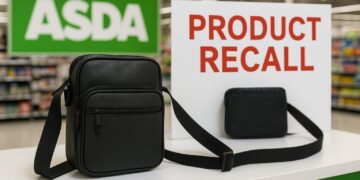
- Asda recalls Front Pocket XBody Bag for excessive phthalate content.
- Urgent alert issued for baby sleeping bags with hoods or no armholes.
- Nearly 50 recalls of unsafe baby sleeping bags reported since 2023.
Full Story
Retailers including Tesco, Sainsbury’s, Argos, and Asda have issued recalls this week alongside an urgent safety alert from the Office for Product Safety and Standards.
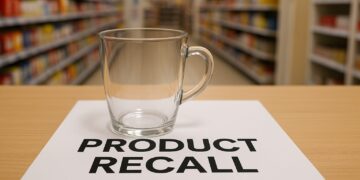
Tesco has announced a recall of its F&F Home Glass Latte Mug due to a manufacturing defect that may lead to the glass breaking during regular use, posing an injury risk. All mugs sold between September 2025 and August 2026 are affected. Customers can return the product to any Tesco store for a full refund without needing a receipt. A Tesco spokesperson stated, “As a precautionary measure, Tesco is recalling all batches of its F&F Home Glass Latte Mug purchased between September 2025 to August 2026 inclusive.”
Sainsbury’s and Argos have recalled three tote bags from the Tu clothing range due to chemical safety risks linked to excessive levels of phthalates, which can have harmful effects on human health. The recalled bags include the Tu Pu Tan Curved Top Shopper with item number 147160412, the Tu Black Croc Winged Tote Bag with item number 147166081, and the Tu Brown Belt Handled Core Shopper with item number 147789704. A Sainsbury’s spokesperson commented, “Sainsbury’s are recalling the above products due to excessive concentrations of phthalates, which pose a chemical safety risk.”
Asda has also conducted a voluntary recall for the Front Pocket XBody Bag after tests revealed excessive levels of phthalates. Although no safety incidents have been reported, Asda stated that the precautionary measure was taken to ensure compliance with safety regulations. An Asda spokesperson said, “While no safety incidents have been reported, we are taking this action to ensure compliance with applicable regulations and to maintain our commitment to consumer safety.”
On October 1, 2026, an urgent safety alert was issued regarding baby sleeping bags that feature hoods or lack armholes, which pose risks of suffocation, overheating, and Sudden Infant Death Syndrome. Officials highlighted that nearly 50 recalls and safety notices for such products have been issued since 2023. Consumers with unsafe sleeping bags marketed for unsupervised use can seek refunds under the Digital Markets, Competition and Consumers Act 2024.
In general, when issues with products are identified, these can either be withdrawn from sale or recalled from consumers. Retailers are required to provide guidance on return procedures and refunds to customers who have purchased affected items.
Source: read the original report.
What this means for your site
Retailers must proactively assess product safety to prevent incidents like those leading to recent recalls by Tesco, Sainsbury’s, Argos, and Asda. A systematic quality control process could ensure that items meet safety standards before they reach consumers. The recalls highlight the need for robust compliance with the General Product Safety Regulations 2005 and the Chemical (Amendment) Regulations 2018, which govern product safety and chemical risks respectively.
To mitigate similar future issues, businesses should conduct thorough risk assessments as mandated by the Management of Health and Safety at Work Regulations 1999. Continuous monitoring of product design and materials, especially concerning chemicals like phthalates, is essential. Implementing regular training for staff on recognizing product hazards and encouraging a culture of safety reporting can foster a proactive approach towards managing product safety and compliance.
Additionally, retailers could benefit from a structured recall procedure to respond swiftly to potential risks, ensuring consumer safety and maintaining trust. Providing clear communication channels for customer feedback can also aid in identifying issues early, thereby reducing risks associated with unsafe products.