















Story Highlight
- Bamford Clough is now one-way to improve safety.
- Average gradient is 1 in 5, with sections over 1 in 3.
- One-way order starts Thursday and lasts 18 months.
- Route remains open for cyclists, horse riders, and walkers.
- Public consultation runs until March on the one-way change.
Full Story
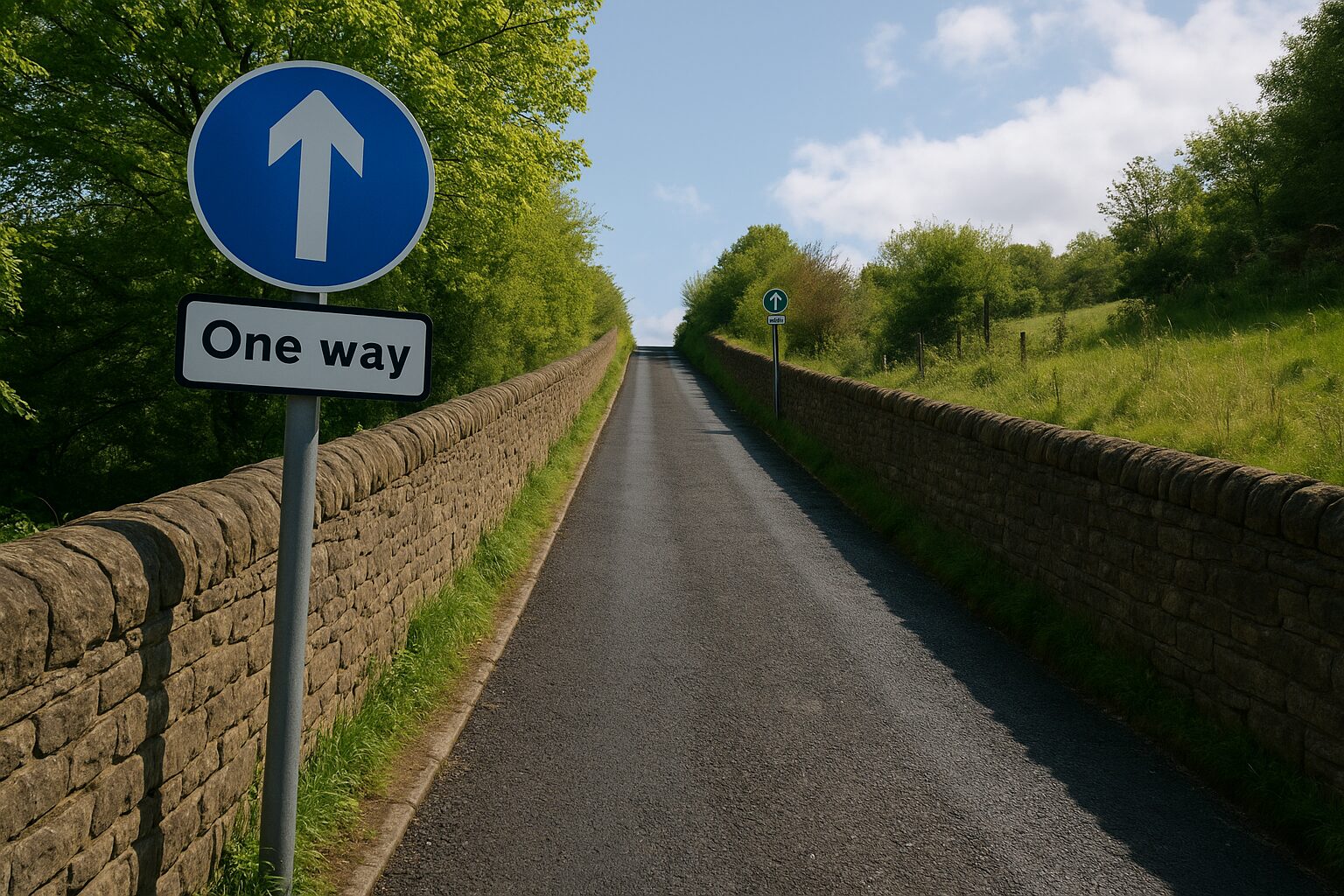
Derbyshire County Council has implemented a one-way traffic system on Bamford Clough, the steepest street in Derbyshire, in an effort to enhance safety for road users. The council reported that the street has an average gradient of 1 in 5, with certain sections exceeding 1 in 3. The narrow walled route poses risks for drivers, as it lacks passing places, making it difficult to navigate and increasing the chances of losing control or encountering oncoming vehicles.
As of Thursday, an 18-month order will restrict motor vehicles to an uphill-only route between Bamford village and New Road. One-way signs have been placed at both the entrance and near the summit of the road. Cyclists, horse riders, and walkers will still be permitted to use the route in both directions.
A spokesperson for the council explained: “Following years of use, the surface of the clough had worn away, leaving utility cables exposed and deep ruts. We carried out extensive repairs to the clough in 2021/2022, including resurfacing most of the route. Although the path has recently reopened, we’re concerned about public safety.”
The council will monitor the impact of the one-way system during the trial period and has initiated a public consultation running until March. A decision regarding the potential permanence of the order will be made before the conclusion of the 18 months.
Source: read the original report.
What this means for your site
The decision to implement a one-way traffic order on Bamford Clough reflects an important step towards enhancing safety on steep and narrow roads. However, a more proactive approach could have been adopted to identify potential hazards earlier. Regular risk assessments as mandated by the Management of Health and Safety at Work Regulations 1999 would ensure that risks associated with road conditions, such as worn surfaces and limited visibility, are identified and addressed before they become critical.
Additionally, compliance with the Road Traffic Regulation Act 1984 might reinforce the need for clearer signage and adequate road maintenance protocols to prevent dangerous driving conditions. To further enhance safety, councils could improve ongoing monitoring systems and engage in public consultations more frequently, allowing for community feedback to guide safety measures. Implementing ‘near-miss’ reporting systems would also enable authorities to capture data on potential hazards before accidents occur, ensuring that necessary interventions are made promptly. These measures could effectively reduce risks and enhance public safety on challenging roadways.