














Story Highlight
- Capenhurst nuclear plant identified as UK’s radiation hotspot.
- Rivacre Brook contains radioactive materials within safety limits.
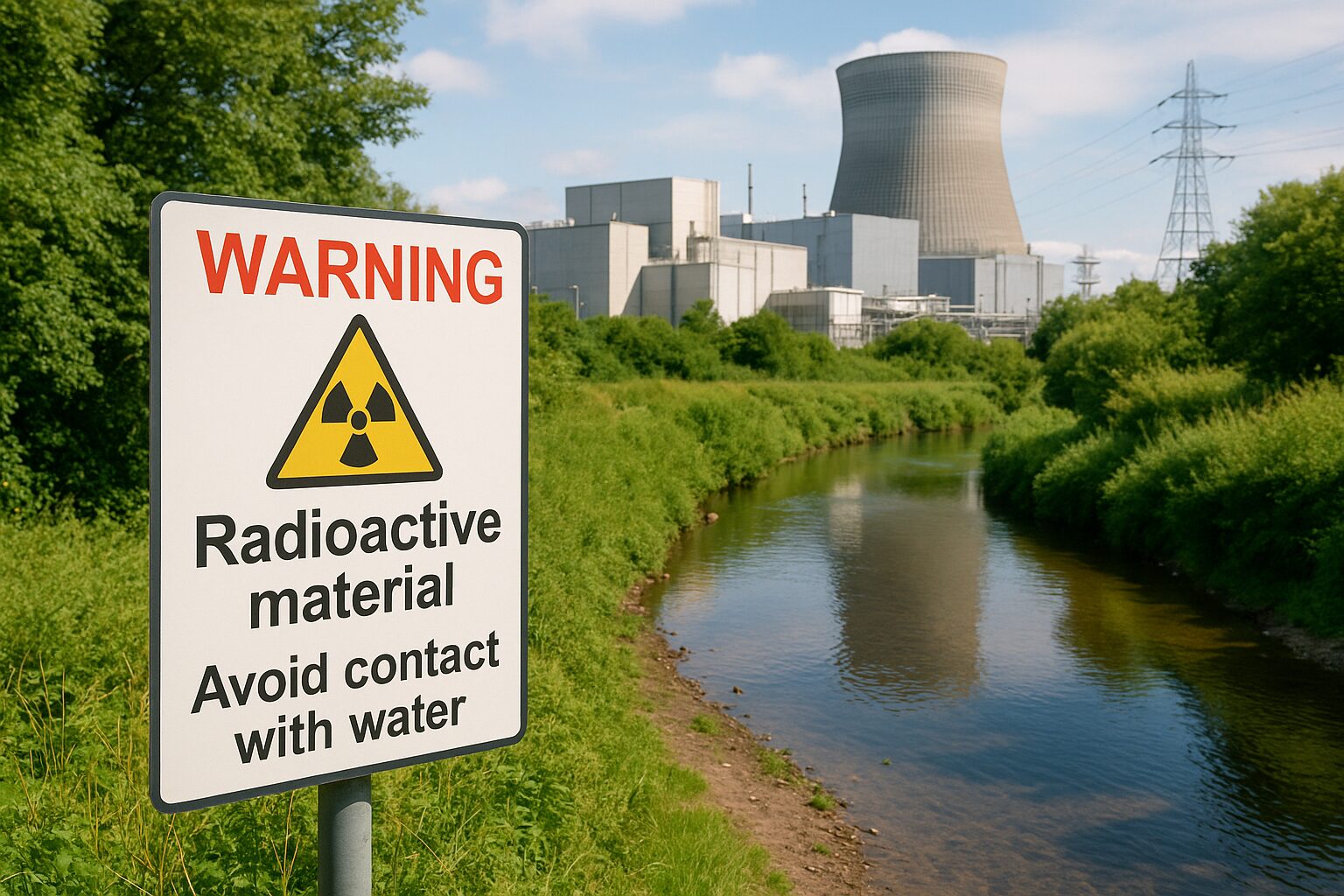
- Local families demand warning signs near contaminated stream.
- Professor warns against playing in water due to radiation risks.
- RIFE report confirms raised radiation doses around Capenhurst plant.
Full Story
Families in Ellesmere Port, Cheshire, are requesting warning signs near a local stream after a report identified the nearby Urenco Capenhurst nuclear facility as the UK’s radiation hotspot. The facility, which employs 650 individuals and supports global electricity generation, has been noted for having the highest radiation doses to the public in Britain, although these levels remain under government safety limits. Rivacre Brook, a popular waterway that flows near the plant and is frequented by children and cyclists, was reported to contain radioactive substances such as tritium, technetium-99, uranium, and neptunium-237.
Professor Patrick Byrne from Liverpool John Moores University has advocated for signage to discourage contact with the brook. He stated, “Uranium and technetium-99 are measurable within the brook sediments. So to avoid unnecessary exposure from regularly entering the water or coming into contact with sediment, clear signage advising against this would be a reasonable and proportionate precaution.” Both Urenco and the Environment Agency have asserted that discharges are within safe limits, but Professor Byrne cautioned against underestimating the risks, saying, “It is important not to confuse low risk with no risk.”
Local residents, including Father-of-two Dave Williams, expressed concerns after his dog became ill from drinking the brook’s water. He remarked, “There should definitely be signposts up there to warn kids not to play in the water. It’s not right.” Alison Ravenscroft, a secondary school teacher, emphasised the need for increased protection for children. She commented, “It’s vital we protect our children from the radiation in the brook, especially with the play areas only a few hundred yards away.”
The incident has prompted worry among the community, particularly due to the recent Health and Safety Executive report linking the area to the highest public radiation doses in 2024, quantified at 0.22 millisievert (mSv), a rise from 0.15 mSv in 2023. The report also highlighted that children playing near Rivacre Brook could ingest radiation from water and sediment, resulting in a dose of 0.007 mSv.
The report, titled the Radioactivity in Food and the Environment (RIFE), published in October 2025, assessed radiation levels for the year 2024. It indicated that the public’s exposure remained significantly below the UK national limit of 1 mSv per year. Concentrations of radioactive materials in the brook were confirmed to be low, although there are historical community concerns regarding emissions from the Capenhurst facility.
Urenco UK operates under Environmental Agency permits that regulate liquid waste discharges to Rivacre Brook. A spokesperson from Urenco stated, “Urenco operates in compliance with permits issued by the Environment Agency, which are in accordance with national and international standards.” The Environment Agency also reassured that they continuously monitor the water’s radioactivity levels, confirming they remain low and within legal limits.
Source: read the original report.
What this means for your site
This incident highlights the importance of proactive risk management in environments adjacent to potential hazards, such as contaminated waterways. While Urenco and the Environment Agency assert that radiation levels are within legal safety limits, more effective communication and preventative measures could alleviate public concern. The Health and Safety at Work etc. Act 1974 mandates that employers ensure, as far as is reasonably practicable, the health and safety of employees and others affected by their work. Additionally, the Management of Health and Safety at Work Regulations 1999 require risk assessments and appropriate measures to be taken to ensure safety.
Concrete steps to prevent similar incidents include the installation of clear and prominent signage near Rivacre Brook to warn the public, especially children, about potential risks associated with playing in or near the water. Furthermore, regular assessments and transparent communication of environmental safety data can promote community awareness and trust. Conducting community engagement sessions to inform local residents about safety measures and potential risks could also foster collective vigilance and ensure the community understands the implications of nearby industrial activities.