









Story Highlight
– Two companies guilty of health and safety violations.
– Coach driver Mick Ferris died from falling window pane.
– Previous window incident ignored by developers as warning.
– Court date set for sentencing on September 24.
– Foster + Partners cleared of health and safety charges.
Full Story
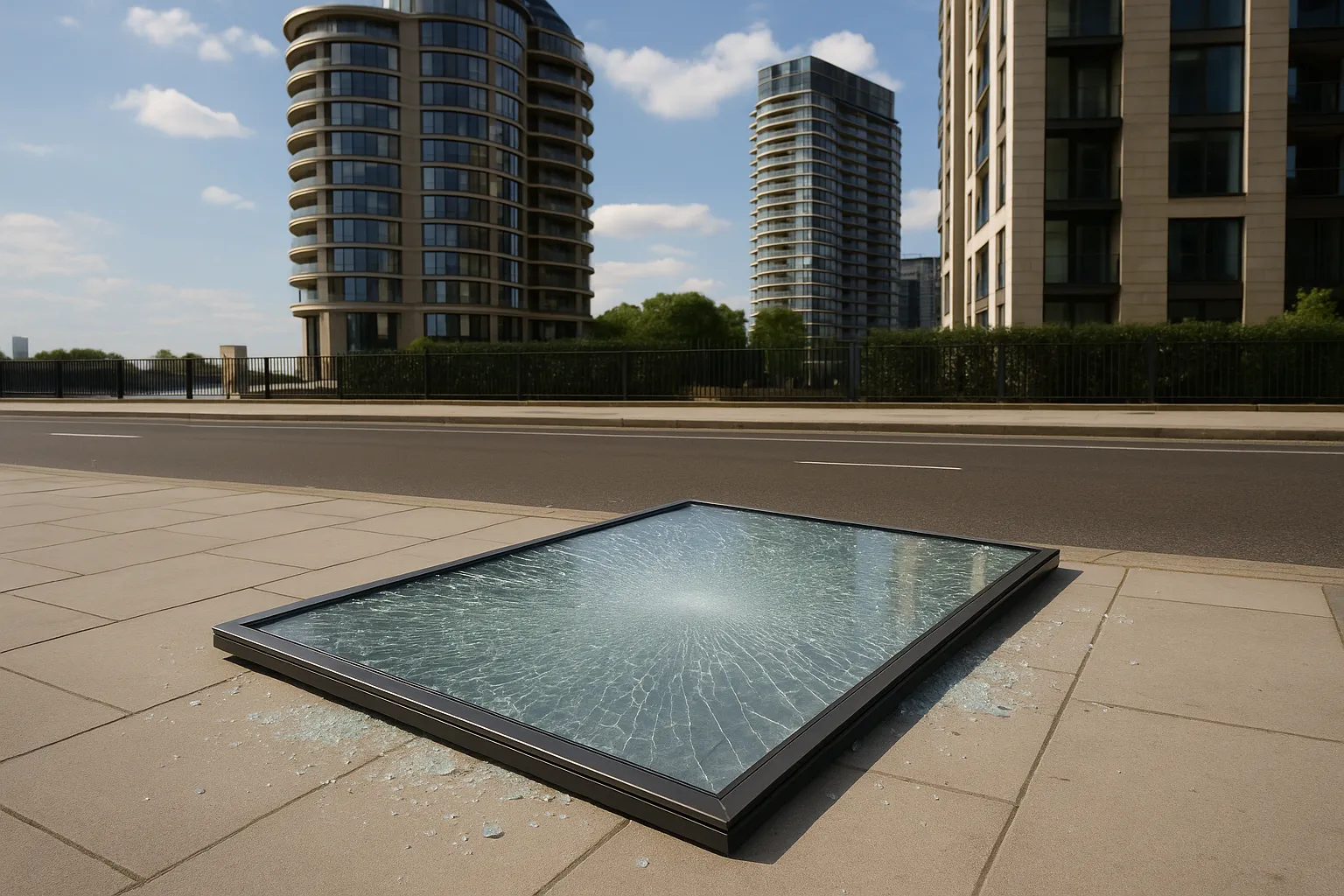
Two construction companies have been deemed responsible for serious breaches of health and safety regulations following the tragic death of a coach driver, Mick Ferris, who was killed by a falling window pane in London. The incident occurred in October 2018, when a heavy glass panel, weighing approximately 130kg, fell from the 23rd floor of The Corniche residential tower on Albert Embankment.
The Inner London Crown Court has found St James Group Ltd and Lindner Prater Ltd guilty of failing to uphold their responsibilities as stipulated under the Health and Safety at Work Act 1974. The sentencing for both firms is set to take place on 24 September, providing an opportunity to address their corporate accountability in this case. On the other hand, architectural firm Foster + Partners and engineering consultants Wintech Ltd have been acquitted of similar charges, highlighting a complex web of responsibility surrounding the incident.
The court proceedings revealed earlier warnings regarding the safety of the windows at The Corniche. Notably, a panel had fallen from the same building in August 2017, yet no significant adjustments were made to the design following that event. Gordon Menzies, who served as the prosecuting lawyer, pointed out the “extraordinary” situation, suggesting a straightforward redesign could have averted subsequent incidents. He remarked, “It’s reasonably practicable for clever people to do a simple thing and design a window that doesn’t fall out once every year,” underscoring the apparent neglect in addressing the initial failure.
Following their appointment as the ‘principal designer’ in 2015, St James Group was tasked with the critical role of overseeing health and safety matters related to the construction. In contrast, Foster + Partners, known for its work on some of London’s most iconic buildings, maintained that their involvement did not extend to the operational details of window design after the initial phases.
Jurors examined evidence indicating that the design of the Corniche’s windows was fundamentally flawed. It was reported that the windows opened outward and relied on a single, weak metal “restrictor” to remain secure, making them susceptible to being dislodged by wind. This design oversight was described as a critical safety failure. Furthermore, rather than taking proactive measures after the first window incident, the original design team failed to reassess the risks, relying on inadequate warnings to halt the use of the windows.
Menzies illustrated that construction staff at the site were instructed not to open the windows, with minimal written precautions displayed for residents. “Effectively, the designers were hoping the residents would not forget to close their windows,” he pointed out, highlighting a negligent attitude towards safety that persisted up until and after Ferris’s death. It was only after this tragic event that any meaningful reconsideration of the design took place.
In a statement following the court’s findings, James Towey, senior enforcement lawyer for the Health and Safety Executive, expressed appreciation for the jury’s efforts during the extended trial. “We acknowledge the jury’s verdict and thank them for their service during what was a lengthy and complex trial,” he noted. Towey also expressed hope that the convictions provide some sense of closure for Ferris’s family, who have been grappling with the aftermath of the incident.
In response to the verdict, a spokesperson from St James Group offered condolences to Ferris’s family and friends, acknowledging the gravity of their loss. They stated, “The death of Mick Ferris in 2018 was tragic,” emphasising the company’s intent to scrutinise the implications of the court’s ruling.
Meanwhile, a representative from Foster + Partners conveyed similar sentiments, reiterating their ongoing thoughts for Ferris’s family. “Our thoughts remain with Mr Ferris’s family, as they have since October 2018,” they said, while expressing gratitude for the jury’s dedication to the case.
Wintech, too, released a statement reflecting on the court’s decision. A spokesperson conveyed sympathy for the tragedy that unfolded, underscoring the industry’s need for continual learning and improvement to uphold standards and minimise the chances of future incidents.
As the industry grapples with the implications of the court’s ruling, it serves as a stark reminder of the importance of rigorous health and safety practices within construction. Experts argue that this verdict may galvanise renewed efforts to strengthen regulations, ensuring that such preventable tragedies do not occur again. The tragic case of Mick Ferris underscores the critical nature of safety in construction environments, prompting calls for heightened awareness and accountability among developers and contractors alike.
Following these developments, calls for reform within the industry are anticipated, focusing on redefining responsibilities that ensure the safety and welfare of both workers and the public. This incident may ultimately serve as a catalyst for change, fostering discussions on enhancing protective measures in the face of construction-related challenges. The upcoming sentencing will undoubtedly mark another chapter in this complex narrative, as the community and stakeholders alike reflect on the lessons to be learnt.
Our Thoughts
The tragic incident involving the death of Mick Ferris highlights numerous health and safety failures under UK legislation, particularly the Health and Safety at Work Act 1974. Key lessons include the necessity for rigorous safety assessments, particularly when previous incidents (like the earlier window fall) occur.
Preventative measures should have included a comprehensive redesign of the window system to mitigate risks associated with single-point fastening mechanisms, especially in high-wind areas. St James Group Ltd, as the principal designer, was obligated to ensure health and safety was effectively coordinated and addressed throughout the construction process.
Relevant regulations that may have been breached include those regarding risk assessments and the duty of care owed to persons not in employ but potentially affected by work activities. Establishing robust procedures for monitoring ongoing safety issues and making necessary adjustments promptly could prevent future incidents.
The industry must reinforce protocols around design safety, particularly in high-rise buildings, to ensure that designers do not underestimate the potential consequences of their work. Following this incident, it is crucial to prioritize continuous learning and adjustment of safety measures within construction practices.