
















Choose an AI chat
Senate confirms Dr. Erica Schwartz as new CDC director amid agency turmoil
UK Health and Safety Latest

Senate confirms Dr. Erica Schwartz as new CDC director amid agency turmoil

by Jade Anderson
August 5, 2026
0

Dr. Erica Schwartz has been confirmed as the new director of the CDC, receiving a 51-44 Senate vote amidst concerns...

Read moreDetails
Redefining healthcare decision-making with innovative statistical methods

Redefining healthcare decision-making with innovative statistical methods

August 5, 2026
B&Q recalls table fan over safety concerns

B&Q recalls table fan over safety concerns

August 5, 2026
Maternity care crisis intensifies as calls for urgent reform grow

Maternity care crisis intensifies as calls for urgent reform grow

August 5, 2026
Study finds no autism link from MMR vaccine in children

Study finds no autism link from MMR vaccine in children

August 4, 2026

Archives

  • August 2026
  • July 2026
  • June 2026
  • May 2026
  • April 2026
  • March 2026
  • February 2026
  • January 2026
  • December 2025
  • November 2025
  • October 2025
  • September 2025
  • July 2025
  • August 2009

Categories

  • Health and Safety Help
  • News
  • Policies
  • UK Health and Safety Latest
  • About
  • Advertise
  • Policies
    • Privacy Policy
    • Editorial Policy
    • Corrections & Complaints policy
  • Useful Documents
    • Understanding RIDDOR
    • 10 Workplace Safety Failures
    • A Complete Guide to Reporting Safety Incidents in the UK
    • Fire Risk Assessment: Meeting the Regulatory Reform (Fire Safety) Order
    • COSHH Basics: A Practical Guide to Control of Substances Hazardous to Health
    • Working at Height in the UK: The Essentials (WAH Regulations 2005)
    • Asbestos in the Workplace: Control of Asbestos Regulations 2012 (CAR) Essentials
    • Managing Contractors Under CDM 2015: Roles, Duties & Controls
    • DSE & Ergonomics: Healthy Workstations for Office & Hybrid Teams
    • Lock out Tag out LOTO
    • Workplace Transport Safety: Forklifts, Pedestrians & Traffic Management
    • Noise & Vibration at Work: Practical Controls (2005 Regulations)
    • Confined Spaces in the UK: Safe Entry under the Confined Spaces Regulations 1997
  • Contact
  • Agent
Thursday, August 6, 2026
25 °c
London
25 ° Wed
22 ° Thu
21 ° Fri
  • Login
UK Safety News
  • Home
  • News
    • All
    • UK Health and Safety Latest
    Senate confirms Dr. Erica Schwartz as new CDC director amid agency turmoil

    Senate confirms Dr. Erica Schwartz as new CDC director amid agency turmoil

    Redefining healthcare decision-making with innovative statistical methods

    Redefining healthcare decision-making with innovative statistical methods

    B&Q recalls table fan over safety concerns

    B&Q recalls table fan over safety concerns

    Maternity care crisis intensifies as calls for urgent reform grow

    Maternity care crisis intensifies as calls for urgent reform grow

    Study finds no autism link from MMR vaccine in children

    Study finds no autism link from MMR vaccine in children

    Digital technologies enhance patient safety in GP practices, study finds

    Digital technologies enhance patient safety in GP practices, study finds

    Digital technologies in GP practices enhance patient safety and reduce errors

    Digital technologies in GP practices enhance patient safety and reduce errors

    Naked man jumps from Brooklyn Bridge after scaling tower with Kazakhstan flag

    Naked man jumps from Brooklyn Bridge after scaling tower with Kazakhstan flag

    Halton Council proposes selective licensing scheme for private rentals to enhance tenant safety

    Halton Council proposes selective licensing scheme for private rentals to enhance tenant safety

    Food safety alerts issued for chocolate, milk and dessert recalls in UK

    Food safety alerts issued for chocolate, milk and dessert recalls in UK

    Trending Tags

No Result
View All Result
UK Safety News
No Result
View All Result
Home News UK Health and Safety Latest

Digital technologies enhance patient safety in GP practices, study finds

Ellie Cartwright by Ellie Cartwright
August 4, 2026
in UK Health and Safety Latest
Reading Time: 4 mins read
0
Digital technologies enhance patient safety in GP practices, study finds

Story Highlight

– Digital technologies enhance patient safety in GP practices.
– Study reviewed 74 clinical trials over 23 years.
– Medication safety improved by 46% using digital tools.
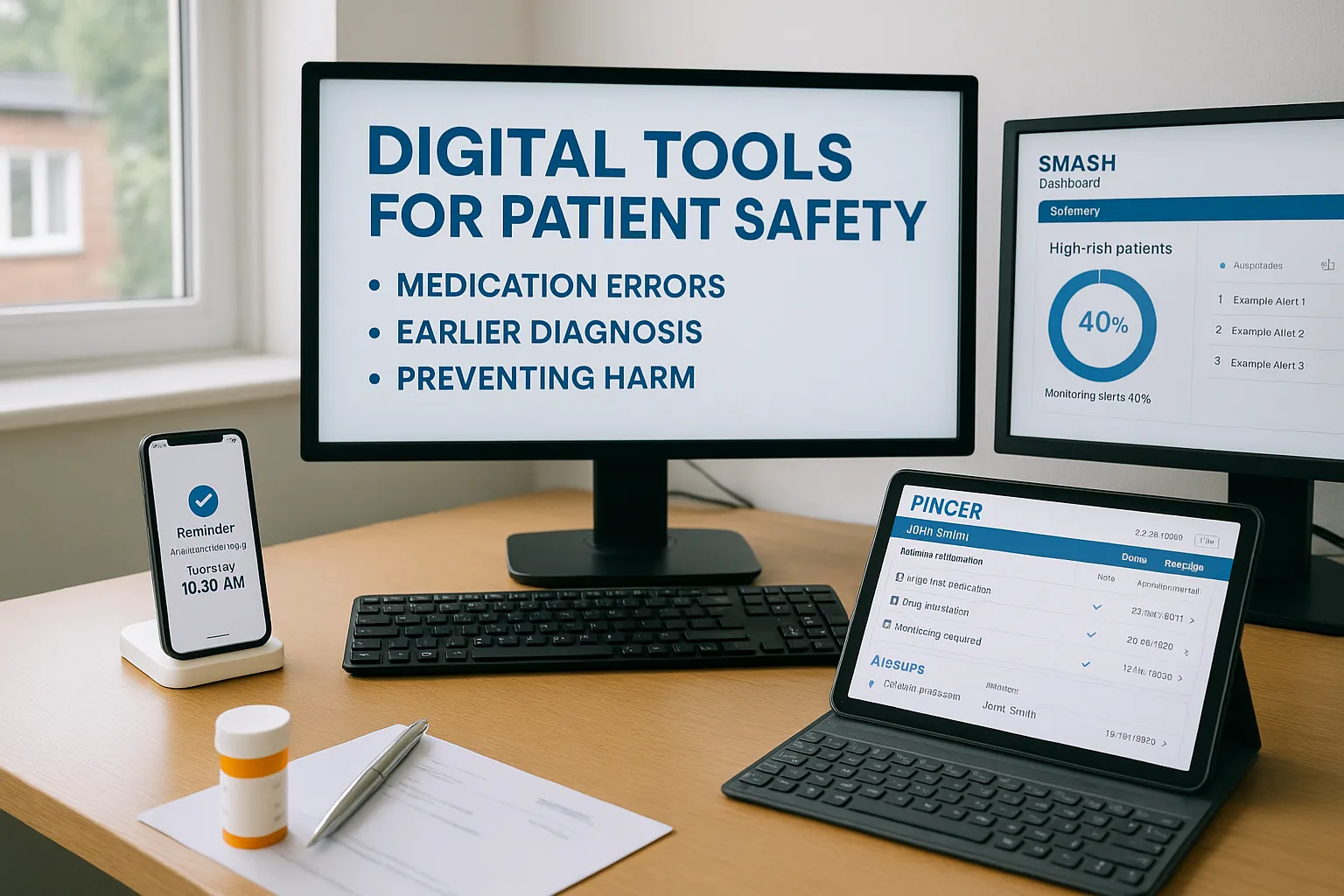
– PINCER program successfully prevents incorrect prescribing.
– Integrated systems show greatest improvements in safety.

Full Story

Digital technologies implemented in general practitioner (GP) practices have been shown to significantly enhance patient safety, according to a comprehensive study conducted by The University of Manchester. The research, which is the largest review of its kind, examined evidence from 74 clinical trials spanning over 23 years and has been published in the journal BMC Medicine. This initiative was funded by the National Institute for Health Research (NIHR) Patient Safety Research Collaboration (PSRC): Greater Manchester.

The findings of the study demonstrated that the integration of digital tools within primary care settings can lead to substantial improvements in patient safety outcomes. The review indicated that systems combining various digital functionalities, such as automated prescribing, real-time reporting of missed tests for healthcare professionals, and digital communication pathways for patients, were particularly effective.

Key results from the research highlighted that the implementation of digital safety interventions resulted in a notable 46% enhancement in medication safety compared to traditional methods. This improvement was largely attributed to a reduction in hazardous prescribing practices and dosage errors. Furthermore, the study observed that non-medication safety processes benefitted even more significantly, with a remarkable 77% reduction in errors when digital tools were employed, facilitating quicker diagnostic evaluations and more timely laboratory assessments. Additionally, there was a 17% decrease in instances of physical harm and adverse events among patients, which played a crucial role in reducing unnecessary hospital admissions, severe asthma attacks, and critical adverse drug reactions.

The study also identified specific digital technologies that have proven instrumental in improving patient safety and facilitating effective communication and treatment decision-making processes. Among these tools was the PINCER programme, a UK-developed initiative that utilises electronic health records to assist GPs and pharmacists in recognising and averting erroneous prescriptions. This programme exemplifies how digital frameworks can enhance safety on a larger scale while optimizing NHS resource utilisation.

Inspired by the successes of the PINCER initiative, new digital innovations have emerged, including the SMASH (Safe Medication Audit and Safety in Healthcare) dashboard. This tool was developed in collaboration between researchers at the NIHR PSRC: Greater Manchester, NHS partners, and industry contributors. The SMASH dashboard serves as a digital resource for clinicians, enabling them to swiftly identify and mitigate medication-related risks. An early evaluation of its deployment in Salford, covering over 235,000 patients across 43 GP practices, reported a significant 40% reduction in hazardous prescribing within just 12 months.

The evaluation emphasised the effectiveness of embedding evidence-based safety metrics into routine clinical practices. By doing so, tools such as SMASH allow clinicians to detect and resolve medication risks more efficiently and consistently.

The researchers also noted that the most profound advancements in patient safety were observed in integrated systems that harmoniously combined various functionalities. These included clinical decision support tools, patient communication methods, and mechanisms for audit and feedback. For instance, when Clinical Decision Support Systems (CDSS) were used alongside Audit and Feedback (A&F) frameworks, which enable practices to routinely assess their safety metrics, a notable improvement in patient care was achieved.

Moreover, tools that incorporated patient engagement features, such as automated text reminders or patient portals, contributed positively to non-medication safety processes. This integration led to nearly threefold increases in punctual investigations and follow-up care for patients.

The implications of this research are significant, as they point to a future where digital technologies can play an essential role in healthcare delivery. By prioritising the adoption of such tools, healthcare providers could significantly enhance patient outcomes, ensuring safer practices within primary care environments.

With the increasing pressures on healthcare systems, particularly in the aftermath of the COVID-19 pandemic, the importance of digitalisation in medicine cannot be overstated. This study provides a crucial insight into how embracing modern technology can transform patient care and safety, ultimately leading to improved health outcomes and more efficient healthcare services.

The evidence presented underscores the necessity for ongoing support and investment in digital health initiatives, which not only benefit individual patients but can also optimise resource allocation within the NHS. As healthcare continues to evolve, leveraging digital solutions will likely become paramount in meeting the challenges faced by primary care providers and enhancing overall patient safety.

Our Thoughts

The study highlights the potential of digital technologies in reducing medication errors and enhancing patient safety within GP practices. To prevent medication errors and improve patient safety, integration of robust digital systems like Clinical Decision Support Systems (CDSS) with Audit and Feedback mechanisms is essential. Regrettably, failure to utilize such technologies could result in breaches of the Health and Safety at Work Act 1974, which mandates employers to ensure the health and safety of employees and others affected by their activities.

Key safety lessons include the importance of adopting evidence-based technology and regular monitoring of safety data to preemptively identify risks. Implementing patient-facing tools, such as automated reminders, can significantly enhance communication and follow-up care, thereby reducing the likelihood of adverse events.

To mitigate similar incidents in the future, practices should prioritize training staff on digital tools and incorporate comprehensive safety checks within their protocols. Compliance with the UK’s General Data Protection Regulation (GDPR) must also be maintained during the implementation of digital solutions to protect patient information. Overall, embracing such technologies is crucial for continuous improvement in patient safety.

Tags: Health and Safety
SummarizeShare34Share197SendSend
ADVERTISEMENT
Ellie Cartwright

Ellie Cartwright

Ellie Cartwright is a health and safety journalist with a background in occupational health and public health reporting. She covers UK workplace safety legislation, HSE enforcement actions, and emerging health risks in the workplace. Ellie holds a degree in Public Health and has reported on safety issues across the construction, healthcare, and manufacturing sectors.

Related Posts

Amazon warehouses in UK report 2,500 serious injuries over a decade

Amazon warehouses in UK report 2,500 serious injuries over a decade

by Ellie Cartwright
November 3, 2025
2

Recent findings reveal that Amazon warehouses in the UK have reported over 2,500 serious injuries in the past decade, raising...

Camden's statements on victim support and child protection face scrutiny

Camden’s statements on victim support and child protection face scrutiny

by Tara Rowden
March 16, 2026
0

Concerns have escalated regarding Camden's apparent disconnect between public statements and actual practices concerning victim support and child safeguarding in...

Leave a Reply Cancel reply

Your email address will not be published. Required fields are marked *

I agree to the Terms & Conditions and Privacy Policy.

Useful Documents

  • Understanding RIDDOR
  • 10 Workplace Safety Failures
  • A Complete Guide to Reporting Safety Incidents in the UK
  • Understanding RIDDOR
  • Fire Risk Assessment: Meeting the Regulatory Reform (Fire Safety) Order
  • COSHH Basics: A Practical Guide to Control of Substances Hazardous to Health
  • Working at Height in the UK: The Essentials (WAH Regulations 2005)
  • Lock out Tag out LOTO

Recent Posts

  • Senate confirms Dr. Erica Schwartz as new CDC director amid agency turmoil
  • Redefining healthcare decision-making with innovative statistical methods
  • B&Q recalls table fan over safety concerns
  • Maternity care crisis intensifies as calls for urgent reform grow
  • Study finds no autism link from MMR vaccine in children

Recent Comments

  1. Piper Douglas on Worker dies due to inadequate machinery safety measures
  2. Natalie Coleman on New housing laws aim to tackle damp and mould crisis in England
  3. Simon Barrett on Honeymoon ruined by illness as newlywed suffers severe infection in Cape Verde
  4. Nolan Barrett on Work-related ill health in Great Britain remains a concern after pandemic peak
  5. Dylan Reeves on Sickness rates among Scottish police officers soar to troubling levels
UK Safety News

Copyright © 2026
UK Safety News

Navigate Site

  • About
  • Advertise
  • Policies
  • Useful Documents
  • Contact
  • Agent

Follow Us

Welcome Back!

Login to your account below

Forgotten Password?

Retrieve your password

Please enter your username or email address to reset your password.

Log In
No Result
View All Result
  • Home
  • News

Copyright © 2026
UK Safety News

This website uses cookies. By continuing to use this website you are giving consent to cookies being used. Visit our Privacy and Cookie Policy.