
















Story Highlight
– Major emergency response at Donnington Bridge yesterday.
– No person found after a two-hour search.
– Previous drowning incident of teenager raised safety concerns.
– Water safety campaign intensified ahead of heatwave.
– Authorities warn of risks associated with swimming in rivers.
Full Story
Emergency services launched a significant operation at Donnington Bridge on Tuesday, June 30, following reports regarding a potential individual in the River Thames. This incident attracted a considerable response from various emergency units, which included fire crews, law enforcement, and medical personnel.
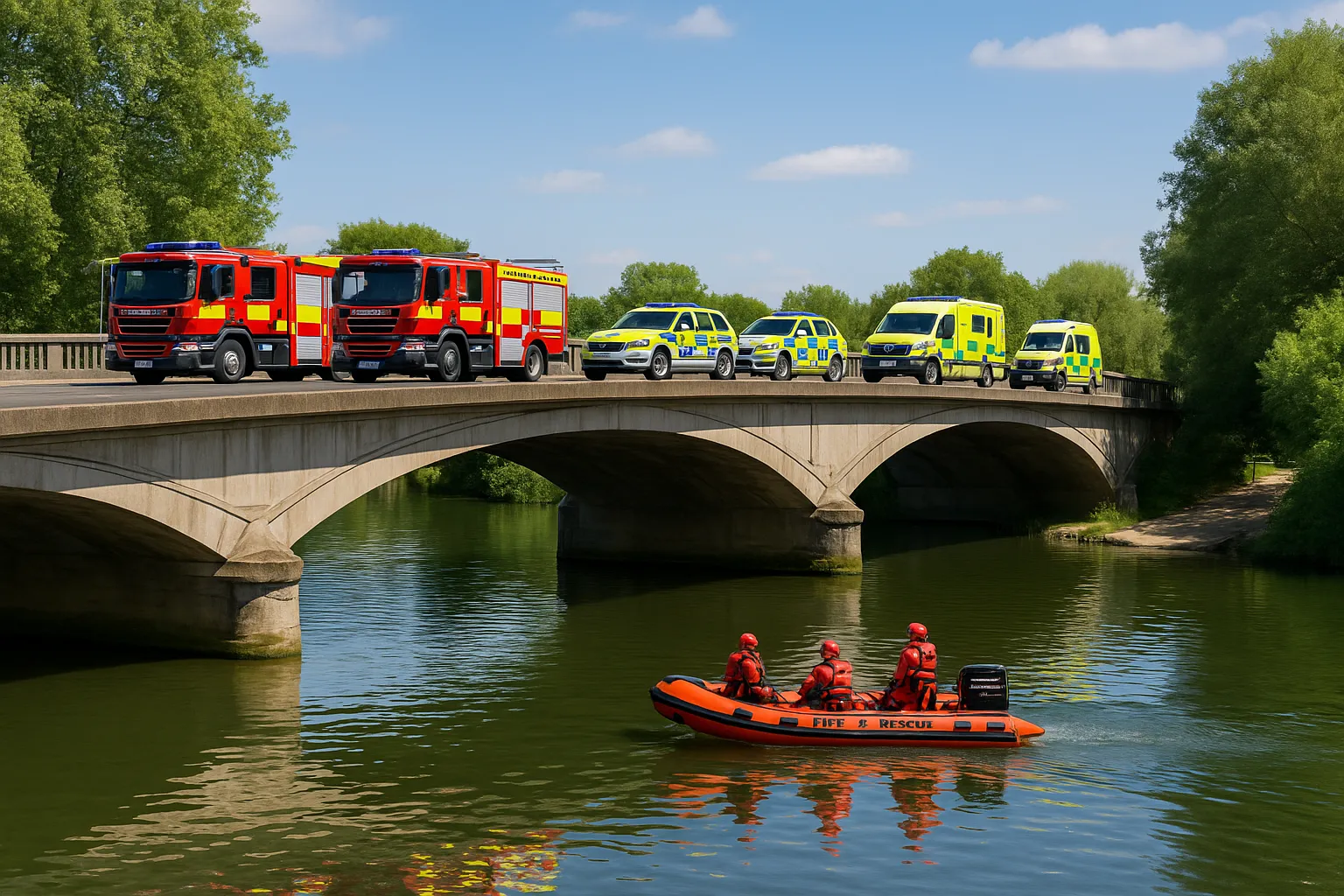
Upon arrival at the scene, emergency responders established a presence on the bridge, which was subsequently closed to public access. Fire engines and police vehicles could be seen stationed across the span, while divers and rescue teams deployed a boat from the slipway, commencing thorough searches of the river and its banks.
After an extensive search lasting two hours, officials from Oxfordshire Fire and Rescue Service confirmed that no individuals were discovered in the water. Following the conclusion of the operation, the bridge was reopened to the public.
This occurrence comes in the wake of a tragedy involving 14-year-old Baltazar Cabral Lay da Costa, who lost his life in the same stretch of water on May 27. The teenager encountered difficulties while swimming during an intense heatwave earlier this year. The circumstances surrounding his death are classified as unexplained but not suspicious, prompting heightened concerns regarding river safety and the adequacy of signage at this well-frequented location.
Photos from May depicted a significant police presence at Donnington Bridge, as the community grappled with the loss of the young boy. Following that incident, there has been a noticeable increase in scrutiny of water safety protocols across the area.
As summer heat persists, the UK has witnessed a troubling trend; during the previous month, at least 18 individuals, many of them teenagers, tragically drowned in various waterways. This prompted Oxfordshire Fire and Rescue to amplify its water safety awareness campaign, particularly as temperatures are projected to rise again, nearing 30°C in the upcoming week, which signals the third heatwave of the year.
Officials have issued stern reminders regarding the dangers associated with swimming in natural bodies of water, especially considering the risk of cold water shock. The UK Health Security Agency has also raised alarms about an anticipated increase in water-related accidents, coinciding with a yellow heat health alert announced for the southeast region, which will be in effect from noon on Saturday, July 4, until 5pm on Wednesday, July 8.
Deb Forder, the safety manager for the Oxfordshire Fire and Rescue Service, conveyed the message that while the allure of open water might be tempting, it poses significant risks. She explained, “If you are submerged in water unexpectedly, your body will gasp for air meaning that you could breathe in water and hyperventilate.” She urges individuals to “relax, lean back and float to live until you can control your breathing.”
Additional hazards lurking beneath the water’s surface, including submerged objects such as debris and machinery, further complicate safety in these environments. As such, responders advocate for practical measures to enhance personal safety, such as informing loved ones of one’s whereabouts and estimated return, carrying a whistle, and employing waterproof pouches for mobile phones.
Officials stress the importance of awareness when engaging in water activities. Emergency services encourage anyone witnessing someone in distress to promptly dial 999 or 112 to summon assistance. Community members are reminded to remain vigilant and exercise caution, especially during the summer heat when individuals may be tempted to take risks in waterways that might not be safe.
As the weather continues to warm, safety agencies across Oxfordshire are reiterating their commitment to prevent further tragedies. Public safety campaigns are being emphasised, providing essential information and resources designed to educate residents on the dangers inherent in swimming in natural rivers and lakes. The collective responsibility to ensure a safe environment for all swimmers is paramount as the summer months unfold.
Our Thoughts
The tragic incident at Donnington Bridge highlights a critical need for enhanced water safety measures. To prevent such occurrences, several actions could be implemented. Firstly, improving signage and public awareness campaigns around the dangers of swimming in open water, especially during heatwaves, could reduce risky behaviors. This aligns with the UK Health and Safety at Work Act 1974, which mandates employers to ensure the health and safety of the public in their vicinity.
Though the emergency services responded effectively, there may have been a breach of the Management of Health and Safety at Work Regulations 1999 regarding risk assessments for public safety at known hazardous sites. Regular assessments of potential dangers associated with the river, including debris and currents, should be conducted and communicated to the public.
Furthermore, extending the water safety campaign to include educational programs in schools could provide teenagers with critical information about the risks of cold water shock and drowning. Engaging the community in proactive measures, such as designating lifeguard areas, could further minimize risks. Overall, a multifaceted approach focused on awareness, education, and precaution could significantly enhance safety around waterways.