














Story Highlight
– Primark recalls purse due to harmful phthalates risk.
– Excessive Dibutyl and Bis phthalate levels detected.
– Consumers urged to stop using purse immediately.
– Product does not meet REACH Regulations 2008.
– Full refunds offered at any Primark store.
Full Story
The Office for Product Safety and Standards (OPSS) has issued a warning regarding a safety recall related to a product sold by Primark, highlighting concerns over the presence of harmful chemicals. The announcement, made recently, indicates that consumers should cease using the item immediately.
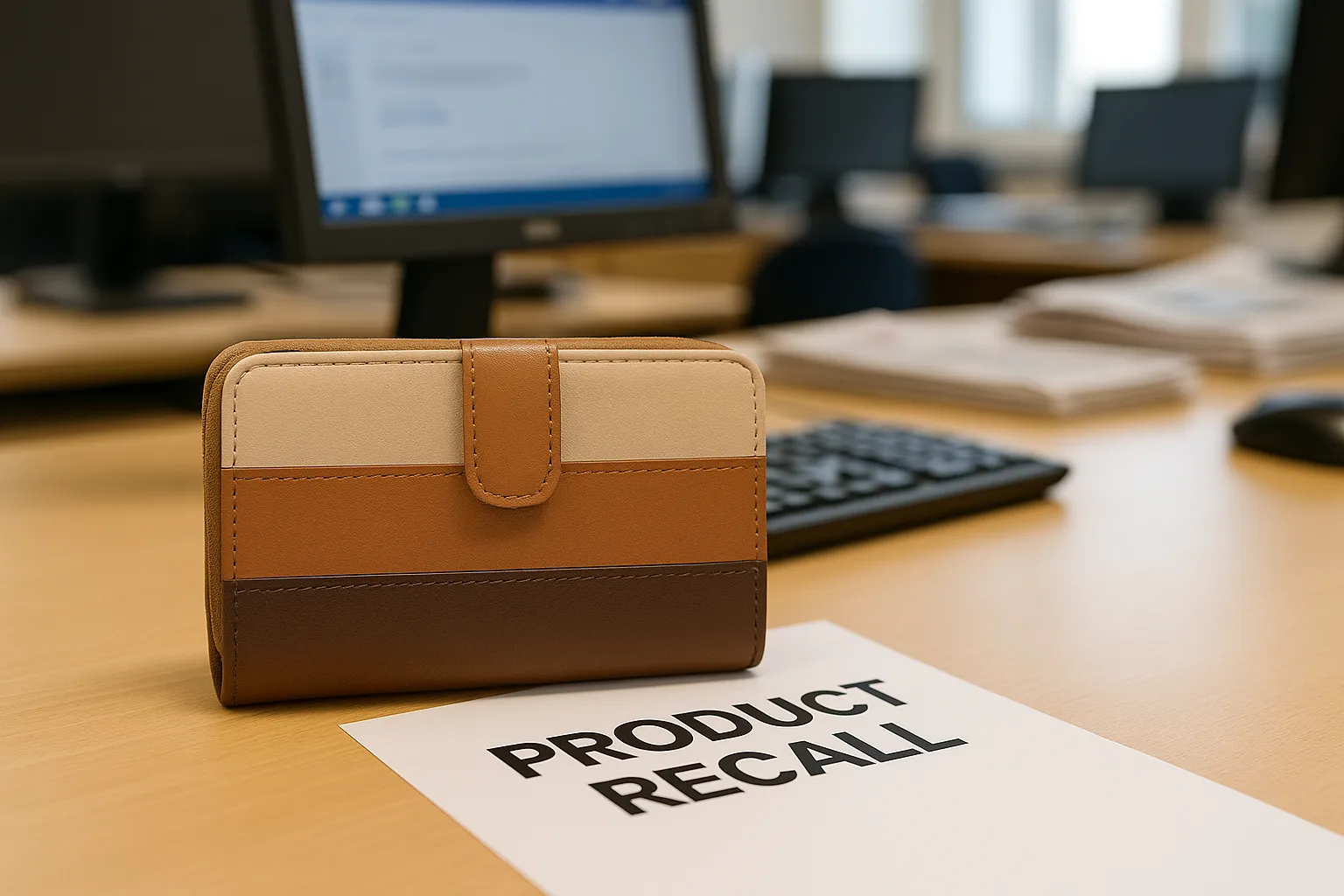
Primark’s recall involves a colour block coin purse, which has been identified as containing excessive levels of phthalates. These chemicals, specifically Dibutyl phthalate (DBP), Bis(2-ethylhexyl) phthalate (DEHP), and Short Chain Chlorinated Paraffins (SCCPs), pose significant health risks, including potential reproductive harm. The OPSS has confirmed that the purse does not comply with the REACH Regulations established in 2008.
In light of these findings, Primark has recommended that anyone who purchased the purse stop using it right away, particularly advising that it be kept out of children’s reach. Consumers are encouraged to return the item to any Primark store, where they will receive a full refund. For further inquiries, customers can reach out to Primark through its live chat service.
The coin purse in question features a combination of brown hues and is identified by the model number 3103002 and barcode 991169270. This recall is part of a broader trend among retail chains in the UK to pull various products from shelves due to safety issues. Recently, other retailers including Morrisons and Lidl have also issued recalls for specific items amid health concerns.
Morrisons has recalled its Maple and Bacon Back of the Net sharing snack, citing that certain packs may contain undeclared milk, which could significantly affect individuals with milk allergies or intolerances. The recall pertains to a 140-gram pack that bears the best before date of August 22, 2026. Customers are urged to avoid consuming the affected product and return it to the store for a full refund without the need for a receipt. Morrisons issued a statement apologising for any inconvenience this recall may cause while assuring patrons of their unwavering commitment to upholding high standards of product safety and quality.
Additionally, concerns have been raised regarding Ferrero’s Frozen Nutella Croissants, which have also been withdrawn from sale. Customers are strongly advised against eating these pastries due to potential contamination with metal fragments. Initially available in Lidl stores across the UK, the recall has expanded internationally, impacting markets in Belgium, Germany, Italy, Spain, Hungary, and Romania. The affected four-pack products are marked with batch codes L126Z39 and L127Z39, with best before dates set for May 6 and May 7, 2027.
The recent flurry of recalls has drawn attention to the importance of consumer safety and the vigilance required from both retailers and regulatory bodies. The OPSS maintains that it is crucial for manufacturers and suppliers to adhere strictly to safety standards in order to protect consumers from potentially harmful products.
As instances of product recalls increase, industry experts encourage consumers to remain proactive in monitoring the safety of items that they purchase. It is suggested that shoppers should always check the labels, packaging, and any recall notices that may be issued by retailers or governmental bodies to ensure that they are not inadvertently using hazardous products.
The health implications associated with the chemicals identified in the purses demonstrate a clear need for ongoing oversight in product safety regulations. Activists and consumer rights advocates are urging that the government strengthens existing frameworks to ensure that products on the market do not pose risks to health and safety.
With consumer trust at stake, companies are reminded of their responsibility to act swiftly upon discovering safety issues. The recent actions taken by Primark, Morrisons, and Lidl reflect a broader awareness within the retail sector about the necessity for transparency and accountability concerning the products they offer.
In conclusion, as the landscape of consumer goods becomes increasingly scrutinised, it remains essential for both regulatory bodies and companies to prioritise product safety. The collaborative efforts to address these concerns will ultimately lead to a safer shopping experience for the public while fostering trust between consumers and brands.
Our Thoughts
Primark’s recent recall of a purse due to hazardous levels of phthalates highlights significant safety oversight in product safety management, particularly regarding compliance with the REACH Regulations 2008. To prevent such incidents, retailers must implement rigorous testing protocols to ensure that all products meet safety standards before they reach consumers. Enhanced supplier vetting and regular audits could also be effective practices.
Key lessons include the importance of continuous monitoring of chemical compliance in product manufacturing and the prompt reporting of any potential risks to the public. Retailers should ensure that their quality control processes are robust, including comprehensive risk assessments.
In this case, the breach of REACH regulations, which govern the use of chemicals in consumer products to protect human health, was critical. To mitigate similar incidents, authorities could enforce stricter penalties for violations and support improved industry compliance through training and resources. Emphasizing a proactive safety culture within organizations can lead to enhanced awareness and prevention of hazardous product releases, thus protecting public health.