










Story Highlight
– Major UK supermarkets recall various food products due to health risks.
– Morrisons warns against Coronation Chicken Pasta containing undeclared milk.
– Salmonella detected in fruits from multiple retailers, posing health threat.
– Arran Chutney linked to potential metal fragments; return advised.
– Waitrose recalls Hot Cross Buns for undeclared barley allergen.
Full Story
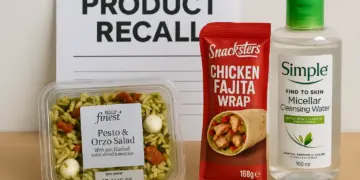
A significant number of major UK supermarkets are undertaking recalls of various food items due to potential health concerns. Prominent retailers such as Sainsbury’s, Tesco, Asda, Morrisons, and Waitrose are involved in this recall initiative, which covers a range of products spanning from pasta to snacks and fresh fruit.
The Food Standards Agency (FSA) has issued “do not eat” warnings regarding several food items, advising customers who may have purchased these products not to consume them. Guidance from the FSA and the supermarkets suggests affected individuals should return the products for a full refund, which can be done without the necessity of a purchase receipt, or dispose of them safely.
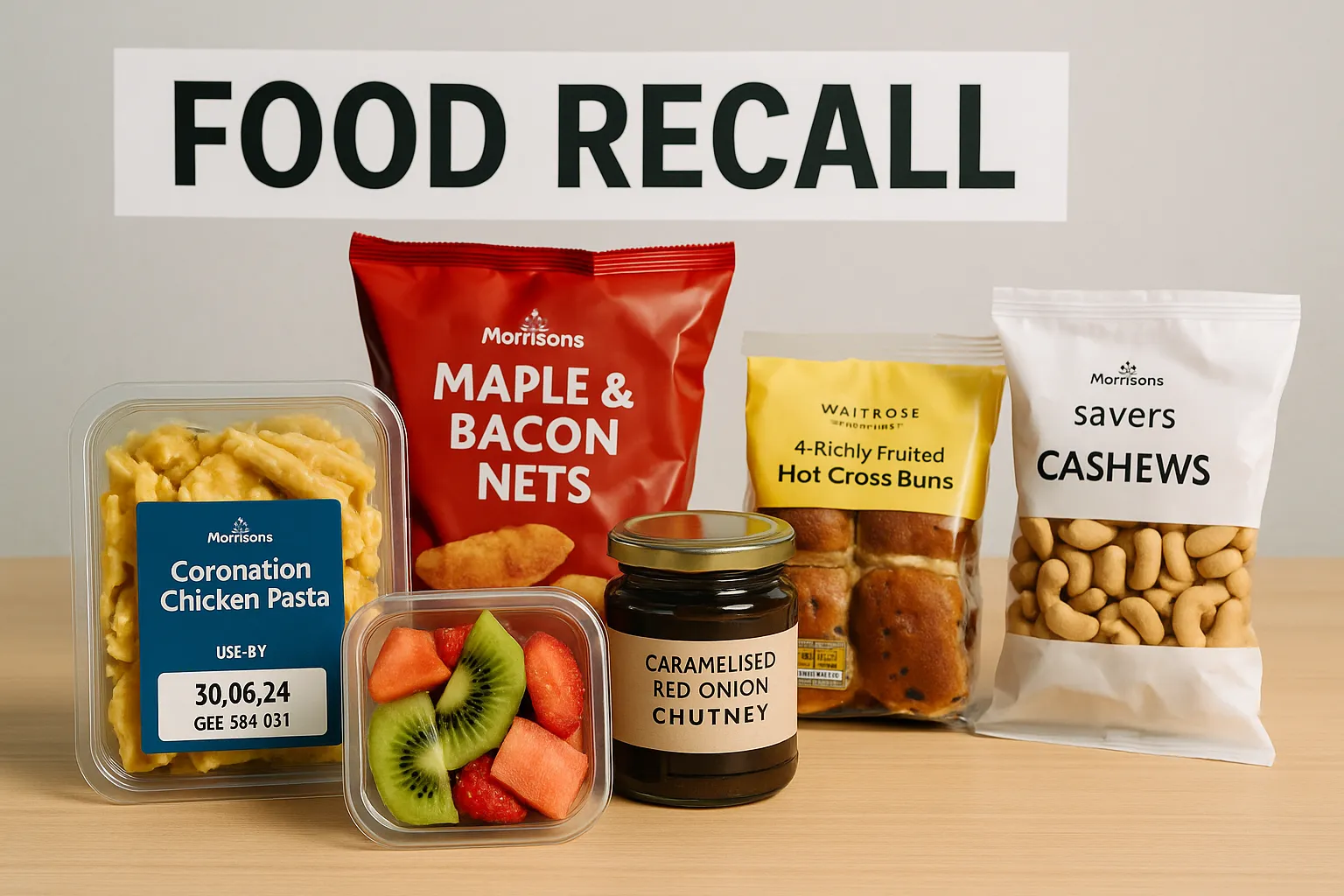
Among the notable recalls, Morrisons has taken steps to withdraw its Coronation Chicken Pasta, packaged in 230g containers. This action follows the revelation that some affected packages might contain Florida Salad, which could include undeclared milk. As a result, the product poses a significant risk to those with lactose intolerance or a milk allergy. The recalled pasta packs bear a use-by date of June 30 and have the batch code GBB 584 031.
Additionally, Morrisons is recalling its Maple & Bacon Back of the Net crisps, sold in 140g bags. Similar to the pasta, these items are potentially hazardous due to a packaging blunder that may have resulted in the inclusion of undeclared milk. Those who have purchased the crisps should also refrain from consumption and return the items for a refund.
The supermarket chain has further announced the recall of its Savers Cashews, which are being removed from shelves after concerns arose over the possible presence of glass fragments within the packs. Customers who bought these 125g bags, with best before dates ranging from August 9 to October 9, are urged to return them immediately.
A broader food safety issue has emerged involving the recall of various fruit products. The supermarkets involved include Morrisons, Asda, Tesco, Sainsbury’s, and Waitrose, as the supplier Prepworld has identified salmonella risks in certain fruits. The implicated items, which include apples and kiwis potentially contaminated with the bacteria, are known to cause symptoms such as fever, diarrhea, and abdominal cramps.
The specific fruit items subject to this recall include:
– Asda’s Pink Lady Apples, and Mango, Strawberry & Blueberry packs with use-by dates of June 23 and 24;
– Morrisons’ Kiwi, Melon & Strawberries with a use-by date of June 24;
– Tesco’s Melon, Kiwi & Strawberry packs, also with June 24 as the use-by date;
– Waitrose’s Pink Lady Apple and Grapes dated June 23;
– Sainsbury’s various fruit packs with use-by dates on June 23.
Food safety officials are emphasising the importance of adhering to the recall notices. A spokesperson for the FSA stated the urgency of avoiding any consumption of the affected products, specifically highlighting the need to seek medical attention if experiencing symptoms associated with salmonella.
In addition to the fruit and snacks, concerns over safety have also prompted the recall of a widely available condiment. The Arran Fine Foods Caramelised Red Onion Chutney, which is sold in both Tesco and Sainsbury’s, is under scrutiny due to suspicions that it may contain metal fragments. Batches set for recall include various pack sizes and best-before dates, with customers strongly advised to return any purchased chutney to the store for a refund.
Furthermore, Waitrose & Partners is recalling its 4 Richly Fruited Hot Cross Buns due to the unlabelled presence of barley, which poses risks to those with barley allergies. Similar to other recalled products, customers should return these buns for a complete refund, again without the need for a purchase receipt.
As consumer safety remains paramount, these recalls serve as an important reminder of the rigorous monitoring conducted by the FSA and supermarkets. The proactive measures being taken by these retailers underline their dedication to ensuring the wellbeing of their customers, alongside maintaining product standards and safety.
In light of these developments, it is recommended that shoppers remain vigilant and routinely check for updates from retailers and the FSA regarding any food safety issues. Regular reviews of purchased items against the recalled lists, as well as adherence to the guidance provided, are essential steps in safeguarding health and preventing potential allergic reactions or illnesses.
The involvement of multiple major retailers signifies a coordinated response to potential food safety hazards, underlining the collective effort to ensure consumer protection across the UK marketplace. Consumers are encouraged to stay informed about such recalls and take necessary precautions when purchasing food items.
Our Thoughts
To prevent the incidents described in the recall of various food products, the supermarkets and suppliers should enhance their compliance with the UK Food Safety Act 1990 and the Food Labelling Regulations 1996. Key actions could include:
1. **Stricter Quality Control Measures**: Implementing more rigorous checks during the production and packaging processes could have identified allergens and foreign materials, preventing mislabeling and contamination.
2. **Supplier Management**: Strengthening the vetting processes for suppliers and ensuring they adhere to health and safety regulations and practices could mitigate risks associated with product contamination.
3. **Training and Communication**: Providing ongoing training for employees in food safety practices and proper labelling could increase awareness of potential hazards and improve overall compliance with food safety standards.
4. **Prompt Reporting Mechanisms**: Establishing effective internal reporting systems for product safety issues can facilitate swift action in case of discrepancies, thereby minimizing risk of harm to consumers.
In these instances, breaches of regulations concerning accurate food labeling and safety could have been addressed through better management protocols and adherence to relevant health and safety legislation. Similar incidents could be avoided through a more proactive safety culture within the food retail sector.