















Choose an AI chat
Employers must maintain reasonable temperatures at work despite lack of legal maximum
UK Health and Safety Latest

Employers must maintain reasonable temperatures at work despite lack of legal maximum

by Michael Harland
May 25, 2026
0

As the UK faces rising summer temperatures, the absence of a legal maximum workplace temperature sparks concern among employees and...

Read moreDetails
Hottest bank holiday on record expected in the UK

Hottest bank holiday on record expected in the UK

May 25, 2026
Workers' rights amid rising temperatures in the UK

Workers’ rights amid rising temperatures in the UK

May 25, 2026
Workers face sweltering conditions as summer heat poses legal uncertainties

Workers face sweltering conditions as summer heat poses legal uncertainties

May 25, 2026
Cornerstone Robotics gains EU and Singapore certifications for surgical system

Cornerstone Robotics gains EU and Singapore certifications for surgical system

May 25, 2026
  • About
  • Advertise
  • Policies
    • Privacy Policy
    • Editorial Policy
    • Corrections & Complaints policy
  • Useful Documents
    • Understanding RIDDOR
    • 10 Workplace Safety Failures
    • A Complete Guide to Reporting Safety Incidents in the UK
    • Fire Risk Assessment: Meeting the Regulatory Reform (Fire Safety) Order
    • COSHH Basics: A Practical Guide to Control of Substances Hazardous to Health
    • Working at Height in the UK: The Essentials (WAH Regulations 2005)
    • Asbestos in the Workplace: Control of Asbestos Regulations 2012 (CAR) Essentials
    • Managing Contractors Under CDM 2015: Roles, Duties & Controls
    • DSE & Ergonomics: Healthy Workstations for Office & Hybrid Teams
    • Lock out Tag out LOTO
    • Workplace Transport Safety: Forklifts, Pedestrians & Traffic Management
    • Noise & Vibration at Work: Practical Controls (2005 Regulations)
    • Confined Spaces in the UK: Safe Entry under the Confined Spaces Regulations 1997
  • Contact
  • Agent
Tuesday, May 26, 2026
9 °c
London
10 ° Thu
8 ° Fri
10 ° Sat
  • Login
UK Safety News
  • Home
  • News
    • All
    • UK Health and Safety Latest
    Mother calls for social media regulations following son's death linked to online challenge

    Mother calls for social media regulations following son’s death linked to online challenge

    Employers must maintain reasonable temperatures at work despite lack of legal maximum

    Employers must maintain reasonable temperatures at work despite lack of legal maximum

    Hottest bank holiday on record expected in the UK

    Hottest bank holiday on record expected in the UK

    Workers' rights amid rising temperatures in the UK

    Workers’ rights amid rising temperatures in the UK

    Workers face sweltering conditions as summer heat poses legal uncertainties

    Workers face sweltering conditions as summer heat poses legal uncertainties

    Cornerstone Robotics gains EU and Singapore certifications for surgical system

    Cornerstone Robotics gains EU and Singapore certifications for surgical system

    Workers seek clarity on temperature rights amid heatwave challenges

    Workers seek clarity on temperature rights amid heatwave challenges

    Surgeon Mei Nortley honoured with prestigious Moynihan Lectureship and Medal

    Surgeon Mei Nortley honoured with prestigious Moynihan Lectureship and Medal

    Growing concerns over safety prompt scrutiny of ashwagandha supplements

    Growing concerns over safety prompt scrutiny of ashwagandha supplements

    UK experiences hottest May day in nearly 80 years amid rising temperatures

    UK experiences hottest May day in nearly 80 years amid rising temperatures

    Trending Tags

    • Donald Trump
    • Future of News
    • Climate Change
    • Market Stories
    • Election Results
    • Flat Earth
No Result
View All Result
UK Safety News
No Result
View All Result
Home News UK Health and Safety Latest

Employers must maintain reasonable temperatures at work despite lack of legal maximum

Michael Harland by Michael Harland
May 25, 2026
in UK Health and Safety Latest
Reading Time: 3 mins read
0
Employers must maintain reasonable temperatures at work despite lack of legal maximum

Story Highlight

– No legal maximum workplace temperature in the UK.
– Employers must maintain “reasonable” working conditions.
– HSE advises minimum temperatures of 16C or 13C.
– Excessive heat can impair concentration and safety.
– Trade unions push for explicit temperature thresholds.

Full Story

Summer’s warmer weather often brings challenges for those working across various sectors, including offices, retail, and warehouses. Employees frequently seek clarity on their rights as indoor temperatures rise, influencing comfort and productivity levels.

In the UK, a common misconception exists regarding workplace temperature regulations. Currently, there is no legislated maximum temperature that employers must adhere to, but they are legally obliged to ensure that working conditions remain “reasonable” according to health and safety laws. This requirement is detailed in guidance provided by the Health and Safety Executive (HSE), which emphasizes that workplaces should offer an environment that is both comfortable and equipped with clean, fresh air. In addition, it encourages employers to incorporate temperature into their workplace risk assessments, particularly during extreme heat events.

While the UK government has specified that there is no formal upper limit at which employees can cease working, the guidance on workplace temperatures underscores the necessity for a “reasonable” thermal environment throughout working hours. Minimum temperature benchmarks do exist, with the HSE recommending indoor workplaces remain at or above 16 degrees Celsius. In scenarios involving significant physical exertion, this threshold is lowered to 13 degrees Celsius.

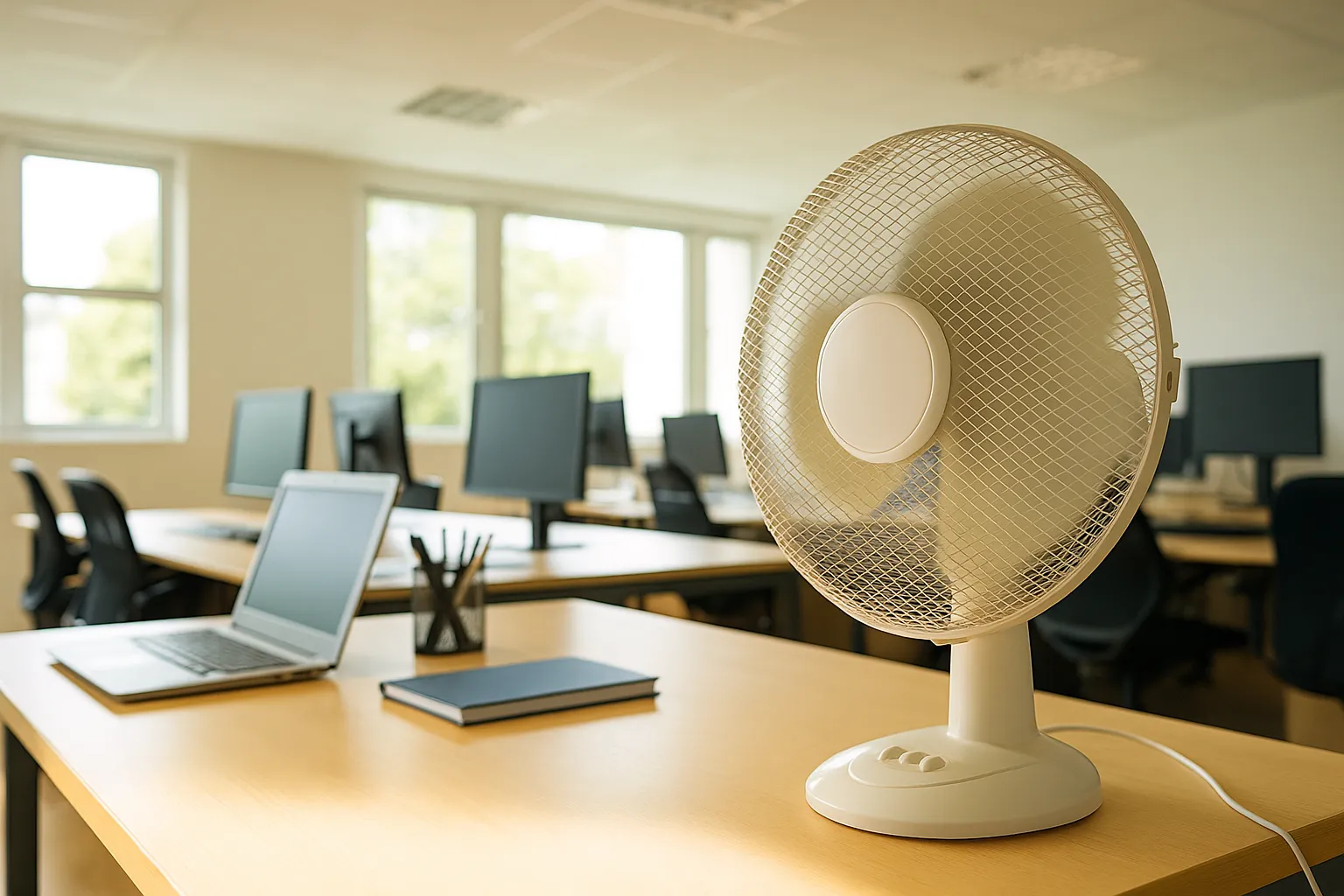
According to industry experts, it becomes vital for employers to adopt practical measures to assist workers who contend with the challenges posed by high temperatures. Such measures might encompass providing portable fans, relaxing dress codes, allowing windows to be opened for improved ventilation, ensuring an adequate supply of cold drinking water, and even altering work patterns during exceptionally hot periods.

The risks associated with excessive heat are significant. The HSE highlights the potential adverse effects of high temperatures on concentration and fatigue levels, which can result in heightened safety risks in various work environments. Overheated workers may be more susceptible to making mistakes and unsafe decisions in their roles, underscoring the importance of maintaining comfortable conditions.

For those engaged in outdoor jobs, the threat of extreme weather poses additional hazards. Employers are urged to assess the risks of dehydration, heat exhaustion, and prolonged sun exposure, especially for workers engaged in physical tasks outdoors. These evaluations are crucial in safeguarding employee well-being and ensuring that outdoor labour is conducted safely.

In certain situations, employees may encounter legal protections when workplace temperatures reach genuinely dangerous levels. Experts in employment law reference Section 44 of the Employment Rights Act 1996, which could shield workers who leave a situation posing “serious and imminent danger”. However, the applicability of this provision can vary significantly based on the specific circumstances surrounding each case.

Trade unions have been vocal in their push for more defined maximum temperature regulations in response to increasing heatwaves. They argue that clearer guidelines would better protect workers during hotter periods. Nevertheless, government representatives and regulatory authorities maintain that a universal upper limit would be impractical, as differing work environments present unique challenges and conditions.

As the climate continues to change, the dialogue surrounding workplace temperatures is likely to evolve. Employers will need to be proactive in addressing the concerns of their workforce and adapting their policies to create safer working environments. It’s expected that discussions will also continue about the responsibilities of employers during unreasonably hot conditions, as the lines between acceptable work environments and legislative obligations blur.

By considering how workplace standards evolve, employers can help ensure that their operations are not only compliant with existing laws but also advocate for employee welfare. The ongoing challenge will be to balance productivity with the well-being of workers in increasingly hot conditions, as the UK’s summer temperatures rise.

In summary, while an official maximum workplace temperature does not currently exist in the UK, the requirement for employers to uphold reasonable working conditions is clear. As temperatures rise, it becomes essential for employers to take tangible steps that mitigate the effects of heat, ensuring the safety and comfort of their staff remains a priority.

Our Thoughts

To avoid the issues outlined in the article, employers could implement several proactive measures to maintain reasonable working temperatures and ensure employee well-being. Key safety lessons include the necessity of regular risk assessments that factor in heat exposure and the requirement to provide measures such as fans, hydration stations, or modified work patterns during extreme temperatures.

The Health and Safety Executive (HSE) guidance should be strictly followed, as it emphasizes maintaining indoor temperatures conducive to comfort and productivity, which reflects obligations under the Health and Safety at Work Act 1974. Although there is no maximum temperature limit, failure to ensure a reasonable working environment can potentially lead to breaches of the Management of Health and Safety at Work Regulations 1999, particularly in maintaining adequate ventilation and comfort.

To prevent similar incidents, employers must develop and communicate clear policies regarding managing heat-related risks, especially for outdoor workers facing dehydration or heat exhaustion. Incorporating effective training and awareness programs about the implications of extreme heat on health and safety could further mitigate risks.

Tags: Climate Change
SummarizeShare34Share197SendSend
ADVERTISEMENT
Michael Harland

Michael Harland

Related Posts

Construction firm fined £1m after worker killed by reversing road-sweeper

Construction firm fined £1m after worker killed by reversing road-sweeper

by Jade Anderson
October 16, 2025
2

Marlborough Highways Limited has been fined £1 million following the tragic death of employee Robert Morris, who was struck by...

Rail safety initiative reaches thousands of young people with renewed support

Rail safety initiative reaches thousands of young people with renewed support

by Jade Anderson
October 13, 2025
3

Lumo and Hull Trains have announced a renewed commitment to the Rail Safe Friendly Programme, highlighting a social value impact...

Leave a Reply Cancel reply

Your email address will not be published. Required fields are marked *

I agree to the Terms & Conditions and Privacy Policy.

Useful Documents

  • Understanding RIDDOR
  • 10 Workplace Safety Failures
  • A Complete Guide to Reporting Safety Incidents in the UK
  • Understanding RIDDOR
  • Fire Risk Assessment: Meeting the Regulatory Reform (Fire Safety) Order
  • COSHH Basics: A Practical Guide to Control of Substances Hazardous to Health
  • Working at Height in the UK: The Essentials (WAH Regulations 2005)
  • Lock out Tag out LOTO
ADVERTISEMENT
Cornerstone Robotics gains EU and Singapore certifications for surgical system
UK Health and Safety Latest

Cornerstone Robotics gains EU and Singapore certifications for surgical system

by Ellie Cartwright
May 25, 2026
0

Cornerstone Robotics has achieved a significant milestone with the approval of its Sentire® Surgical System, now bearing both EU CE...

Read moreDetails
Workers seek clarity on temperature rights amid heatwave challenges

Workers seek clarity on temperature rights amid heatwave challenges

May 25, 2026
Surgeon Mei Nortley honoured with prestigious Moynihan Lectureship and Medal

Surgeon Mei Nortley honoured with prestigious Moynihan Lectureship and Medal

May 25, 2026
Growing concerns over safety prompt scrutiny of ashwagandha supplements

Growing concerns over safety prompt scrutiny of ashwagandha supplements

May 24, 2026
UK Safety News

Copyright © 2025
UK Safety News

Navigate Site

  • About
  • Advertise
  • Policies
  • Useful Documents
  • Contact
  • Agent

Follow Us

Welcome Back!

Login to your account below

Forgotten Password?

Retrieve your password

Please enter your username or email address to reset your password.

Log In
No Result
View All Result
  • Home
  • News

Copyright © 2025
UK Safety News

This website uses cookies. By continuing to use this website you are giving consent to cookies being used. Visit our Privacy and Cookie Policy.