













Story Highlight
– Aircraft engineer Georgie Buxton died after hangar accident.
– Incident occurred while working on Boeing 787 at Heathrow.
– Virgin Atlantic described him as a beloved team member.
– Georgie was on life support for three weeks.
– Investigation underway with Metropolitan Police and Health officials.
Full Story
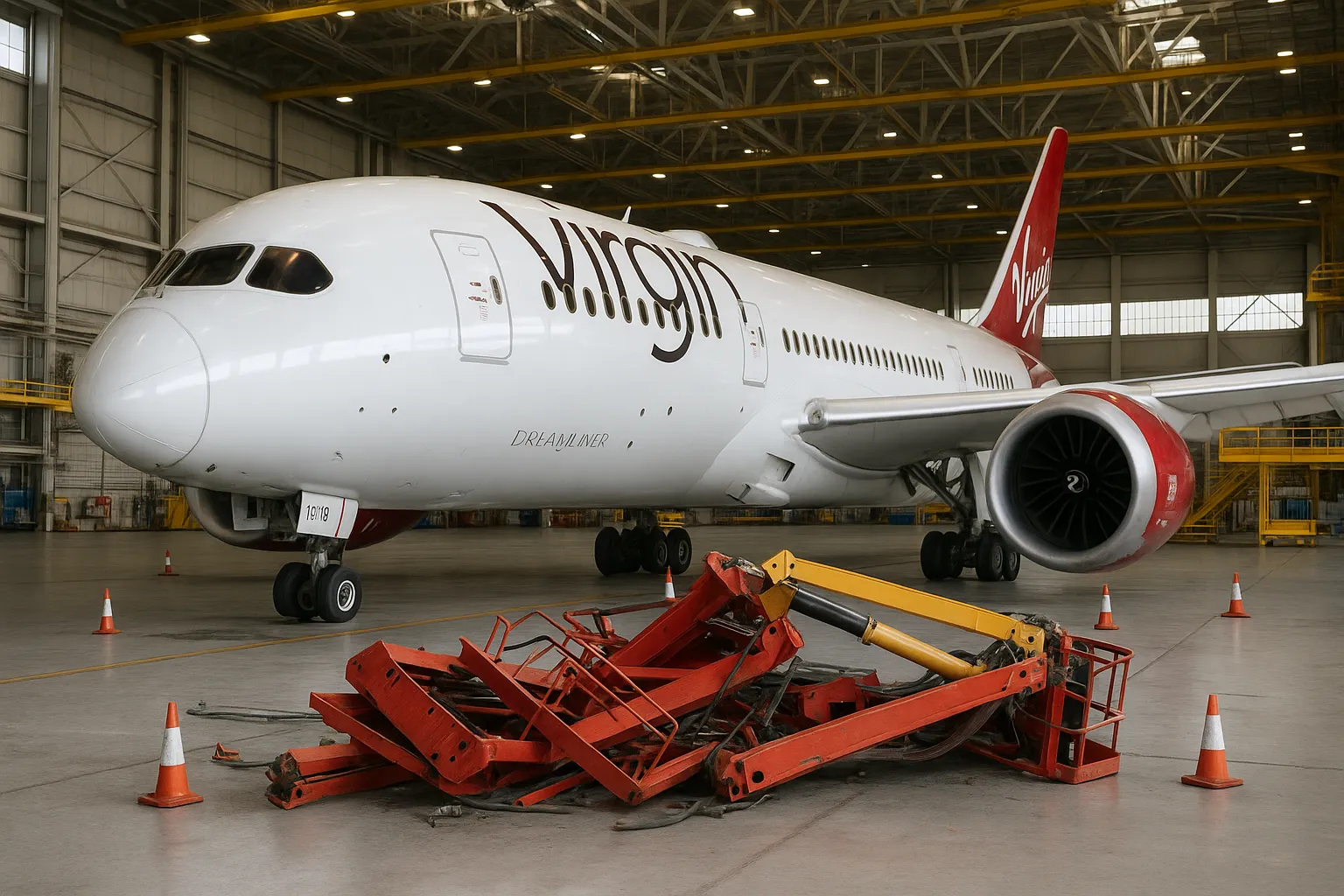
An aircraft engineer tragically lost his life following a workplace incident at Heathrow Airport involving a Boeing 787 Dreamliner. Georgie Buxton, a 23-year-old technician, sustained critical injuries after machinery in the hangar fell on him while he was engaged in maintenance on a Virgin Atlantic aircraft. According to the Metropolitan Police, the accident occurred shortly before 9 am on June 11.
Despite being placed on life support for three weeks, Buxton passed away on July 7 after the support was withdrawn. Virgin Atlantic expressed profound sorrow over his death, highlighting his status as a beloved member of their engineering team. A spokesperson shared heartfelt condolences on behalf of the airline, stating, “Our thoughts are firmly with Georgie’s family, loved ones, friends and colleagues at this incredibly sad and challenging time.” They also committed to providing support to those affected during this distressing time, as Buxton’s family requested privacy to mourn their loss.
The airline is currently collaborating with the Metropolitan Police’s Aviation Policing Unit as well as the Health and Safety Executive to investigate the circumstances surrounding the incident. Initial reports indicate that an accident occurred in a hangar setting, raising serious safety concerns about conditions and protocols in such high-stakes environments.
Georgie Buxton had joined Virgin Atlantic in 2024, transitioning from his previous role at Ryanair. In his social media posts, he expressed excitement about his new position as an aircraft technician, reflecting on the valuable experiences he had gained while working at Stansted Airport. He remarked, “It’s been a pleasure working with all the engineers and mechanics whilst at Ryanair in Stansted and I’ve been able to develop and learn a lot. Now it’s time to move on so I can develop and learn more on different airframes.” This statement encapsulates his eagerness to grow in the field, illustrating the determination and passion he had for his profession.
The tragic event has raised questions regarding safety policies within the aviation maintenance sector, particularly concerning the handling of heavy machinery essential for aircraft operations. Experts in aviation safety have urged a thorough examination of protocols to ensure similar incidents do not occur in the future. The enforcement of rigorous safety standards and regular training for staff in the use of equipment is vital for protecting the lives of those maintaining aircraft.
Heathrow Airport, a major international aviation hub, has consistently faced scrutiny over safety regulations. Incidents like Buxton’s underline the need for continuous assessment of workplace safety measures to prevent further tragedies. The support for Buxton’s family and colleagues has been echoed across the aviation community, as they cope with the loss of a young professional dedicated to his craft.
Colleagues remembered Mr. Buxton fondly, sharing anecdotes that reflect his warm personality and commitment to teamwork. Fellow engineers noted their deep admiration for his work ethic and the positive spirit he brought to the workplace. His passing has left a palpable void in the Virgin Atlantic engineering department, where he was regarded not just as a colleague, but as a friend.
As investigations unfold, emphasis on maintaining a culture of safety in aviation maintenance becomes increasingly crucial. The tragic loss of Georgie Buxton underscores the human aspect of the aviation industry, where skilled professionals work diligently behind the scenes to ensure the safety and comfort of passengers flying across the globe. His legacy will not only be remembered by those who knew him personally but also by the stringent safety improvements that may arise from this unfortunate accident.
The airline industry’s resilience is often highlighted during such challenging times, as companies strive to ensure the ongoing safety of their employees. Engaging with industry experts and stakeholders could propel necessary changes in maintenance operations, helping to safeguard future engineers and technicians who dedicate their lives to this essential work.
In conclusion, the heart-wrenching story of Georgie Buxton serves as a sobering reminder of the risks faced by those working in aviation maintenance. As the investigation progresses, it is hoped that meaningful lessons will be learned, leading to enhanced safety protocols to protect those who keep the aviation sector running smoothly.
Our Thoughts
The tragic incident involving aircraft engineer Georgie Buxton highlights several areas where improved safety measures could have potentially prevented the fatality. Key lessons include the importance of rigorous maintenance and inspection protocols for hangar machinery, as well as ensuring that all equipment meets safety standards as mandated by the Provision and Use of Work Equipment Regulations 1998 (PUWER).
If proper risk assessments had been conducted in accordance with the Management of Health and Safety at Work Regulations 1999, hazards associated with the machinery could have been identified and mitigated. Additionally, effective training for employees regarding emergency procedures and machinery safety could further reduce the risks associated with working in such environments.
Regular safety audits should also be carried out to ensure compliance with all relevant health and safety legislation, including the Health and Safety at Work Act 1974. Furthermore, implementing a culture of safety where workers feel empowered to report unsafe conditions could contribute to preventing similar incidents in the future.