













Story Highlight
– Farm safety event highlights 41 worker fatalities since 2025.
– UK agriculture remains the most dangerous industry.
– Half of deaths involve workers aged 65 or older.
– Serious injuries on farms can be life-changing.
– Call for mindset shift towards prioritizing safety.
Full Story
In a significant initiative aimed at enhancing safety within the agricultural sector, George Gittus, a representative from the National Farmers Union (NFU) in Suffolk, organised a poignant event on his farm near Bury St Edmunds. This event served as a precursor to the forthcoming Farm Safety Week, a dedicated period focused on raising awareness regarding the critical importance of safety in farming practices.
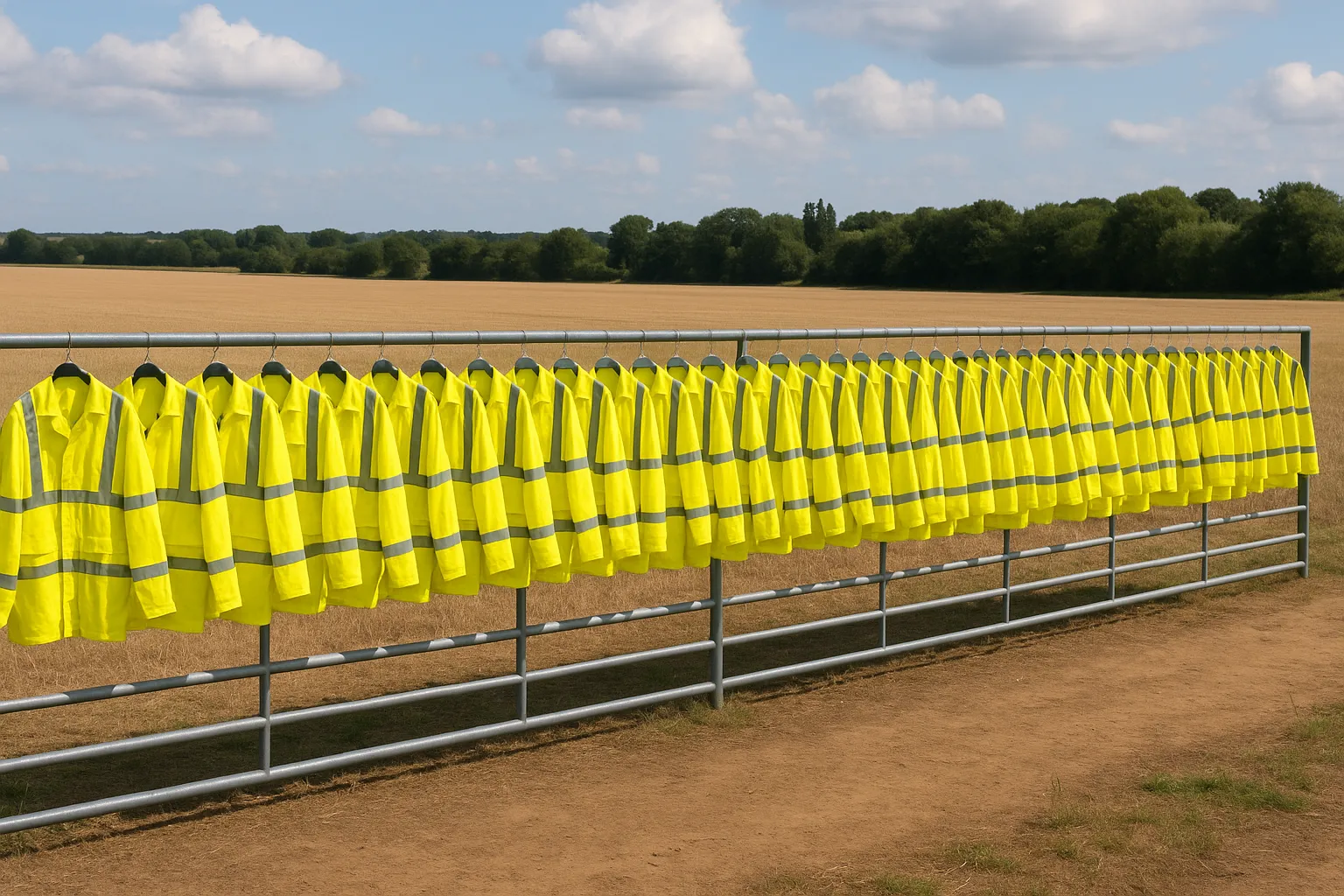
At the centre of the event was a powerful visual display: 41 high-visibility jackets, each symbolising a farm worker who tragically lost their life in an accident since April 2025. This somber reminder of the human cost associated with farming underscored the urgent need for improved safety measures within the industry.
Speaking at the event, Mr Gittus emphasised the profound impact of even a single fatality in the farming community. “Just one farm death is one too many,” he asserted. He further highlighted that the consequences extend beyond fatalities, pointing out that many individuals endure serious injuries that can result in life-altering conditions. “In addition to the 41 deaths, we need to take into account those who also suffer serious injuries on farm, and many can be life-changing. Farm safety must be the top priority for everyone,” he added.
These remarks come against a backdrop of alarming statistics revealing that farming continues to be the UK’s most perilous occupation. According to recently compiled figures, 22 fatalities among farm workers were reported in the 2025/26 period. A concerning trend is noted in the age demographics of those affected, with half of the deceased workers being 65 years or older, and a staggering 10 per cent of all fatalities involving children. Moreover, the sector grapples with an estimated 9,000 workers experiencing work-related ill health, many of whom suffer from musculoskeletal disorders (MSDs).
Data from the Health and Safety Executive (HSE) illustrates a stark reality: individuals working in agriculture, forestry, and fishing face a risk of fatality that is seven times higher than those employed in the construction industry, and 21 times greater than the average across all sectors. This disparity underscores the pressing need for a cultural shift regarding safety practices in agriculture.
Stephanie Berkeley, manager of the Farm Safety Foundation, known as Yellow Wellies, echoed Mr Gittus’s sentiments, stressing the need to broaden the conversation around farm safety. “When we talk about farm safety, fatalities understandably dominate the conversation, but serious injuries can be just as life-changing,” she remarked. She added that the reality on farms often diminishes the perception of risk, with the potential for severe accidents lurking just beneath the surface. “The margin between a near miss, a serious injury and a fatal incident is often frighteningly small,” she said.
The upcoming 14th annual Farm Safety Week, orchestrated by the Farm Safety Foundation, is set to highlight not only the loss of life but also the everyday risks that lead to serious injuries, which, in some instances, go unacknowledged. This year’s initiative seeks to shift the focus towards comprehensive safety measures that protect workers from various forms of harm.
Mr Gittus is advocating for a transformative change in attitudes within the farming community. He raised a critical point about the stigma surrounding discussions of mental and physical fatigue, asserting that farmers should not feel weak for admitting they need assistance or more time to complete a task safely. “We need to correct the all too often held view that we are somehow weak if we say we are tired or we need more time or we can’t afford the right equipment or contractor to carry out the task safely,” he stated, urging peers to take immediate action when feeling overwhelmed.
He advised, “If you are tired – STOP. Take Five to Stay Alive. You will be resting for a very long time in the wrong place if you kill yourself or someone else. Think of those you will leave behind; it is not worth it. You cannot put a price on a life.”
This focus on mental well-being and proactive measures is crucial in an industry where the pressures of work can often lead to neglect of personal health and safety. The farming community, often steeped in tradition and resilience, must now embrace a new narrative that prioritises the safety and well-being of its workers above all else.
As Farm Safety Week approaches, the industry faces a pivotal moment. With increased awareness and a collective commitment to change, there is potential to significantly reduce the hazards faced by those who work tirelessly to provide food and resources. The call for action from leaders like Mr Gittus and organisations like the Farm Safety Foundation is essential in driving meaningful improvements in safety standards, ultimately safeguarding lives and livelihoods in this vital sector.
Our Thoughts
To avoid the tragic incidents highlighted in the article, the farming community must adopt stringent safety practices in line with the Health and Safety at Work Act 1974, which mandates that employers ensure the health, safety, and welfare of all workers. Increased emphasis on risk assessments and safety training could mitigate risks associated with farm activities, particularly for older workers and young children, who are at higher risk.
Key safety lessons include the importance of proactive safety cultures where workers feel empowered to express fatigue or request necessary resources without stigma. Compliance with the Management of Health and Safety at Work Regulations 1999 requires employers to provide adequate training and information about health risks, particularly concerning musculoskeletal disorders prevalent in the sector.
Preventative strategies could involve regular safety workshops, ensuring proper safety equipment is accessible, and implementing fatigue management programs. The significant number of non-fatal injuries indicates a failure to adequately address safety measures; thus, a culture shift toward prioritizing safety in daily operations is essential to prevent future fatalities and serious injuries on farms.