















Story Highlight
– HSE aids milestone in hydrogen-powered flight with Rolls-Royce.
– First jet engine tested using 100% hydrogen successfully.
– Project supports UK’s net zero aviation technology goals.
– HSE ensures safety analysis for rapid innovation in testing.
– Collaboration validates hydrogen technology for future aerospace applications.
Full Story
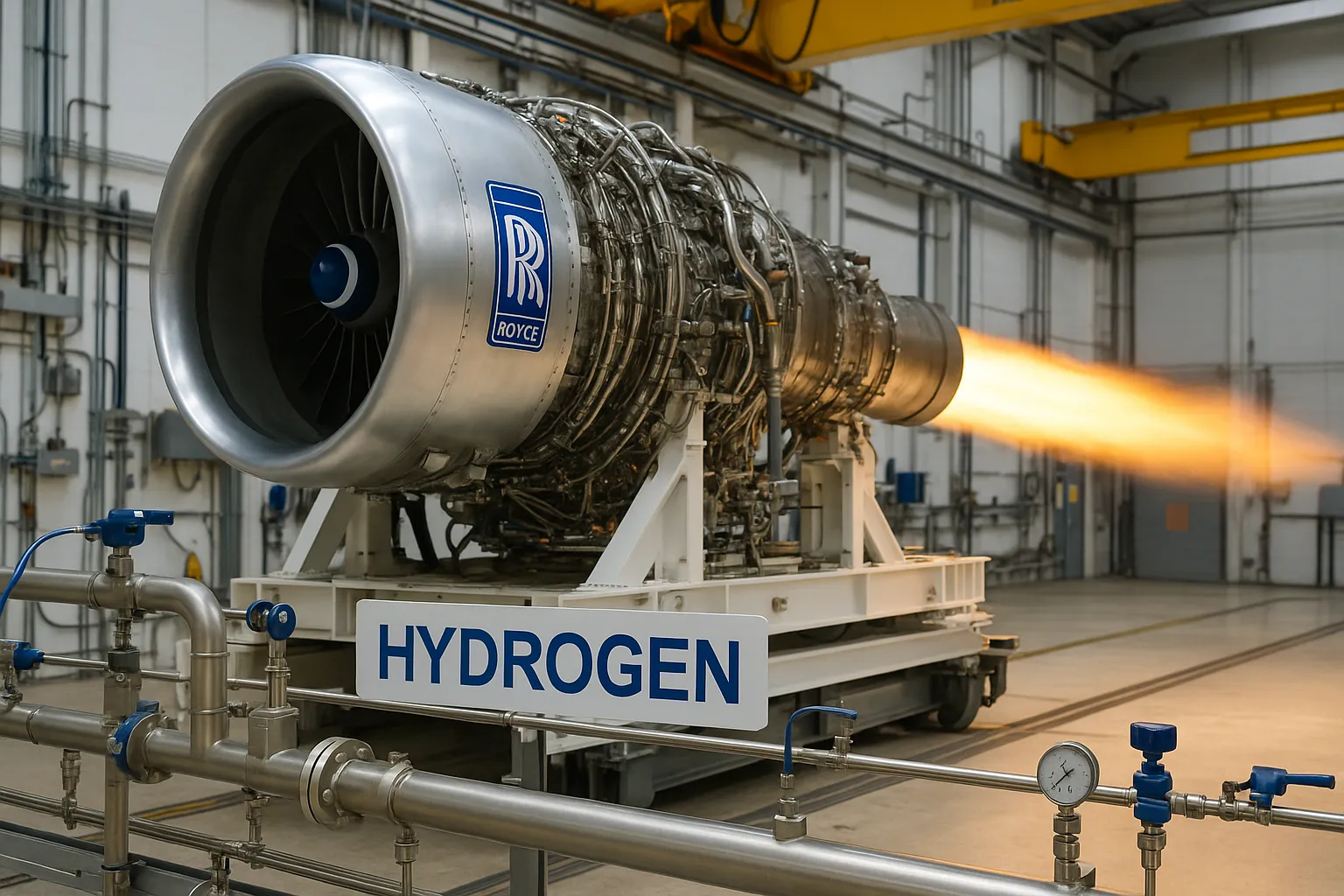
The UK’s Health and Safety Executive (HSE) is making significant strides in the field of aviation, particularly in the development of hydrogen-powered flight, highlighting the pivotal role safety expertise plays in fostering innovation. This collaboration with Rolls-Royce has culminated in a groundbreaking achievement: the successful testing of the world’s first jet engine that operates on 100% hydrogen and can achieve full take-off power.
This initiative is part of a pioneering programme aimed at advancing hydrogen aviation research, which is crucial for reducing carbon emissions in future air travel. Through this collaborative effort, HSE demonstrates that a robust regulatory framework, grounded in scientific expertise, can facilitate technological advancements necessary for achieving net zero aviation.
The work conducted at HSE’s cutting-edge Science and Research Centre in Buxton involved a multifaceted approach to the design, manufacturing, and installation of sophisticated hydrogen control and monitoring gas supply systems. This infrastructure is essential for safely conducting tests aimed at utilising hydrogen as a fuel source in aircraft engines. The successful Engine GH2 test marks a historic first, showcasing HSE’s ability to handle challenging projects that marry safety with innovation.
Dr Nigel A Moss, the Aerospace Sector Manager at HSE’s Science and Research Centre, underscored the vitality of safety in the aviation industry. He stated, “Safety is always front and centre within the aerospace sector and the development of hydrogen as an alternative to hydrocarbon-based jet fuel presents challenges across many different technical fronts.” He further emphasized that the HSE’s contributions are designed to support rather than hinder innovation, allowing for rapid advancements in the field.
The hydrogen research team at HSE boasts a rich history of over 20 years, during which they have collaborated with prominent UK aerospace firms, including Airbus and Rolls-Royce. Their work aligns closely with the objectives of the Aerospace Technology Institute and supports the UK Government’s growth strategy by pushing forward the frontiers of technology in aviation.
Commenting on the project, Adam Newman, Chief Engineer for the Hydrogen Demonstrator Programme at Rolls-Royce, conveyed the industry’s enhanced understanding of hydrogen’s behaviour within modern aero gas turbines. “This programme has given us the clearest understanding in the industry of how hydrogen behaves in a modern aero gas turbine,” said Newman. The systematic approach to testing has validated critical technologies relating to combustion, fuel, and control systems, confirming the safe implementation of hydrogen usage from initial design through to operational testing.
Through exhaustive testing across a variety of operating conditions, including fault scenarios, the team was able to ensure the engine could operate at its full potential throughout an entire flight cycle. Newman praised the swift pace of delivery, highlighting its significance in gaining insights that will be applicable to future projects, such as the UltraFan® programme, positioning Rolls-Royce as a leader in sustainable aviation technology.
This innovative endeavour illustrates HSE’s overarching goal of enabling safe industry advancement – showcasing how a solid safety foundation is not merely a regulatory hindrance, but a crucial aspect that enables progress and fosters technological breakthroughs.
In addition to fostering collaboration between organizations, the health and safety regulator’s involvement serves to reinforce public trust in the aviation industry’s transition towards sustainable practices. As the demand for greener travel alternatives grows, projects like this are essential in paving the way for cleaner aviation options that align with environmental goals and public expectations.
The HSE, responsible for ensuring workplace health and safety across the UK, continues to expand its role within innovative sectors, driven by a commitment to protect both individuals and the environment. The organisation’s extensive experience and scientific acumen position it uniquely to advise on the safe implementation of new technologies, thus reinforcing its essential role in the industry.
The state-of-the-art Science and Research Centre in Buxton not only plays a crucial part in these developments but is also regarded as a premier institution for applied science and engineering research in health and safety. By providing a conducive environment for rigorous testing and collaboration, it enhances the capabilities of the UK’s aerospace sector and underpins the country’s position as a leader in aviation technology.
In conclusion, the joint efforts between the HSE and Rolls-Royce in the domain of hydrogen-powered aviation mark a significant milestone for both entities and the industry as a whole. As aviation faces immense scrutiny regarding its environmental impact, initiatives that harness innovative fuel sources while prioritising safety are more pertinent than ever. With ongoing research and collaborative efforts, the possibilities for sustainable air travel appear increasingly attainable, driving the future of aviation towards a cleaner, greener horizon.
Our Thoughts
The article highlights a successful collaboration between the Health and Safety Executive (HSE) and Rolls-Royce in developing hydrogen-powered flight. To further enhance safety in such innovative projects, the following lessons could be taken into account:
1. **Rigorous Safety Assessment**: Although the article praises HSE’s safety analysis, it is crucial to ensure that all potential hazards related to hydrogen use are exhaustively evaluated, especially during initial design phases.
2. **Regulatory Compliance**: Continuous monitoring and adherence to relevant UK regulations, such as the Health and Safety at Work Act 1974, is essential to ensure that all safety measures are properly implemented and maintained.
3. **Training and Competency**: Regular training programs for all personnel involved in hydrogen handling and testing are vital. Ensuring that all staff are competent in safety procedures relating to new technologies can prevent potential incidents.
4. **Risk Management Framework**: Implementing a robust risk management framework that includes contingency plans for fault scenarios can improve preparedness and response in the event of unexpected challenges during testing.
By embedding these practices, the aerospace sector can further mitigate risks associated with emerging technologies like hydrogen aviation, ensuring that safety continues to underpin innovation.