














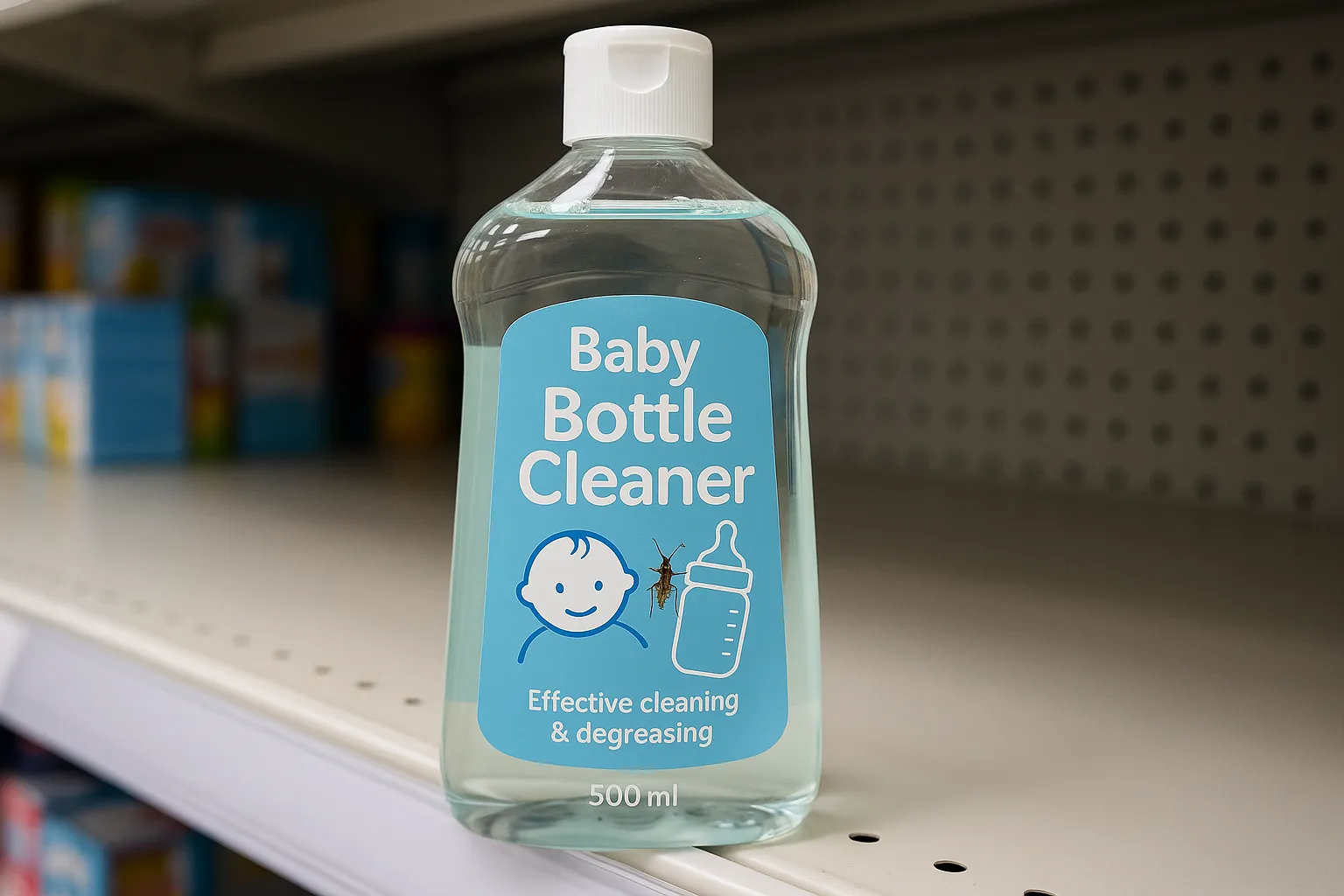
UPDATE 07/09/26: This has now been reclassified from a product recall to a product withdrawal.
Story Highlight
– Milton recalls baby bottle cleaner due to insect contamination.
– Affected products pulled from UK supermarket shelves.
– Contamination deemed harmless but poses health risk.
– Customers can return products for full refund.
– Milton prioritizes safety and transparency in response.
Full Story
A popular baby bottle cleaning solution has been taken off the market following reports of insect contamination within certain batches. The product, a 500ml Baby Bottle Cleaner produced by Milton, has been recalled from supermarket shelves across the UK due to potential health risks associated with the findings.
The recall has been initiated by Milton International SAS, alongside stores like Waitrose, aiming to ensure consumer safety amid these alarming reports. While the company asserts that the insect presence in their product does not pose a direct danger to infants, the Office for Product Safety and Standards issued a statement indicating that such contamination can create health concerns.
In a public statement regarding the recall, Milton expressed deep concern for the well-being of infants and reassured parents that safety is their foremost priority. “The safety of babies and the trust of parents are our highest priorities so we want to be open with you about a recent issue with Milton Baby Bottle Cleaner and what we have done about it,” the company’s spokesperson noted.
Their statement further elaborated, “We identified the presence of insects in a small number of UK Milton Baby Bottle Cleaner bottles. As soon as we became aware, we removed the affected products from sale and began a full investigation. This included conducting laboratory microbiological testing according to ISO Standards – which confirmed there is no risk to babies’ health or safety.”
Consumers who have purchased this particular cleaner are advised to verify the product’s batch codes and expiration dates against the company’s guidelines to determine if their item is affected by the recall. The recalled batches include:
– 6030 1103M / Exp 01/2029
– 6077 1103M / Exp 03/2029
– 6110 1103M / Exp 04/2029
– 6111 1103M / Exp 04/2029
– 6112 1103M / Exp 04/2029
– 6133 1103M / Exp 05/2029
Milton is a well-established name in the baby product market, known for its high-quality hygiene offerings. It has a strong reputation among healthcare providers, midwives, and families. The Baby Bottle Cleaner is particularly favoured by parents as a reliable method for sterilising baby bottles, breast pumps, and various feeding accessories.
The cleaner is readily available at major retailers including Boots, Sainsbury’s, Asda, Waitrose, Ocado, and Savers, typically priced around £3. For those who acquired the affected item from Waitrose, the supermarket has arranged for a straightforward return process, allowing customers to obtain a full refund for their purchase.
In light of this incident, Milton has expressed their commitment to rectifying the situation swiftly. “We are working closely with our partners to restore supply as quickly as possible and apologise for any inconvenience this may have caused,” they said, reiterating their focus on maintaining quality and safety standards.
This recall arrives during a period of heightened scrutiny over consumer product safety, particularly regarding items designed for infants. Parents are increasingly aware of the potential hazards they may encounter and are encouraged to stay informed about product recalls and safety notices.
The discovery of unwanted contaminants in household products can raise alarms among parents who rely on these items for their children’s welfare. The situation highlights the importance of adhering to rigorous safety protocols during the manufacturing process, especially for products that directly impact health and hygiene.
Experts suggest that consumers should remain vigilant about the items they purchase and to pay close attention to recall announcements. Industry analysts also point out that while incidents such as these can damage a brand’s reputation, responsive action taken by companies can often rebuild consumer trust over time.
As reports emerge of product recalls linked to health risks, it serves as a reminder for parents to remain proactive in monitoring the safety of items they bring into their homes. The Milton incident underscores the need for transparency and swift action in resolving safety issues surrounding consumer goods.
This recall, while troubling, has provided an opportunity for Milton to reaffirm its commitment to quality and safety. The company’s response illustrates a dedication to addressing consumer concerns and rectifying issues promptly, which is crucial for maintaining their longstanding reputation in the industry.
In conclusion, parents should take careful note of any affected items in their possession and follow the outlined procedures to ensure their children’s safety. The fallout from this recall may prompt further discussions on product safety regulations, as consumers expect and deserve high standards in the items they rely on for their families.
Our Thoughts
To avoid the contamination incident involving Milton Baby Bottle Cleaner, several key safety measures could have been implemented. Firstly, robust quality control processes should be enforced at all stages of production to detect potential contaminants before products reach consumers, aligning with the requirements of the Food Safety Act 1990. Regular microbiological testing and adherence to hygiene guidelines in the manufacturing environment are essential to mitigate contamination risks.
Furthermore, the company should enhance its risk assessment protocols under the Management of Health and Safety at Work Regulations 1999 to identify potential hazards associated with the production and packaging processes. This could include a comprehensive review of suppliers and materials used in the manufacturing process to prevent the introduction of contaminants.
In this instance, while Milton states that the insect presence does not pose a health risk, the Office for Product Safety and Standards highlights the situation as a health risk, indicating that stricter compliance with health and safety standards and better communication with regulatory bodies is necessary. Ongoing training for staff on hygiene practices is also critical to prevent future incidents.