
Story Highlight
– Mother-of-two suffers from inoperable brain tumour pain.
– 100 UK women suing Pfizer over contraceptive injection link.
– Study shows increased meningioma risk from Depo-Provera.
– Surgery unsuccessful; tumour causes severe health complications.
– Calls to remove Depo-Provera from market for safety.
Full Story
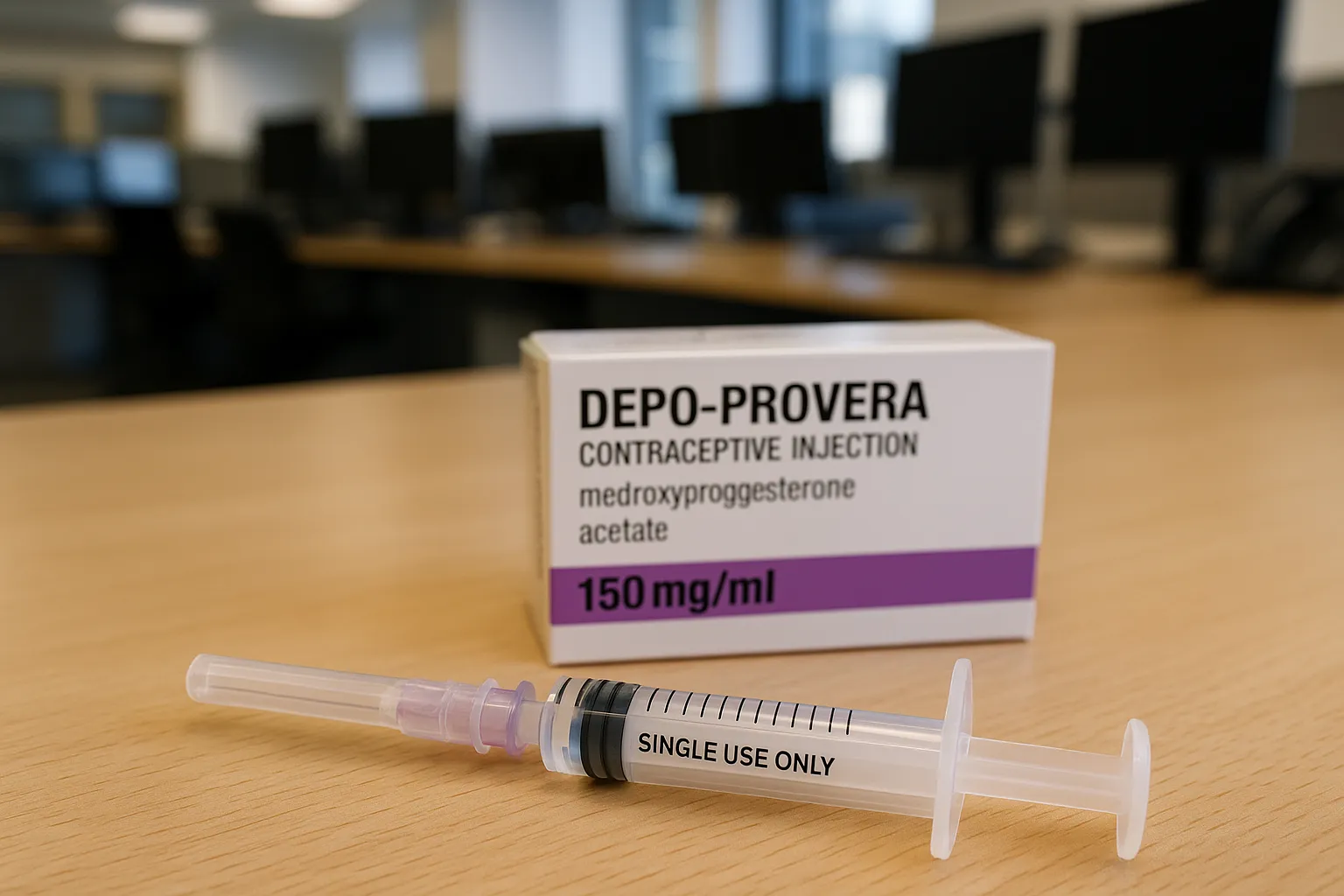
A mother from North Wales is enduring significant distress resulting from an inoperable brain tumour, which she suspects is linked to the contraceptive injection she received for over 15 years. Lauren Lewington, who resides in Bangor, has been grappling with debilitating symptoms, including facial numbness and severe headaches, after using the Depo-Provera contraceptive injection, also known as medroxyprogesterone acetate (MPA).
At the age of 35, Lewington is among a group of approximately 100 women in the UK taking legal action against pharmaceutical company Pfizer, citing a connection between the use of Depo-Provera and the emergence of benign brain tumours. A recent study published in the British Medical Journal identified that women who used this contraceptive injection for a year or longer are 5.6 times more likely to develop meningioma brain tumours. This finding prompted an update to the product’s patient information leaflet regarding the associated risks.
Lewington began her use of the Depo-Provera injection in 2009. In July 2022, she experienced intense ear pain and severe headaches, which initially were misdiagnosed as migraines by her GP. The situation worsened dramatically on her son’s ninth birthday, when she described the pain as feeling like she had been “hit by a baseball bat,” leading her to collapse in agony as she arrived at the emergency department.
Over the subsequent months, she frequently visited the hospital, sometimes as often as twice a week, for headaches that rendered her nearly incapacitated. A CT scan conducted in December 2022 eventually revealed she had a meningioma, which is a type of non-cancerous tumour located in the protective layers of tissue surrounding the brain and spinal cord. Despite being non-cancerous, scans indicated her tumour was expanding by 1mm each month, causing damage to her nerves and leading to excruciating pain.
By January 2023, her condition had deteriorated to the extent that she was struggling to care for her two autistic sons, aged 12 and 9. Her spouse, Aaron Edwards, made the decision to leave his job to provide support for Lewington and their family. Following two surgical procedures, medical professionals determined that the remaining tumour could not be safely removed due to its proximity to vital blood vessels, forcing her to undergo radiotherapy.
“It’s heartbreaking to know that I’ll never be tumour-free,” Lewington expressed, reflecting on the emotional toll of her diagnosis. It was not until after her final surgery that she became aware of a possible correlation between her condition and the hormonal contraceptive she had been using. Testing indicated that her tumour contained a high level of progesterone receptors, prompting medical advice to discontinue the use of the injection immediately.
Since stopping the injection in January 2025, Lewington has noted signs of the tumour shrinking. “I’m angry, and I’m upset. And I don’t want anyone else to go through what my family and I have been through,” she stated, calling for the withdrawal of Depo-Provera from shelves across the UK.
Another woman, identified as Deana and also pursuing a claim against Pfizer, used the Depo-Provera injection for over 25 years. Now, she faces blindness in her left eye and persistent headaches due to multiple inoperable brain tumours. Her journey began in May 2018 when she sought help for a left eye that would not fully open. Initial examinations revealed abnormalities on her optic nerve, leading to a diagnosis of meningioma.
Reflecting on her experience, Deana shared, “I had the jab for my period pain; it was a known fact that it would help reduce the pain, and it did. But it feels like they’ve failed me because now I have to live with this for the rest of my life.”
Legal representation for Deana and Lewington, Lisa Lunt of Fletchers Solicitors, indicated that many women were largely unaware of the risks associated with extended use of certain hormonal contraceptives. “It’s life-changing for women who’ve got memory loss, or are now disfigured from craniotomies, suffer from epilepsy, or have cognitive changes and eyesight problems,” Lunt elaborated.
The Medicines and Healthcare products Regulatory Agency (MHRA) has stated that they continuously review the safety profile of MPA and related synthetic progestogens, with potential regulatory actions pending any newly identified information. Chief Safety Officer Dr Alison Cave reiterated, “Patient safety is our top priority. For the majority of people, the benefits of Depo-Provera outweigh the risks, but we advise anyone with concerns to consult their GP, pharmacist, or contraceptive provider.”
A spokesperson for Pfizer maintained their commitment to patient safety, asserting that Depo-Provera is supported by a well-established efficacy and safety record. They mentioned their ongoing rigorous monitoring of medicines, which includes assessments of adverse events in partnership with global health authorities.
As cases like those of Lewington and Deana emerge, the potential links between hormonal contraceptives and serious health issues prompt questions about the need for greater awareness and transparency regarding these treatments. The experiences shared by these women serve as a powerful reminder of the importance of patient safety and informed consent, particularly in relation to long-term medication usage.
Our Thoughts
The incidents described highlight significant concerns regarding the long-term use of hormonal contraceptives and the importance of informed consent regarding potential risks. To avoid such situations, clearer communication of risks associated with Depo-Provera must have been prioritized, especially given the emerging evidence linking it to benign brain tumours. Regulatory compliance with the Medicines and Healthcare products Regulatory Agency (MHRA) is crucial; the updated patient information leaflets should have been disseminated promptly and effectively to users to ensure they understood the implications of prolonged use.
Furthermore, adherence to the Health and Safety at Work Act 1974 mandates that employers and healthcare providers ensure the safety and well-being of patients through adequate risk assessments and monitoring of medical products. Enhanced vigilance in monitoring adverse effects and engaging with patients about potential side effects is necessary.
Preventive measures could include regular evaluations of long-term users and updated training for healthcare providers on current research findings, ensuring they can adequately inform and support patients. Continuous regulatory review of prescribed medications should also remain a priority to mitigate similar future incidents.