















Story Highlight
– New study reveals significant neurotoxic effects of fluazinam.
– Previous 2005 study found no harmful effects on rats.
– Pesticide may require immediate withdrawal from the market.
– EU faces scrutiny over pesticide approval processes.
– Ongoing review expected by early 2027.
Full Story
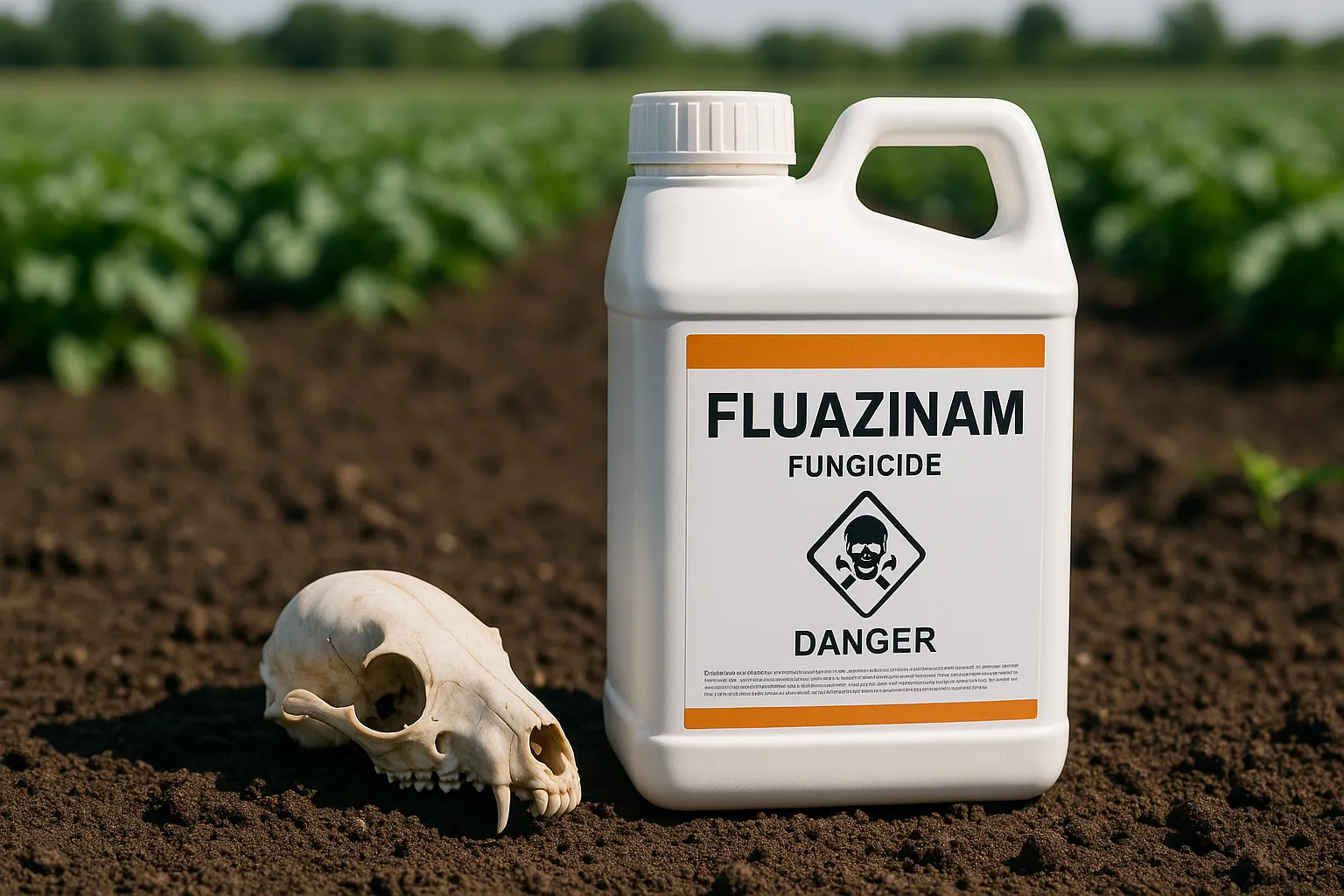
Researchers at Stockholm University have recently revisited the pivotal findings concerning the neurotoxic effects of fluazinam, a widely used fungicide. Their work has led to conclusions that differ markedly from a previous study conducted in 2005, prompting activists and experts to call for the immediate withdrawal of the chemical from the market.
The original study, commissioned by ISK, the maker of fluazinam, was performed by Huntingdon Life Sciences and aimed to evaluate the neurotoxic potential of the compound in pregnant rats. It found no significant evidence linking fluazinam with adverse brain development in the offspring of the test subjects. Following this research, fluazinam received approval from European authorities in 2008. This fungicide is commonly employed to combat various soil-borne fungal pathogens affecting crops such as potatoes and apples. In 2024, Germany alone accounted for the sale of approximately 340 tonnes of this pesticide.
Despite the original study’s findings, it was not included in the evidence used for the approval process but was nonetheless referenced in discussions surrounding the substance’s safety. The recent work from the Stockholm University team, which has yet to undergo peer review, revisits the same statistical analysis techniques but arrives at a considerably different conclusion. Their research identified six instances where exposure to fluazinam resulted in statistically significant impairments in brain development metrics, particularly noting reductions in both brain weight and width in the offspring of the treated rats.
The researchers expressed their concern, stating, “In our opinion, considering the potentially lifelong consequences of brain development deficits, an effect of a chemical on brain weight, width and morphometrics qualifies as severe.” They further challenged the validity of the conclusions drawn in the 2005 study, contending that the original authors’ methods were insufficient to appropriately interpret the data. “It is impossible to correctly reach the results in the 2005 report based on the raw data in the 2005 report using the methods specified in the 2005 report,” they asserted. They argued that the conclusions about brain impacts in adult offspring were “entirely unreasonable” given the data that should have been reported.
Legal experts, including Antoine Bailleux, a professor of EU law at UCLouvain in Belgium, have indicated that failing to disclose significant findings related to developmental neurotoxicity may constitute a violation of EU pesticide regulations.
Dr Angeliki Lysimachou, who leads the science and policy department at the Pesticide Action Network (PAN) Europe, voiced strong disapproval of the situation, stating that the original study’s results were effectively concealed from regulatory bodies. “When it finally reached the authorities, the warning signs were still missed. This is a breach of both legal obligations and scientific integrity that demands an urgent investigation, full accountability for those responsible, and the immediate withdrawal of fluazinam from the market,” she stated.
The research team claimed that due to the pesticide’s effects on brain development, it is impossible to establish a safe level of exposure, thus questioning the rationale behind its approval in 2008. Reviewing the recent findings, Hans Peter Arp, an environmental chemist at the Norwegian Geotechnical Institute, concurred that the evidence presented in the new study is reason enough to reconsider the pesticide’s approval status.
Fluazinam is currently undergoing a re-evaluation process for re-approval within the European Union. Following Brexit, the fungicide has been maintained in the UK’s active substances register and is approved for use until 2029. Bailleux has said that the renewal should be contingent upon a more thorough investigation into the newly reported findings.
Nick Mole, a policy manager for PAN UK, has advocated for the UK’s Health and Safety Executive to “immediately revoke its authorisation” of the pesticide. The authors of the study further commented that fluazinam’s continued use since its approval may have resulted in “unnecessary and potentially harmful human exposure.” Alarmingly, traces of fluazinam have even been identified in children’s playgrounds in the South Tirol region of Italy, where the substance is applied to neighbouring apple orchards.
Dr Axel Mie, the study’s lead author, acknowledged that while animal studies cannot be directly applied to humans, any substance that adversely affects brain development in rats raises legitimate concerns for similar impacts in humans. Christina Rudén, a professor in regulatory toxicology at Stockholm University and another co-author, critiqued the current EU pesticide approval framework, suggesting it inherently suffers from conflicts of interest, as the manufacturers are tasked with providing the safety data.
The EU’s pesticide regulatory process is facing scrutiny, with allegations that it may be attempting to further dilute safety measures by proposing unlimited time-frame approvals for pesticides. Lysimachou emphasised the urgency of stronger enforcement and transparency in these procedures, stating that the welfare of children’s neurological development must be prioritised over commercial interests.
In response to the revelations from the recent study, the European Food Safety Authority (EFSA) has commissioned the Austrian Agency for Health and Food Safety (AGES) to conduct a detailed review of the statistical analysis and underlying data concerning fluazinam’s approval. A spokesperson from EFSA noted that this review adheres to established EU protocols and is independent, with decisions ultimately reached in consultation with member states.
Following these developments, ISK has acknowledged awareness of the issues raised regarding the 2005 study but refrained from commenting further due to the absence of the underlying analysis. They expressed faith in the regulatory processes that have already assessed the active substance. Meanwhile, a representative from Huntingdon Life Sciences has yet to provide a response to these significant concerns.
This article was produced in conjunction with broadcasters from Germany, Italy, and Sweden, reflecting widespread interest and concern over the implications of the new findings.
Our Thoughts
The incident involving the fungicide fluazinam highlights several key safety lessons and potential breaches of UK health and safety regulations. Firstly, there appears to be a significant failure in the regulatory assessment process, particularly concerning the transparency and independent scrutiny of the safety data submitted by ISK. According to the Health and Safety at Work Act 1974, employers have a duty to ensure the health and safety of their employees and the public, which includes providing safe products based on reliable safety data.
The 2005 study’s exclusion from the approval process raises concerns regarding compliance with the relevant pesticide regulations, particularly those regarding the duty to report statistical significance in safety evaluations, as cited by legal experts. Failure to disclose such information could lead to serious public health risks.
To prevent similar incidents, enhancing regulatory oversight and ensuring independent evaluations of pesticide safety studies are critical. Establishing stricter requirements for the disclosure of all relevant data and imposing penalties for non-compliance can help to uphold scientific integrity and protect public health. Immediate reassessment of fluazinam’s approval status is advised, considering the potential long-term impacts on human health, especially concerning neurodevelopmental risks in children.