
















Story Highlight
– Over 11,000 cyclosporiasis cases reported in the US.
– Outbreak linked to iceberg lettuce from Taylor Farms.
– Michigan hardest hit with over 7,000 reported cases.
– State and federal data discrepancies complicate outbreak tracking.
– Public health funding cuts hinder response capabilities.
Full Story
An ongoing outbreak of cyclosporiasis underscores the collaborative yet often fragmented approach of public health authorities in the United States to tackle foodborne illnesses. Recent estimates by the Centers for Disease Control and Prevention (CDC) suggest that cases could exceed 11,000, raising alarm among health experts who point to inherent weaknesses within the country’s food safety systems.
Barbara Kowalcyk, an associate professor at George Washington University and director of its Institute for Food Safety and Nutrition Security, highlighted the alarming scale of the outbreak. She stated, “What’s surprising to me is the magnitude of it, and how it highlights all these system vulnerabilities.”
Cyclosporiasis is a gastrointestinal infection caused by the cyclospora parasite, which is microscopic in size. Infected individuals typically suffer from protracted bouts of watery diarrhea that can be explosive and relapsing. As of now, while over 300 patients have required hospitalisation due to the disease, fortunately, there have been no reported fatalities.
This year’s surge in cases is notable, as cyclospora outbreaks tend to be a recurring issue during the summer months—a period often dubbed “cyclospora season” by public health officials. The parasite is transmitted via food and water contaminated with human faeces, which is the only known environment where the organism thrives.
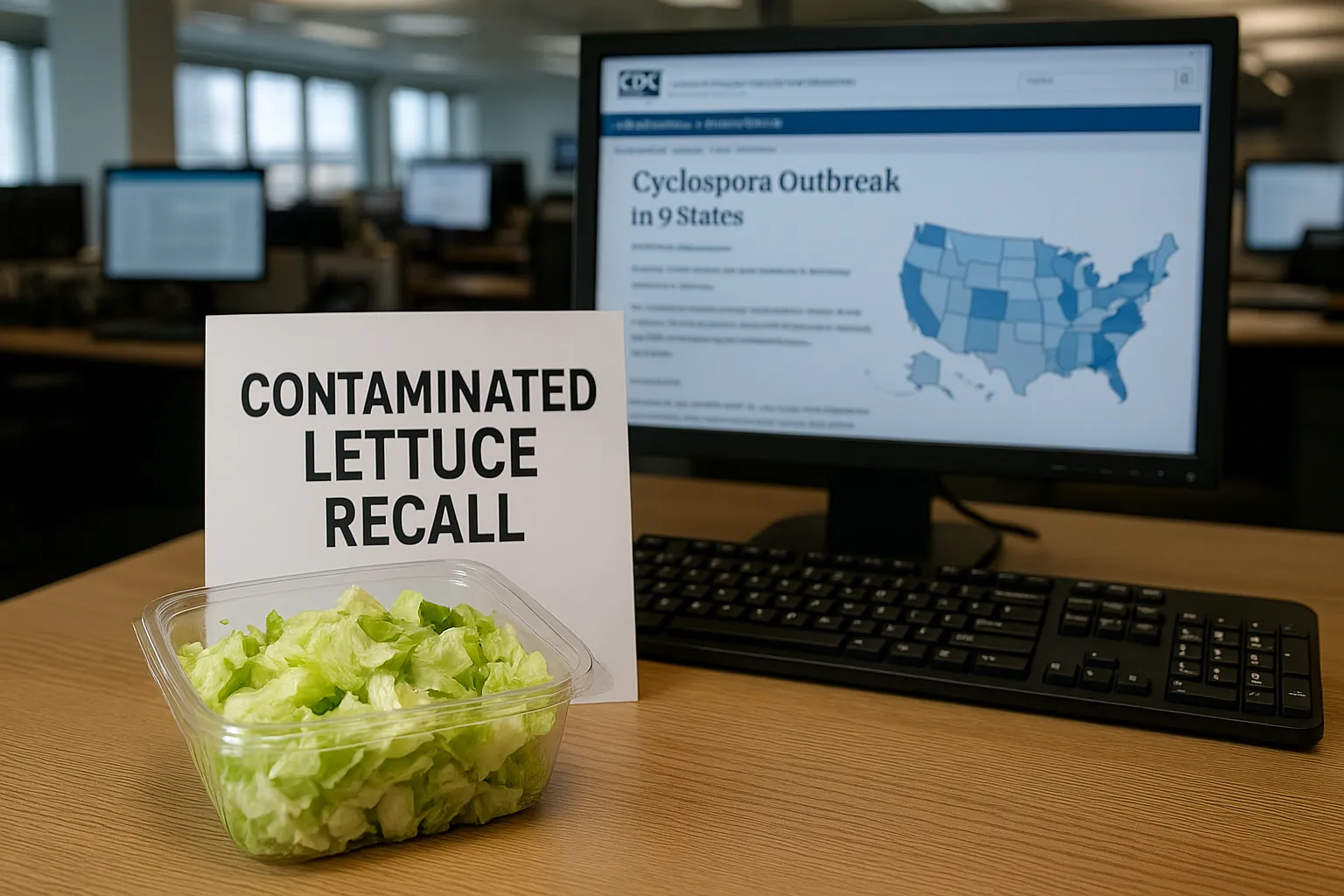
The Food and Drug Administration (FDA) is currently probing six distinct outbreaks, with one particularly significant outbreak spanning nine states. So far, one source has been pinpointed: iceberg lettuce sourced from Taylor Farms de Mexico. In response, Taylor Farms has proactively recalled affected lettuce products distributed to restaurants in 27 states and grocery stores across 15 states. Taco Bell, which has reported cases linked to the outbreak in nine states, announced that it has ceased using this lettuce.
The state of Michigan has recorded the highest impact from this outbreak, with local officials reporting over 7,000 instances of the illness.
A notable point of confusion surrounding this situation is the disparity in reported case numbers from state and federal authorities. This inconsistency reflects the complex regulatory landscape in the US, where states bear the primary responsibility for the health and wellbeing of their residents. Coordination with federal agencies is essential, as different entities may be involved depending on the suspected food source.
The identification process begins with an individual seeking medical attention. After receiving care, the physician must specifically test for cyclosporiasis, which is not included in standard stool sample panels. These initial steps contribute to public health authorities’ recognition of confirmed cases likely being underreported.
Once a doctor confirms a case, it must be reported to the state health department. Subsequently, state health officials will typically carry out an investigation, involving interviews to ascertain whether the individual contracted the infection domestically or through international travel. Following this, the state reports their findings to the CDC via the National Notifiable Diseases Surveillance System (NNDSS).
Currently, only 47 states mandate the reporting of cyclosporiasis cases to the NNDSS. In certain locations, such as Pennsylvania, reporting remains optional. Moreover, the timing of these reports can vary significantly. The CDC estimates a gap of six weeks between the onset of an illness and the official reporting of that case. To further investigate, the CDC may conduct additional testing to analyse whether multiple states share a common outbreak origin, often through genotyping to establish a “fingerprint” of the contagion.
This particular outbreak is occurring amid considerable challenges faced by state and federal health departments. Significant cuts to public health funding initiated during the Trump administration have created considerable strain. For instance, pandemic-era financial support for state and local health departments diminished by approximately $11.4 billion, adversely affecting their outbreak response capabilities. The CDC experienced staff reductions totalling between 25% and 30%, leading to a drastic decrease in personnel within its specialised parasitic disease team—from 11 members down to just three. The team’s funding was partly reliant on USAID contributions, which themselves saw substantial cuts.
Compounding these issues is the discrepancy in how data is disclosed to the public by different authorities. The CDC website reports case numbers for the nine-state outbreak only after both interviews and laboratory confirmations are conducted. Conversely, Michigan health officials reported that they submit all confirmed lab cases to the CDC, which may not always include interview data.
Kowalcyk articulated the critical need for effective outbreak management, remarking, “Ideally, we would identify and solve these outbreaks when they’re small, you don’t want an outbreak of 11,000 people. It’s just symptomatic of the fact we have cut public health funding over the last two years to an area we haven’t fully funded to begin with.”
As this outbreak unfolds, it highlights the importance of robust public health infrastructure and the need for meticulous coordination between state and federal agencies to effectively address foodborne illnesses and safeguard public health.
Our Thoughts
The outbreak of cyclosporiasis highlights significant gaps in food safety systems that, if addressed, could prevent similar incidents in the future. Key UK health and safety lessons include ensuring robust food safety protocols akin to those required under the Food Safety Act 1990, which mandates comprehensive safety standards for food handling and preparation.
To avoid such outbreaks, there should be regulations ensuring timely reporting of foodborne illnesses, in line with the Health Protection (Notification) Regulations 2010, which require communicable diseases to be reported promptly. A more coordinated response between local authorities and national public health bodies, similar to the UK’s combination of local authorities’ oversight and the role of the Food Standards Agency, would enhance outbreak response times.
Regular training on identifying and testing for less common pathogens like cyclospora among healthcare professionals would also be beneficial, aligning with General Health and Safety regulations by promoting proactive health management. Overall, consistent public health funding and clear communication protocols between health agencies could mitigate the risk of large-scale outbreaks occurring in the future.