














Story Highlight
– Employee paralyzed after structure collapse at Siemens Gamesa site.
– HSE investigation revealed serious work safety failures.
– Company fined £600,000 for safety violations.
– Incident caused by inadequate risk assessment and training.
– New safety measures implemented to prevent future incidents.
Full Story
Siemens Gamesa has faced significant legal repercussions following a serious incident at its Hull facility, resulting in life-altering injuries for an employee. The incident drew the attention of the Health and Safety Executive (HSE), which identified critical lapses in workplace safety protocols.
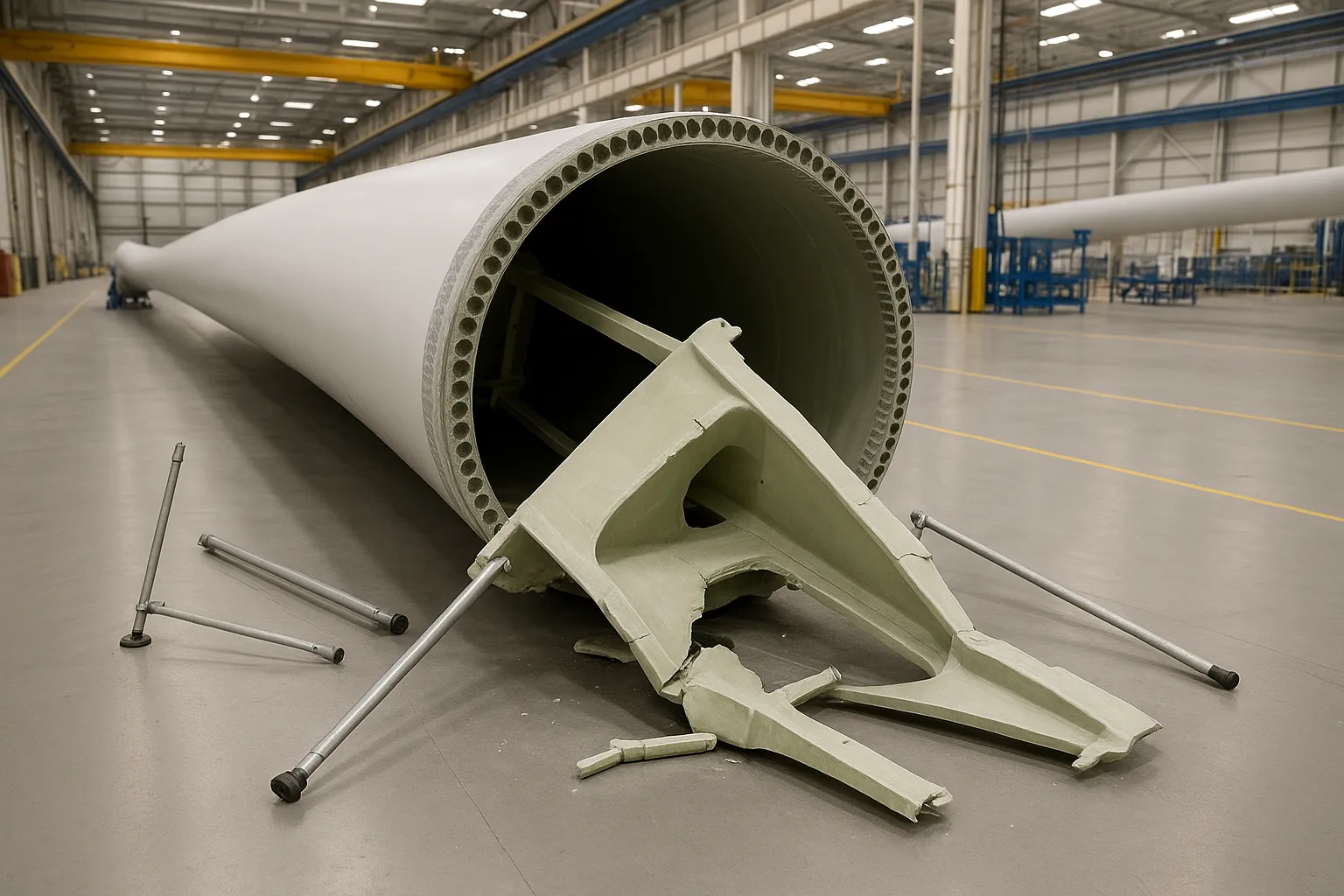
On 18 July 2024, a 37-year-old female worker was engaged in the construction of a wind turbine blade when a heavy structure collapsed, leaving her paralysed from the waist down. At the time of the accident, she was part of a team working on the web section of the turbine blade. This internal component, which acts similarly to a spine, extends almost the full length of the blade and is crucial for ensuring the structure’s rigidity against powerful winds.
The critical event unfolded at the pre-cast area of the web, located at the root end where the blade connects to the rotor, comprising around 800kg before any additional construction materials were used. As the worker and a colleague were preparing to wrap this substantial component, it unexpectedly fell when the support poles, which had previously secured it, were taken away.
In its investigation, the HSE found that Siemens Gamesa had not sufficiently evaluated the risks associated with the task. Furthermore, the company did not establish a solid system of work to prevent the removal of the support poles, nor did it provide adequate training for employees regarding safe working practices. This negligence led to a situation where staff resorted to unsafe practices to complete their duties.
In response to the incident, Siemens Gamesa has taken steps to enhance safety measures at the site. The organisation has now introduced a system where support poles must be locked in place and can only be released by a designated individual with a key, ensuring that such precautions are mandated during critical stages of construction.
Legally, employers are mandated to ensure the safety of their employees and others who may be affected by their operations. Conducting risk assessments forms a vital part of this responsibility, alongside implementing measures to manage potential hazards. Comprehensive guidance on risk management is accessible through the HSE’s official resources.
Siemens Gamesa Renewable Energy Ltd recognised its failure to adhere to the Health and Safety at Work etc. Act 1974, pleading guilty to violations regarding workplace safety standards. As a consequence, the company was fined £600,000 and ordered to cover further costs of £7,980.80 at Grimsby Magistrates’ Court on 22 May 2026.
HSE Inspector Mark Slater commented on the incident, emphasising the necessity of meticulous risk assessments for all activities that pose health and safety threats. He underscored that safe systems of work must be developed and enforced. “In this case, inadequate risk assessment and inadequate systems of work left employees to adopt their own working methods, exposing them to an unacceptable level of risk. This was a wholly avoidable incident,” he stated.
The prosecution was instigated by HSE enforcement lawyer Nathan Cook, along with paralegal officer Henrietta Ruthven, who highlighted the regulatory body’s commitment to workplace safety.
The HSE serves as the UK’s primary regulator for health and safety in the workplace, dedicated to safeguarding individuals and environments to foster safer and healthier lifestyles for all. Further information regarding relevant legislation and guidance on effective risk assessment and management can be found on the HSE’s website.
While the HSE plays a crucial role in investigating and prosecuting workplace safety violations, it is important to note that the authority does not have the power to issue sentences or determine fines. All penalties must be consistent with the sentencing guidelines unless a court believes it would not align with the interests of justice.
Amid ongoing discussions about workplace safety and legal compliance, this incident stands as a stark reminder of the critical need for robust safety measures and training in high-risk environments, particularly as industries like renewable energy continue to expand. The fallout from such incidents not only affects the individuals involved but also has broader implications for workplace culture, employee morale, and industry standards.
In conclusion, Siemens Gamesa’s recent legal troubles highlight significant issues concerning health and safety practices within the construction of renewable energy infrastructure. The case serves as an essential lesson for other companies in the sector, reinforcing the necessity of diligent risk management and employee training to prevent future incidents and ensure a safe working environment for all.
Our Thoughts
The incident at the Siemens Gamesa site highlights critical failures in risk assessment and safe systems of work, violating Section 2(1) of the Health and Safety at Work etc. Act 1974. To prevent this type of incident, a thorough risk assessment should have been conducted, identifying the hazards associated with the removal of support poles for the heavy pre-cast section.
Implementing a more robust safe system of work would have included strict protocols for when and how to remove these supports, ensuring that only trained personnel were involved. Adequate training on safe working methods is essential; without it, employees resort to unsafe practices, increasing the risk of severe accidents.
Furthermore, establishing lock-out systems for support structures before any work can begin would prevent premature removal of support poles. This approach would significantly reduce the risk of falling objects during high-risk operations. Regular safety audits and employee training sessions would further reinforce a culture of safety compliance.
In summary, comprehensive risk assessments, effective training, and improved safety protocols are necessary to mitigate similar incidents in the future and uphold the standards set by UK health and safety legislation.