










Story Highlight
– Multiple nationwide recalls due to health risks issued.
– Morrisons recalls Coronation Chicken Pasta for undeclared milk.
– Salmonella found in fruit sold at major supermarkets.
– Tesco and Sainsbury’s chutney recalled for metal contamination.
– Gü dessert recalled due to undeclared hazelnuts, soya.
Full Story
Multiple food products sold across the UK are currently under recall due to potential health risks, prompting warnings from health authorities for consumers to avoid consuming these affected items.
The Food Standards Agency (FSA) has released several “do not eat” alerts for products available in major supermarket chains. Customers are strongly encouraged to check their belongings and adhere to guidance surrounding the safety of the recalled items, which may involve returning the products for a refund or disposing of them in a safe manner.
### Morrisons’ Pasta Recall
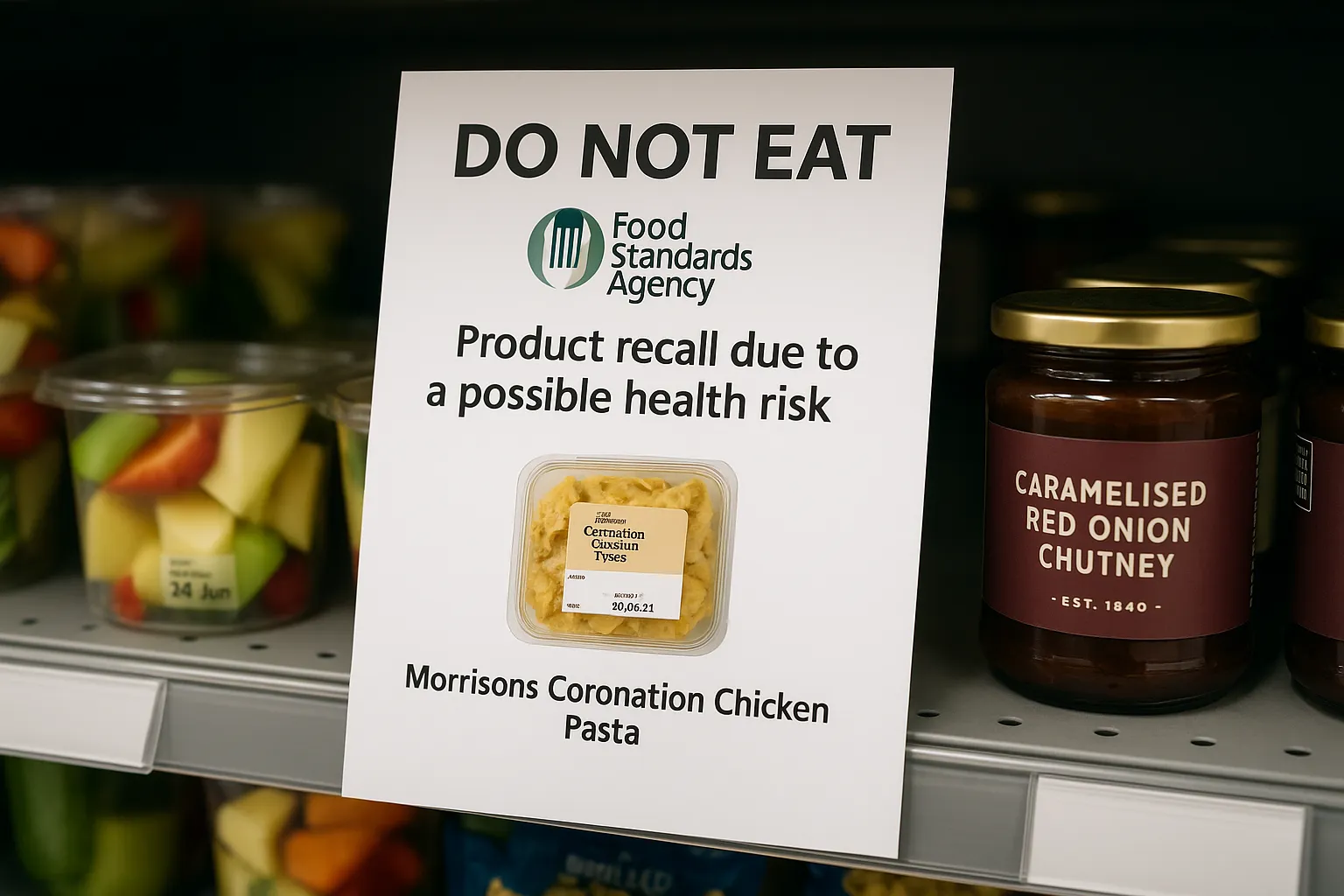
Morrisons has taken the precautionary step of recalling its Coronation Chicken Pasta, which was identified as potentially containing undeclared milk due to an error in packaging. This issue arose when some batches were found to inadvertently include Florida Salad, a component that incorporates milk not listed on the label. This poses a serious health risk for individuals with lactose intolerance or milk allergies.
Consumers who possess the affected product should look for packets marked with a use-by date of June 30 and the batch code GBB 584 031. A representative from the FSA remarked, “Morrisons is recalling the above product from customers and has been advised to contact the relevant allergy support organisations, which will tell their members about the recall.” He added that a point-of-sale notice is available in store to inform customers of the reasons behind the recall and the instructions for returning the product.
Morrisons has also stated, “Please do not eat this product and return it to your nearest store for a full refund. We do not need a receipt.” They confirmed that no other products were impacted by this recall. The supermarket apologised for any inconvenience it may cause and reaffirmed its dedication to maintaining high safety standards across its range.
### Salmonella Risk in Prepared Fruits
A wider concern has emerged regarding pre-prepared fruit sold at multiple retailers, including Asda, Tesco, Sainsbury’s, Marks and Spencer, Waitrose, and Morrisons. The company Prepworld has initiated recalls after routine testing uncovered the presence of Salmonella in batches of apples and kiwifruit.
Salmonella can lead to symptoms such as fever, diarrhoea, and abdominal pain. Customers are urged not to consume the affected fruit products, which include a variety of fruit mixes with use-by dates falling between June 23 and 24 across different brands. A spokesperson for the FSA has warned purchasers of these items to return them to their respective stores for a full refund and to stay away from work or school if they are experiencing any symptoms related to the infection.
Point-of-sale notices will be prominently displayed in stores, explaining the rationale behind the fruit recalls and advising what to do if a product has been purchased.
### Concerns over Metal Contamination in Condiments
In a separate incident, a popular condiment, Arran Fine Foods Caramelised Red Onion Chutney, marketed by Fox’s Burton’s Companies (FBC) UK, is undergoing a recall due to concerns about the possible presence of metal fragments within the product. This recall affects several batches, specifically those best before dates ranging from November 2028 to February 2029 and 1.35kg packs until July 2027 and August 2027.
Consumers are advised to immediately stop using the chutney and return it to the store from which it was bought. The FSA has reiterated the importance of consumer safety, stating, “If you have bought the above product, do not eat it. Instead, return it to the store from where it was purchased for a full refund.”
### Morrisons Savers Cashews Recall
Morrisons is once again at the forefront of another recall, this time affecting its Morrisons Savers Cashews. This 125g product is being pulled from shelves owing to concerns that it may contain small pieces of glass. The recall includes products with best before dates scattered between August and October 2026.
An FSA spokesman advised that customers who have bought this product should refrain from consumption and return it for a full refund, emphasising that this recall does not affect any other products from the brand. Morrisons has expressed its regret for any inconvenience this issue may present to shoppers.
### Hazelnut and Soya Alert for Desserts
Also noteworthy is the recall of the Gü Double Sea Salted Caramel Frozen Dessert, available at Tesco and Waitrose. This dessert has been withdrawn from sale due to concerns that it may contain undisclosed allergens, specifically hazelnuts and soya, making it unsafe for those with relevant allergies.
The affected product has a lot number of 126135 and a best before date of June 30, 2027. A representative for Gü stated, “The issue is limited to a very small number of products (believed to be less than 10 units). However, as a precautionary measure and in line with our commitment to consumer safety, the affected date code is being recalled.”
### Understanding Product Recalls
Product recalls occur when a food item is identified as potentially unsafe for consumption. This can involve either withdrawing the product from sale or initiating a return request to customers. The FSA plays a critical role in informing local authorities and consumers about ongoing recalls through Product Withdrawal Information Notices or Product Recall Information Notices.
In some critical situations, a ‘Food Alert for Action’ might be distributed to guide local authorities on specific actions necessary to safeguard public health in relation to the affected products. Consumers are encouraged to remain vigilant about food product recalls and adhere to all official safety notifications to ensure their well-being.
Our Thoughts
The article outlines multiple recalls due to potential health risks, indicating several breaches of UK food safety regulations. Key lessons include the necessity for rigorous allergen labeling and contamination control to comply with the Food Safety Act 1990 and the General Food Law Regulation (EC) 178/2002, which mandates traceability and safety in food products.
Preventive measures could have included enhanced quality assurance processes and better allergen management protocols to avoid undeclared ingredients, as seen with the Morrisons Coronation Chicken Pasta. Regular training for staff on allergen management is vital, as is comprehensive testing for contamination in food production.
Furthermore, supermarkets must ensure effective communication strategies for recall notices and consumer alerts, minimizing health risks by promptly informing customers of potential hazards. This scenario reflects the importance of adhering strictly to regulations such as the Food Information Regulations 2014, which require clear labeling of allergens.
In summary, enhancing food safety protocols and strict adherence to labeling requirements are essential to prevent similar incidents and protect consumer health.