
















Story Highlight
– Truro Sawmills failed to protect workers from wood dust.
– Workers lacked training for rider-operated lift trucks.
– Company received £20,000 fine for safety violations.
– Managing Director disqualified for five years as director.
– HSE emphasized accountability for health and safety compliance.
Full Story
A Cornwall timber company and its director have been fined £20,000 following a series of breaches related to health and safety regulations, specifically regarding the management of wood dust and the operation of lift trucks. Truro Sawmills Limited and its Managing Director, Alistair Wright, faced scrutiny from the Health and Safety Executive (HSE) after inspections revealed significant shortcomings in their practices aimed at safeguarding workers.
The company’s operations include the supply of timber and the manufacturing of various outdoor products, such as gates and fencing panels. The sawmill, situated in Penhallow, Truro, came under investigation when HSE inspectors discovered that employees were exposed to harmful wood dust without adequate protective measures. Wood dust can contribute to serious health issues, including respiratory diseases and even cancer, if not properly controlled.
The HSE uncovered several violations during their investigation, most notably that staff members had not been adequately trained in the use of rider-operated lift trucks. Additionally, the necessary health monitoring systems to screen employees for potential health risks associated with wood dust were not in place. Employees were also found to have not undergone face fit testing for respiratory protective equipment (RPE), which is crucial for their safety in a dusty work environment.
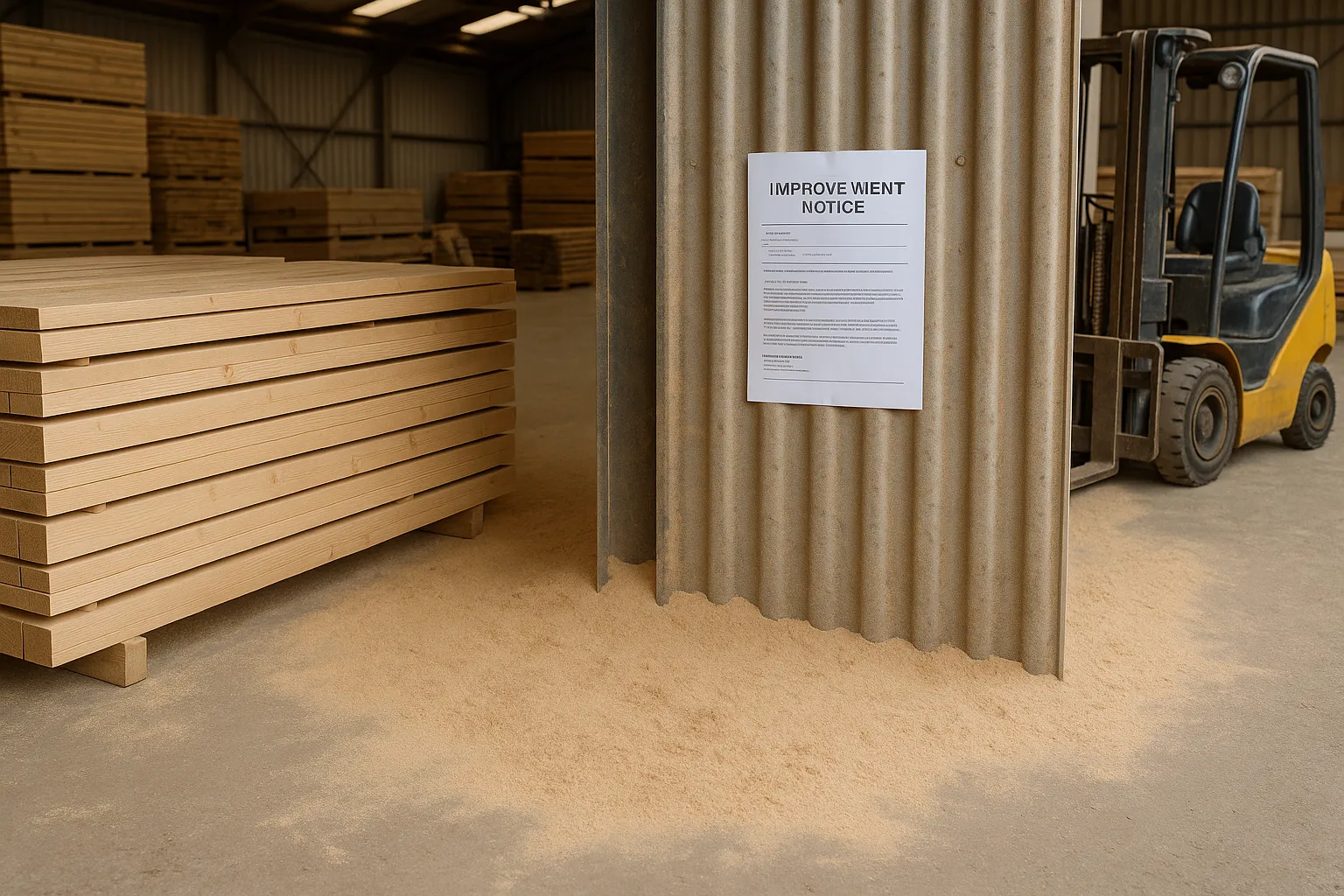
As a result of these findings, the HSE issued Improvement Notices to Truro Sawmills Limited. These legal notices are designed to compel a company to rectify unsafe conditions and protect workers. However, the company failed to comply with the directives outlined in these notices, leading to a HSE prosecution.
Mr. Wright, the director of the company, pleaded guilty to breaching the stipulations of the Improvement Notices. This prompted the HSE to pursue further legal action aimed at disqualifying him from acting as a company director under the Company Directors Disqualification Act of 1986. The HSE concluded that Truro Sawmills Limited had contravened Section 2(1) of the Health and Safety at Work etc. Act 1974, which mandates that employers ensure, so far as is reasonably practicable, the health, safety, and welfare at work of all their employees.
On 20 August 2026, at a hearing held at Truro Crown Court, the company was fined £20,000 and ordered to pay additional costs of £5,000. Mr. Wright received a personal fine of £5,000 and was also required to pay £2,500 in costs. The court accepted the HSE’s request to disqualify him from serving as a company director for a period of five years.
HSE principal inspector Melissa Lai-Hung commented on the case, underscoring the serious risks posed by wood dust exposure. She stated, “Exposure to wood dust can cause asthma, respiratory conditions and cancer – yet this firm failed to act on legally-binding notices served by health and safety inspectors to protect their workforce.” She highlighted the lack of proper training for lift truck operation as another major concern, noting, “We also found workers hadn’t been properly trained to use lift trucks, creating very real dangers for those onsite.” The inspector reinforced that businesses must understand that non-compliance with health and safety regulations will have consequences.
This prosecution drew support from HSE enforcement lawyer Robert James and paralegal officer Mike Millman, who advanced the case through the legal system.
The Health and Safety Executive (HSE) remains the primary authority in the UK for workplace health and safety, dedicated to protecting employees and ensuring compliance with regulations designed to mitigate risks in various work environments. This incident with Truro Sawmills Limited serves as a cautionary tale for businesses across the region about the importance of adhering to health and safety legislation. Employers are urged to take proactive measures to guarantee the health and safety of their workers, including proper training, health surveillance, and the provision of necessary protective equipment.
Safeguarding the well-being of workers is not just a legal obligation but also a moral responsibility for businesses. Companies must foster a culture of health and safety that prioritises the welfare of their employees, going beyond the minimal legal requirements to ensure a safe working environment.
For further guidance on safely operating lift trucks and managing wood dust in the workplace, resources are available from the HSE. These include comprehensive training for lift truck operators, protocols for controlling wood dust, and best practices for health surveillance and fit testing of respiratory protective equipment.
Penhallow, the location of Truro Sawmills Limited, is now highlighted as a crucial area for vigilance regarding workplace safety, particularly within the timber industry. The HSE continues to actively monitor compliance with health and safety regulations, seeking to prevent similar incidents in the future and protect the rights of workers across the UK.
The implications of this case resonate beyond the immediate fines and disqualifications. It serves as a reminder of the critical importance of fostering a robust safety culture in workplaces, which can ultimately lead to healthier work environments and a more responsible business community.
Our Thoughts
Truro Sawmills Ltd failed to adhere to key safety regulations under the Health and Safety at Work etc. Act 1974, particularly Section 2(1), which mandates the duty to ensure the health and safety of employees. To avoid the issues that arose, proper training for employees on the use of rider-operated lift trucks should have been implemented. Additionally, the firm needed to provide adequate respiratory protective equipment (RPE) and conduct face fit testing, alongside implementing health surveillance for risks associated with wood dust exposure, which can lead to severe health conditions.
The company had been issued Improvement Notices from the HSE, highlighting the legal obligation to address these hazards, which were neglected. Compliance with these notices and undertaking regular safety audits could have prevented this situation. Future similar incidents can be avoided by prioritizing employee training, adhering to safety regulations, and fostering a health and safety culture to ensure proactive identification and mitigation of workplace risks.