













Story Highlight
– UK government considers ban on under-16s using social media.
– Pressure mounts after AI-generated sexualized images of children.
– Labour Party supports ideas from Australia’s social media regulations.
– 88.7% of teachers union members favor a statutory ban.
– NSPCC advocates for safer social media, not outright bans.
Full Story
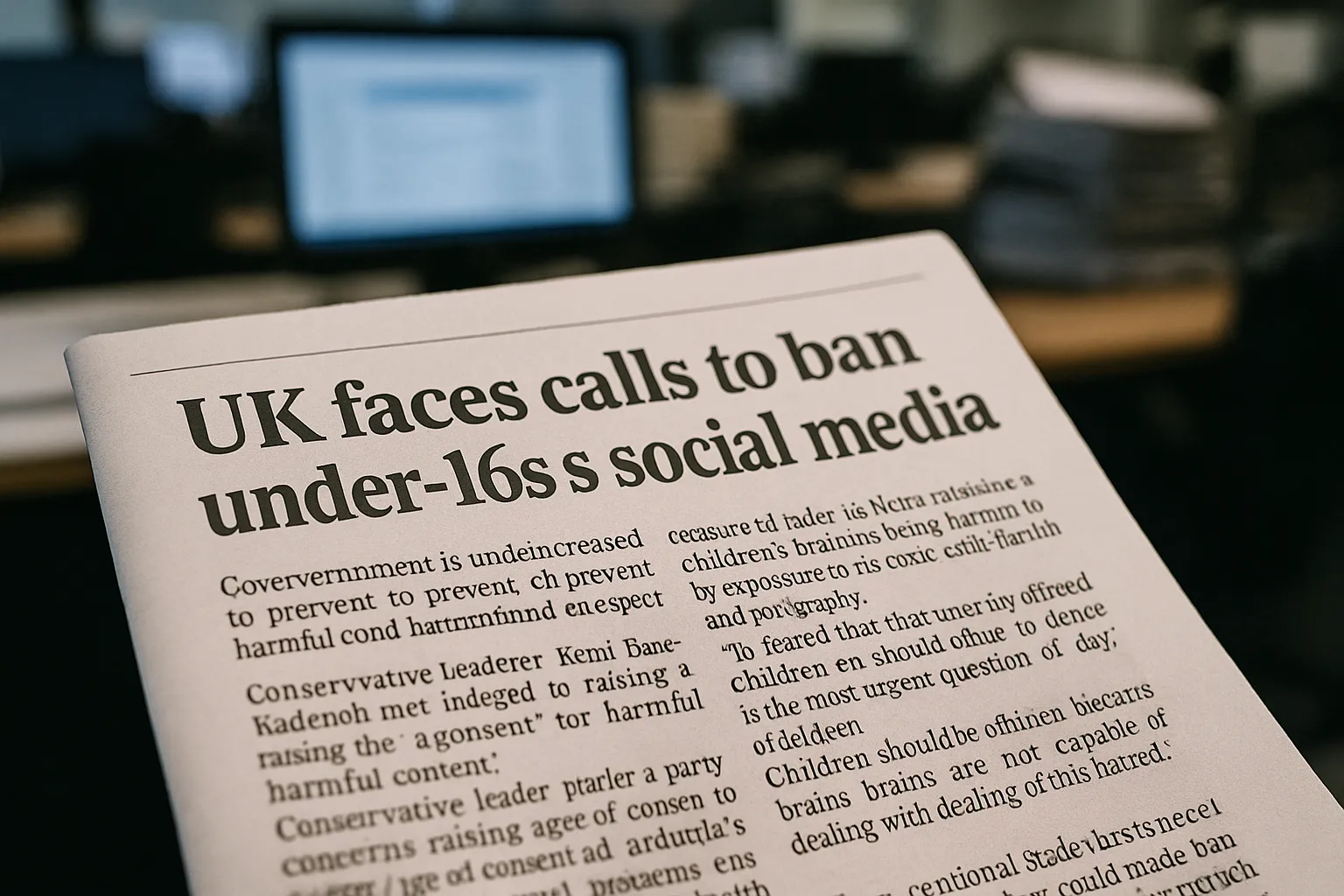
The UK government is currently under increasing scrutiny regarding the possible implementation of a ban on social media access for individuals under the age of 16. This consideration comes in response to recent revelations about the misuse of artificial intelligence systems, such as Grok on the platform X, which have been associated with the generation of sexualised images of minors.
In light of these developments, prominent political figures, including Conservative Leader Kemi Badenoch, have voiced their support for rising the “age of consent” as a means of safeguarding children from accessing harmful online content. Simultaneously, Labour leader Keir Starmer has indicated that his party may look towards Australia’s recent legislative actions, which saw it becoming the first nation to impose a ban on under-16s using social media platforms as of December last year.
Concerns have escalated regarding the ease with which children under 16 can now gain access to content that is often violent, sexualised, or laced with hate speech. Such exposure poses risks to their mental health, particularly as evidence emerges within the Online Safety Act that highlights the detrimental effects of toxic online material on the development of young minds. Jonathan Hill KC, an independent reviewer of terrorism, emphasised the urgency of establishing regulations within the online space, stating, “Children should be offline because their brains are not capable of dealing with this hatred.”
Reports suggest that while no specific timeline has been established for a potential ban, new legislative measures could be introduced within a few months rather than years. Speculation about Labour’s intentions has intensified, as Health Secretary Wes Streeting has directed officials to assess the specifics surrounding Australia’s legislative model. Additionally, Streeting has invited Jonathan Haidt, a noted author and advocate for stricter regulations on social media, to discuss his perspectives with government officials. Haidt is known for his work, “Anxious Generation,” which argues for the necessity of restricting social media use by minors due to increasing rates of depression, anxiety, and self-harm in teenagers linked to digital engagement.
A coalition of political figures and educational organisations is rallying behind the call for a ban. The National Association of Schoolmasters Union of Women Teachers (NASUWT) has recently expressed that prohibiting access to social media for individuals under 16 could yield significant benefits. The union highlighted that prolonged social media use can diminish attention spans and the capacity for sustained learning, contributing to behavioural issues in educational settings. An internal poll revealed that an overwhelming 88.7% of NASUWT members support a statutory restriction on social media access for this age group.
Haidt maintains that a significant correlation exists between the surge in adolescent mental health issues over the past decade and the proliferation of smartphones and social media. There is also a growing digital petition within the UK Parliament advocating for a similar ban, which has garnered over 127,000 signatures, showcasing rising public backing for the initiative.
Conversely, organisations such as the National Society for the Prevention of Cruelty to Children (NSPCC) have urged a different approach. They contend that the focus should be on ensuring social media platforms’ accountability for safeguarding young users rather than imposing outright bans. Sir Peter Wanless, NSPCC Chief Executive, asserted that children ought to engage with age-appropriate online experiences rather than being excluded. “Social media is an integral part of young people’s lives,” he noted, “and a blanket ban could penalise children for failures on the part of tech companies to create safe environments.”
Furthermore, the Molly Rose Foundation expressed concerns that a total prohibition could result in unintended consequences, potentially plunging children into riskier, unregulated online spaces once they reach 16. Such a sudden transition could pose additional hazards, according to the foundation, which underscores the need for a nuanced strategy that enhances online safety without severing children’s access to beneficial social platforms.
Currently, no UK law explicitly bars under-16s from social media usage. The Online Safety Act, however, mandates that social media companies must protect younger users from harmful content. This includes enforcing age verification for adult content and ensuring that harmful material is promptly removed. Popular platforms like Facebook and Instagram set their minimum age for user registration at 13.
Moving forward, the UK government has several regulatory options at its disposal. It might consider a blanket ban, establish partial prohibitions on specific sites, or impose restrictions on usage hours. In 2022, Peter Kyle, Secretary of State for Science, Innovation and Technology, noted the government’s observation of TikTok’s implementation of a curfew for users under 16, a strategy that could inform future regulations.
To assess how a potential ban could be enforced, it would be important to classify which platforms need monitoring, as many are used educationally by children. Effective enforcement would likely involve Ofcom, which could impose financial penalties on companies failing to comply with the regulations.
Internationally, Australia’s experience with its under-16s ban could provide valuable insights. The Australian government identified various platforms, including Twitch, YouTube, and TikTok, as subject to this ban, establishing criteria that these services are primarily for social interaction. The law requires existing under-16 users to deactivate their accounts, leading to substantial account removals shortly after its implementation.
However, the success of such measures remains uncertain. Experts raise concerns over the practical enforcement of such restrictions in the UK, with the Molly Rose Foundation warning against relying on strategies without robust evidence supporting their efficacy. Andy Burrows, the charity’s chief executive, emphasised the need for approaches founded on solid research to prevent children from being exposed to greater risks posed by unregulated online platforms.
Analysis from the UK Parliament’s youth select committee concluded that imposing a ban would likely be impractical and ineffective, placing emphasis on the accountability of technology companies to maintain safe online environments. A recent study from the University of Manchester also contested the assumption that social media use directly contributes to mental health issues in adolescents, finding no significant evidence linking increased screen time with heightened anxiety or depression symptoms.
Revisiting the balance between protecting young users and enabling safe engagement with digital platforms will be crucial as lawmakers contemplate how best to navigate this complex issue in the rapidly evolving landscape of social media.
Our Thoughts
The article highlights significant risks associated with children’s use of social media and suggests a potential ban for under-16s in the UK. Key safety lessons include the need for better regulation and oversight of online platforms. Relevant UK regulations that may have been breached include the provisions of the Online Safety Act, which mandates that social media companies protect children from harmful content and enforce age verification.
To avoid the issues discussed, social media companies could enhance their content moderation systems and implement stricter age verification measures as part of their compliance with existing legislation. Additionally, developing features focused on safeguarding children from exposure to harmful material could mitigate risks rather than relying solely on blanket bans, which may push issues into unregulated spaces.
Preventative measures could also involve increased collaboration with educational institutions to educate children on digital literacy and online safety. Holding tech companies accountable for their content and ensuring they provide safe, age-appropriate experiences online could significantly reduce the potential for mental health issues, reflecting the duty of care set out under the Health and Safety at Work Act 1974.