










Story Highlight
– Multiple food and product recalls announced this week.
– M&M’s recalled due to allergen risk for consumers.
– Turkey Breast Pastrami found contaminated with Listeria.
– Seven toys recalled for potential asbestos contamination.
– Disposal instructions provided for affected food and toys.
Full Story
A series of urgent product recalls have been announced this week, affecting popular food items and children’s toys across the UK. Consumers have been cautioned about potential hazards associated with these products, leading to increased scrutiny and necessary actions for safety.
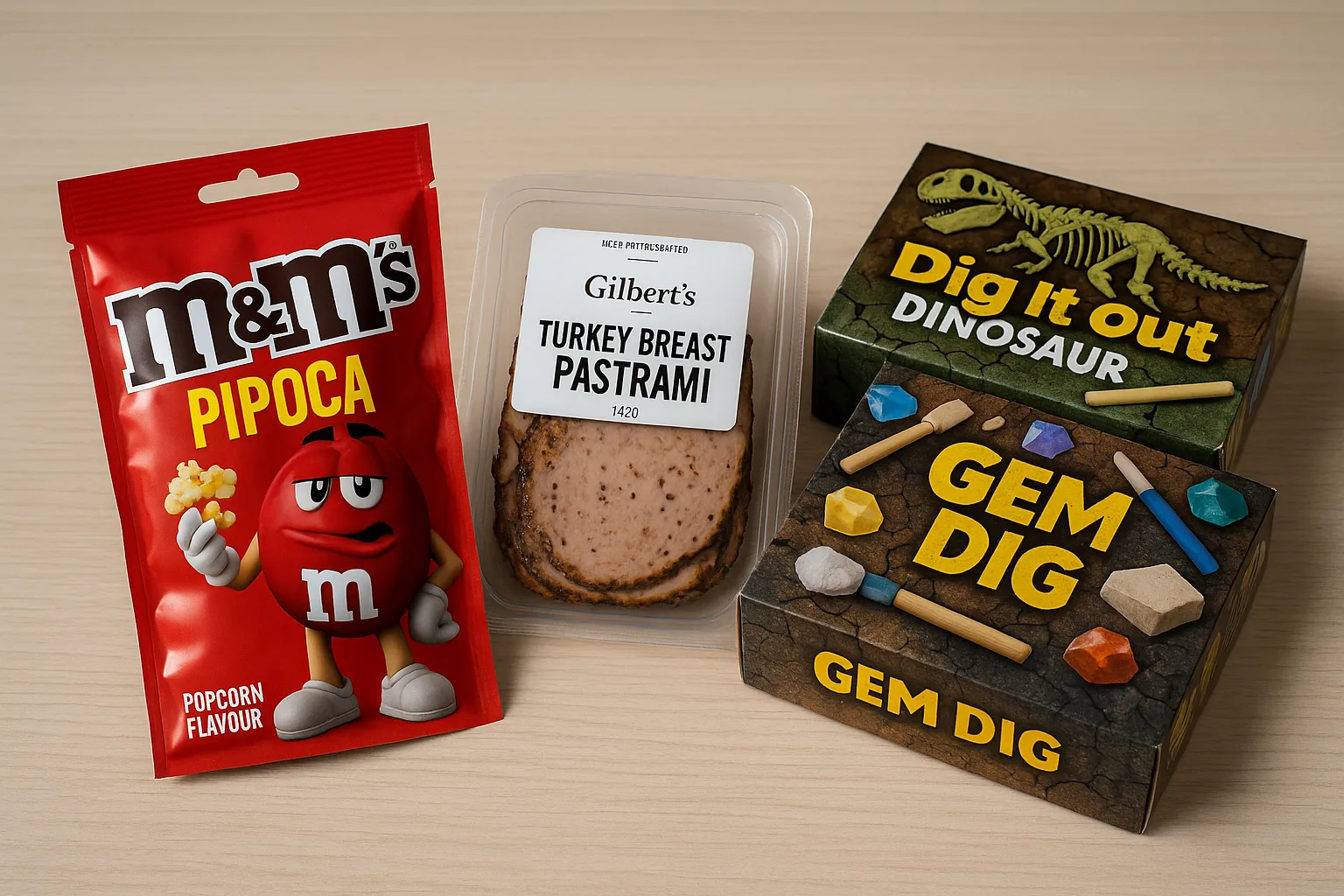
The Food Standards Agency (FSA) has reported significant concerns regarding two food products. One of these is a chocolate item, M&M’s Pipoca (popcorn), which has raised alarm due to an allergen risk. The chocolate, originally intended for the Brazilian market, contains peanuts and gluten, and it may also have undisclosed traces of barley, rye, and wheat. This poses a serious risk for individuals with allergies to these ingredients or conditions such as coeliac disease. The FSA has recommended that anyone who has purchased these 35g packs should avoid consumption and return the products to the retailer for a full refund, regardless of whether they have a receipt.
Additionally, Gilbert’s Turkey Breast Pastrami is under recall following the detection of Listeria monocytogenes in some batches. This bacterium can lead to listeriosis, a serious infection that mimics flu symptoms and can escalate to severe complications, including meningitis, in vulnerable populations. The affected packs are those weighing 142g and with a use-by date of April 9, 2026. Consumers are urged to check their refrigerators and dispose of any possessor of these specific codes—CK016 or CK027.
Moreover, safety alerts have also been issued concerning toys sold at Smyths Toys. A diverse range of dig toy products has been recalled, including the Dino Dig Sensory Bin and the Gem Dig Kit. The Office for Product Safety and Standards (OPSS) identified that the sand-like material contained in these toys may be contaminated with asbestos, a material banned due to its significant health risks, even at low exposure levels. Asbestos exposure is known to cause serious respiratory issues and various health conditions.
In light of this risk, the OPSS has provided detailed instructions for disposal of the affected toys and their contents. Users should cease using the toys immediately. If the contaminated sand remains packaged, it must be carefully sealed in a heavy-duty plastic bag, clearly labelled, and stored safely away from children. For any sand that has been utilized, it is critical to clean up the area with wet cloths to avoid dust dispersion. Those handling the material are advised to wear gloves and a mask and to securely double-bag all potentially contaminated items. Customers can also approach Smyths Toys for refunds.
These recalls form part of a growing awareness and rapid response to consumer safety risks in the UK marketplace. The role of regulatory bodies, such as the FSA and OPSS, is crucial, as they work to identify and mitigate potential health hazards from everyday products. Industry analysts suggest that heightened vigilance may be a response to an increasingly safety-conscious consumer base, demanding transparency and quick action from manufacturers and retailers alike.
While these recalls may cause inconvenience for affected consumers, they underscore the importance of public health initiatives aimed at safeguarding communities. Health experts recommend that consumers remain informed about product safety updates and maintain a vigilant check on food labels and toy materials, especially for those with allergies or young children.
As concerns continue to mount regarding product contamination, the trend of recalls may likely persist, highlighting the necessity for robust quality control measures within the food and toy manufacturing sectors. Retailers and manufacturers are encouraged to enhance their protocols to ensure that such risks are minimized in the future.
In conclusion, the recent recalls serve as a reminder of the potential dangers present in commonly used products. The public is urged to stay attentive to safety communications from regulatory agencies and to act swiftly in returning any recalled items. The ongoing surveillance for food safety and product integrity plays a vital role in protecting consumers and maintaining trust in the market. Health authorities remain committed to ensuring that food products sold in the UK meet stringent safety standards, advocating for consumer awareness and proactive measures to preempt health risks.
Our Thoughts
The incidents highlighted in the news article demonstrate breaches of several UK health and safety regulations, particularly those under the Food Safety Act 1990 and the General Product Safety Regulations 2005. To prevent such occurrences, manufacturers should ensure strict compliance with labelling regulations, particularly for allergenic ingredients. In this case, M&M’s Pipoca lacked proper labels for allergens, which could lead to severe health risks for consumers with allergies.
For the listeria contamination in the Turkey Breast Pastrami, regular microbiological testing during production and thorough monitoring of the supply chain could have mitigated the risk of contamination. Establishing robust quality assurance measures is essential.
Regarding the toys containing asbestos, manufacturers must conduct comprehensive risk assessments as mandated by the Control of Asbestos Regulations 2012 to prevent hazardous materials from entering products marketed for children.
Overall, key lessons include the necessity of rigorous product testing, transparent labelling, and adherence to safety standards to ensure consumer safety. Regular audits and training for staff on compliance with health and safety legislation could also help prevent similar incidents in the future.