















Story Highlight
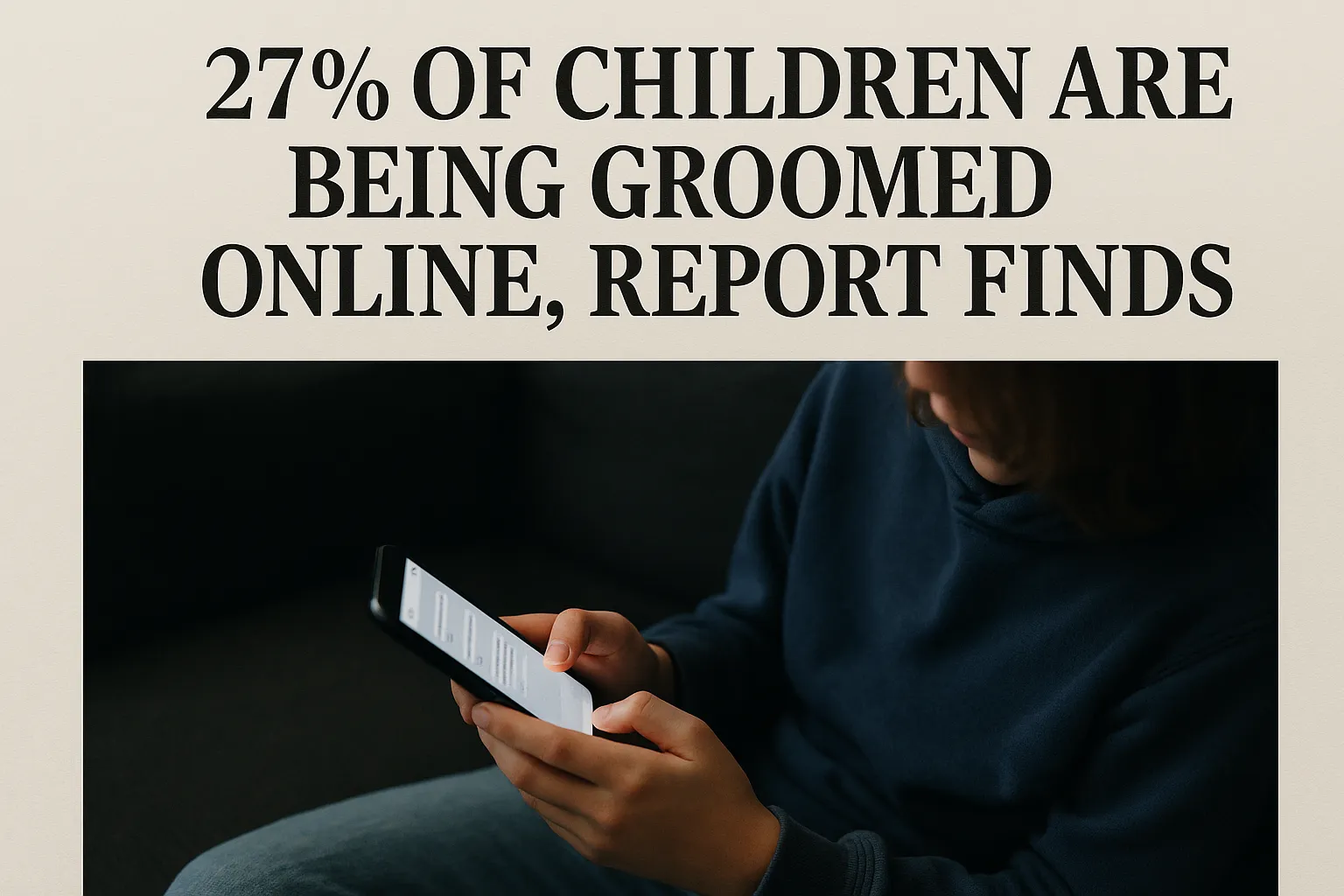
– Over 25% of children groomed online, experts warn.
– 38.6% of girls, 19% of boys affected before 18.
– One in 10 children faces sextortion threats online.
– Over 300 million children experienced online exploitation last year.
– Report urges governments to prioritize child online safety.
Full Story
A recent study has highlighted a troubling statistic: over a quarter of children are falling victim to online grooming, an issue labelled a “global health emergency” by experts in the field. Conducted by the Childlight Global Child Safety Institute (GCSI), the research reveals that an alarming 27% of children encounter grooming scenarios online, with many facing pressure to share explicit images.
According to the findings shared by Childlight, a research institute affiliated with the University of Edinburgh, the prevalence of grooming incidences varied significantly between genders. The report indicates that 38.6% of girls and 19% of boys experience grooming before reaching adulthood. Additionally, approximately one in ten children may encounter a particularly insidious tactic known as “sextortion.” This coercive practice involves blackmailing young people into sharing intimate photographs by threatening to distribute the images unless the individual complies with the blackmailer’s demands.
The expansive nature of this issue is further underscored by the GCSI’s revelation that around 300 million children were subjected to some form of sexual exploitation online in the past year alone. Moreover, the report anticipates that more than 130 million children will experience abuse offline in 2024.
The report, titled “Into the Light Data Update,” was launched during the World Health Assembly in Geneva and calls for immediate recognition of this serious issue as a public health priority by governments worldwide. The findings were based on a comprehensive analysis of 147 studies from over 60 countries, offering a broad insight into the prevalence of this alarming trend.
Leading the research, Professor Debi Fry, Global Director of Data at Childlight, articulated the profound impact of childhood sexual abuse. “The harms of childhood sexual abuse are not fleeting,” she noted. “For many victims, the consequences include trauma, anxiety, depression, and self-harm that can persist into adulthood.” She emphasised that the health consequences linked to childhood sexual violence among girls and women surpass many commonly acknowledged health risks, such as smoking and excessive alcohol consumption. Among boys, the issue is seen as a more significant threat to their well-being than poor nutritional habits. “This is a worldwide health emergency – but it is preventable,” Professor Fry asserted.
Rhiannon-Faye McDonald, a survivor of online abuse, shared her own harrowing experience to highlight the urgency of this issue. At just 13 years old, she was approached by an adult male posing as a teenager and experienced severe online exploitation. Now serving as an advocate for enhanced online safety through the Marie Collins Foundation, she has chosen to speak out by waiving her right to anonymity. “These findings reflect what we see every day in our work with victims and survivors of technology-assisted child sexual abuse,” McDonald stated. “The scale is deeply concerning, and the impacts are real and long-lasting.”
She advocated for the framing of this crisis as a public health matter, stressing that health services play a crucial role in the early recognition and response to harm. “Without that recognition, opportunities for early support and prevention are too often missed,” McDonald warned, highlighting that proper identification of child victims within healthcare systems is essential to preventing ongoing trauma.
The stark realities presented by this report reveal a pressing need for governments, educational institutions, and health services to collaborate in addressing online child grooming. Educating parents, children, and educators about the potential risks associated with online interactions is imperative to foster a safer digital environment for young people.
As the report gains traction, the call for action grows ever more urgent. The complexities of technological advancement and its relationship to child safety necessitate a multifaceted approach to prevention. Stakeholders across sectors must come together to develop robust strategies and policies aimed at mitigating risks and protecting children from exploitation.
In light of these findings, it is crucial for those affected to seek support. For anyone experiencing feelings of distress, the Samaritans provide a confidential service available around the clock in the UK and Republic of Ireland at 116 123. Those in the USA can access help through the 988 Suicide and Crisis Lifeline by calling or texting 988, or by visiting their website for online chat services. International resources can be found at www.befrienders.org, offering connections to local helplines.
In conclusion, the GCSI’s report not only sheds light on an alarming health crisis affecting children globally but also serves as a call to action. By recognising the scale of online grooming and its consequences, society can work towards implementing preventative measures that protect the most vulnerable members of our community. The urgency of this issue cannot be overstated, and it is imperative that collective action is taken to address and alleviate the crisis at hand.
Our Thoughts
To address the alarming issue of online grooming highlighted in the report, key preventative measures and legislative adherence are crucial. First, enforcing existing regulations such as the UK’s Sexual Offences Act 2003 and the Online Safety Bill can enhance child protection by holding internet service providers and social media platforms accountable for safeguarding children online.
There needs to be improved implementation of robust age-verification processes to restrict access to platforms where grooming could occur. Increased education for both parents and children on safe online practices is also essential to empower users to recognize and report suspicious behavior.
Additionally, industry collaboration with law enforcement can aid in monitoring and shutting down distribution networks of harmful materials, such as paedophile manuals.
Furthermore, recognizing the consequences as a public health issue can enable better resource allocation for mental health support systems, ensuring timely identification and treatment of victims. Establishing training for healthcare professionals to recognize signs of harm early is vital, aligning with the Health and Safety at Work Act 1974 which emphasizes welfare provisions for vulnerable individuals.
Collectively, these measures can significantly mitigate the risk of similar incidents occurring in the future.