














Story Highlight
– Jason Thomas disappeared from Valaris 121 on January 22, 2023.
– Search and rescue operation failed to recover his body.
– Ensco Offshore UK Limited fined £267,000 for safety breach.
– Investigation revealed unsecured deck grating led to his disappearance.
– Company replaced polymer grating with galvanized steel afterward.
Full Story
**Tragic Incident at Valaris 121: Safety Breaches Leading to Loss of Experienced Offshore Worker**
On January 22, 2023, the offshore oil rig Valaris 121 became the site of a tragic incident that led to the disappearance of Jason Thomas, a seasoned offshore worker from South Wales. The event unfolded during a period when the rig was being towed to Dundee, Scotland, for essential maintenance. When Thomas went missing around 4pm, a swift and extensive search and rescue operation was initiated, but unfortunately, he has not been found.
In the aftermath of this devastating incident, Ensco Offshore UK Limited (EO UK Ltd), the company operating the Valaris 121, faced serious scrutiny for its adherence to health and safety regulations. On May 18, 2026, at Aberdeen Sheriff Court, the firm was held accountable for its failure to ensure the safety of its operations. It was ordered to pay a substantial fine of £267,000 along with a victim surcharge of £20,025. This legal consequence underscores the grave nature of the oversight that led to Thomas’s disappearance.
Jason Thomas was known for his extensive expertise in the offshore oil and gas industry, having accumulated approximately 16 years of experience. Over the course of his career with Ensco Services Limited, a subsidiary of EO UK Ltd, Thomas had advanced through various roles. He began as a roustabout, ultimately becoming a deck foreman and crane operator. On the day of the incident, he was responsible for supervising the deck team, highlighting the critical role he played within the operation.
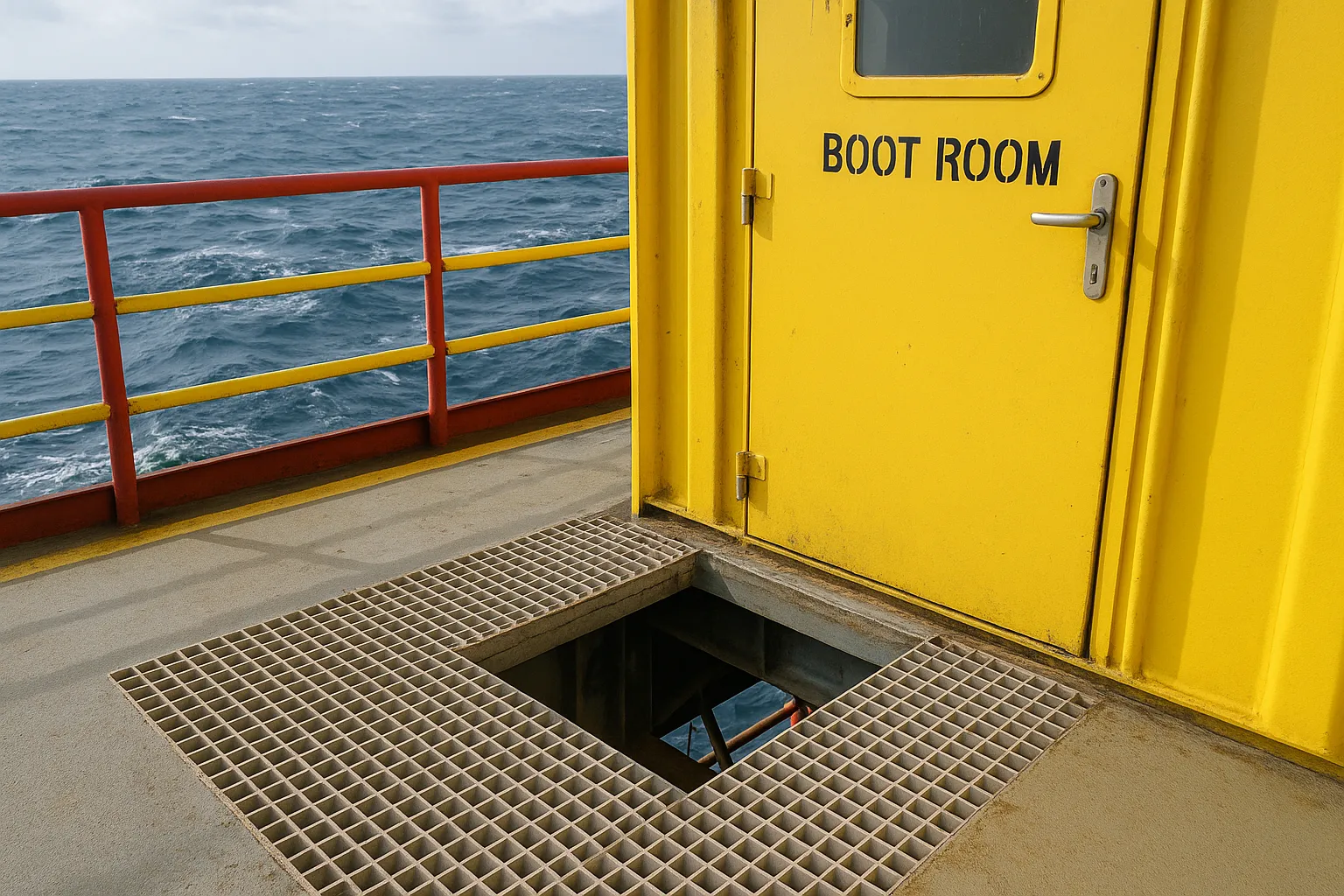
The Health and Safety Executive (HSE) conducted a thorough investigation into the circumstances surrounding Thomas’s vanishing. Their inquiry revealed that a section of deck grating located just outside the boot room door had not been properly secured according to the specifications provided by the manufacturer. The investigation indicated that routine inspections had failed to verify whether the Hilti clips meant to secure the grating were correctly installed.
On that fateful day, the weather conditions worsened significantly, with wind speeds exceeding 30mph and wave heights surpassing five metres. Experts believe that the intense wave action created sufficient upward force to dislodge the unsecured grating, resulting in a dangerous opening directly in front of the door. Following this, a colleague reportedly heard a loud noise around the time of the incident. Upon investigating, they discovered that the grating was no longer in place, leading to a perilous drop into the sea below.
Prior to his disappearance, Thomas had been performing vital water integrity checks alongside a colleague. After completing these tasks, he left to change out of his wet gear, leaving personal belongings, including his hard hat, gloves, and radio near the airlock door. Witness accounts reveal he was last seen exiting a staff lounge with a cup of coffee and his mobile phone shortly after 3pm.
Despite repeated announcements over the tannoy system to locate him, Thomas remained unaccounted for. It was not until nearly 9pm that HM Coastguard was notified about his absence. Search operations commenced shortly after, but they were called off the following day. In a further personal tragedy, Thomas’s mother obtained a Presumed Death Certificate through the Welsh courts, acknowledging that he had likely perished on January 22. Tragically, she passed away shortly after this legal process was completed.
The HSE investigation also explored the possibility of foul play regarding the unsecured grating but found no evidence of malicious interference. A detailed examination of the clips and fixings revealed no tool marks, suggesting that external tampering was not a factor in the incident.
In response to the serious safety lapse highlighted by this tragedy, the company took immediate measures to address similar risks across its fleet. All polymer deck gratings were replaced with more robust galvanised steel alternatives. This decision was made in an attempt to enhance safety and prevent future incidents of a similar nature.
HSE principal inspector Steven Hanson Hall noted the significant impact of Thomas’s death on both his colleagues and the wider community. He described the event as a “profound tragedy” and emphasised that straightforward measures designed to manage the risks associated with deck gratings, particularly during towing operations in adverse weather conditions, could have avoided the disaster.
The loss of Jason Thomas serves as a poignant reminder of the critical importance of health and safety protocols within the offshore oil industry. His experience and commitment to his role reflect the dedication of many workers in this challenging field. The ongoing discussions about safety reforms highlight the pressing need for all companies in the sector to ensure robust practices are in place, safeguarding the lives of those who work tirelessly in demanding environments.
As investigations continue and lessons are gleaned from this heart-wrenching incident, the industry must remain vigilant to prevent such tragedies and honour the memory of those like Jason Thomas, whose contributions were integral to their teams and communities. The commitment to learning from past mistakes is essential to ensuring that no family suffers the same loss in the future.
Our Thoughts
The tragic incident involving Jason Thomas highlights several key safety lessons and breaches of UK health and safety legislation. Firstly, Ensco Offshore UK Limited failed to ensure the deck grating was secured according to the original equipment manufacturer’s specifications, breaching the Management of Health and Safety at Work Regulations 1999, which require employers to assess and manage risks effectively.
Regular inspections of safety equipment, including grating, were evidently inadequate. The Health and Safety Executive (HSE) noted that the Hilti clips securing the grating were not checked correctly, violating the Provision and Use of Work Equipment Regulations 1998, which mandate that equipment should be maintained in a condition that ensures safety.
Moreover, in adverse weather conditions, a thorough risk assessment should have prompted better supervision and preparation before personnel moved about the deck. The HSE emphasized that implementing straightforward measures to identify and control the risks associated with unsecured gratings, particularly during rig towing operations in heavy seas, could have prevented this incident. To avoid similar occurrences, companies must prioritise rigorous maintenance procedures, risk assessments, and heightened awareness during adverse conditions.