















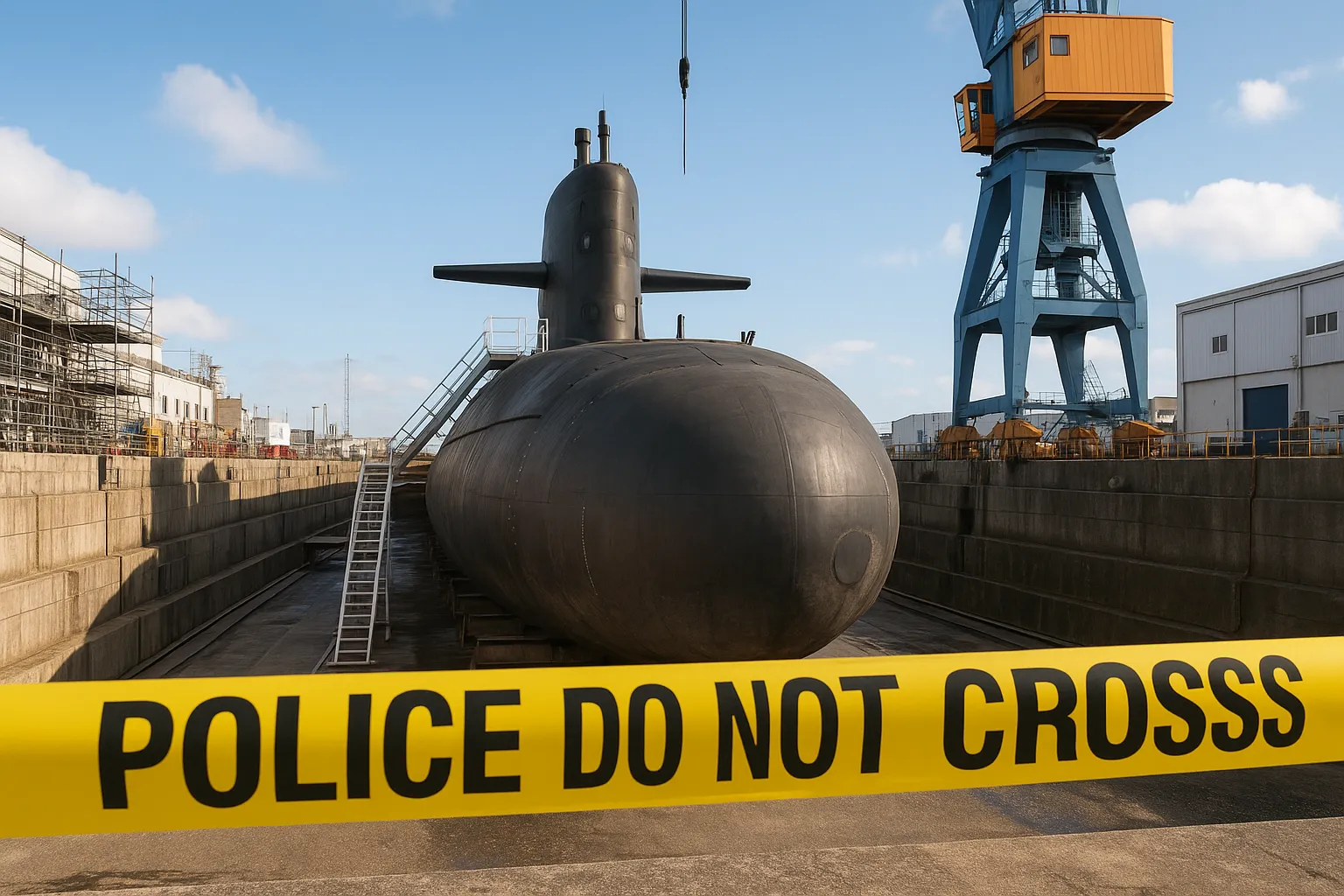
Story Highlight
– Staff member hospitalized after incident at Devonport dockyard.
– Injured worker was an apprentice at Babcock.
– Incident occurred on April 2 during maintenance work.
– Investigation launched; HSE is aware of the situation.
– Babcock prioritizes worker’s wellbeing and safety.
Full Story
A staff member has been hospitalized following a significant workplace incident at the Babcock facility within the Devonport naval base in Plymouth. This event, which occurred on April 2, involved a worker sustaining severe injuries while engaged in activities related to a nuclear submarine.
The casualty was reportedly an apprentice employed by Babcock, a company responsible for engineering services at the naval facility. It is believed that the injured individual was working on HMS Audacious at the time of the incident. The HMS Audacious is part of the Royal Navy’s Astute-class submarines and has been docked at Devonport to undergo necessary maintenance.
Babcock has acknowledged that an incident transpired at their Devonport site, confirming that the injured employee was subsequently admitted to the hospital. However, the company has refrained from providing specific details regarding the incident itself or the nature of the injuries sustained. A spokesperson emphasized that the wellbeing of their colleague is of utmost concern, and the company is committed to determining the circumstances surrounding the occurrence. They stated, “Our focus is on their wellbeing. An investigation is underway to establish the cause of the incident. The health and safety of everyone working across our operations is our absolute priority.”
In response to the incident, the Health and Safety Executive (HSE) has been notified and is currently conducting inquiries. A spokesperson for the HSE confirmed their awareness of the situation and reiterated that they are engaged in an investigative process regarding the incident. This independent regulator is renowned for overseeing work-related health and safety matters, ensuring compliance among employers throughout the UK.
The HMS Audacious, which docked at the naval base last year, is the fourth submarine in the Astute class. It was launched in April 2017 and had recently returned from a comprehensive 11-month patrol in the Mediterranean Sea. During this mission, the submarine underwent complex underwater repairs, particularly concerning partially flooded ballast tanks crucial for buoyancy. Following its operational duties, the vessel is now in Plymouth for scheduled maintenance, initially docked in a tidal berth until its recent entry into dry dock for further refitting.
While the investigation unfolds, concerns regarding health and safety protocols in high-risk work environments like those at naval facilities are likely to come to the fore. This incident underscores the importance of stringent safety measures, particularly when handling complex and potentially hazardous equipment associated with nuclear submarines.
Industry experts have expressed the necessity of effective oversight and adherence to safety regulations within engineering and maritime industries, where the risks are notably heightened. Such incidents can have far-reaching implications, not only for the individuals involved but also for the broader public perception of safety within the sector.
As this case progresses, it may ignite discussions on the training and safety practices implemented for apprentices within high-stakes environments. The role of rigorous training and proactive safety measures in preventing workplace accidents cannot be overstated, particularly in sectors dealing with sophisticated technology such as nuclear submarines.
In addition to the immediate safety concerns, the mental well-being of fellow employees may also come under scrutiny. Support mechanisms may be essential to assist workers in coping with the aftermath of such incidents, creating a workplace culture that prioritises mental health alongside physical safety.
As investigations continue, the implications of this event may influence not only Babcock’s operations but also wider industry practices. Stakeholders are likely to watch developments closely, anticipating potential changes to safety regulations that could emerge from the findings of the investigation.
The incident at Devonport serves as a reminder of the inherent dangers that workers in specialised fields face daily. The commitment to protecting the lives and well-being of employees is paramount, necessitating ongoing dialogue about safety practices and the responsibilities that come with high-reliability organisations.
In summary, the unfortunate occurrence at the Babcock facility highlights critical issues of workplace safety and the necessity of comprehensive training and oversight. The investigations by both Babcock and the HSE are expected to shed light on the incident and could potentially lead to enhanced safety protocols in the future, ensuring the welfare of all staff operating within such crucial environments.
Our Thoughts
The incident at Babcock’s Devonport site underscores significant breaches of UK Health and Safety legislation, particularly the Health and Safety at Work Act 1974, which mandates that employers ensure, as far as reasonably practicable, the health and safety of employees. Key safety lessons include the importance of thorough risk assessments and adequate training, especially for apprentices and less experienced workers.
To prevent similar incidents, Babcock should have established robust safety protocols tailored to the unique environment of working on nuclear-powered vessels. This includes ensuring that all staff are trained in specific operational hazards associated with submarine maintenance and the use of personal protective equipment (PPE). Regular safety drills and clear communication about potential risks must be enforced to enhance awareness and preparedness among workers.
Furthermore, the oversight of the HSE in investigating the incident should focus on whether Babcock complied with operational safety guidelines and whether a suitable health and safety management system was in place. Improved supervision and reinforced adherence to safety regulations could mitigate risks in future operations.