













Story Highlight
– Councillors oppose Cornwall Council’s glyphosate reintroduction decision.
– Demands for public consultation on chemical weed treatment.
– Cornwall Council cites increased complaints as justification.
– Motion seeks to extend opt-out period for councils.
– Public demonstration planned against glyphosate use proposal.
Full Story
Councillors from various districts in Cornwall are voicing strong opposition to a recent decision by Cornwall Council, describing it as a “complete U-turn” from the authority’s previous stance on glyphosate use, which had been phased out over the last decade. The council’s latest move involves a reintroduction of chemical weed treatment within public spaces, prompting concerns over public health and ecological impacts.
Councillors have urged the local authority to delay implementing its weed control programme until a more comprehensive public consultation is conducted. In late March, Cornwall Council communicated to town and parish councils that its Liberal Democrat and Independent cabinet had mandated the initiation of a new weed management strategy intended to enhance public spaces throughout the region.
The correspondence cited a growing number of complaints related to declining conditions since glyphosate use was halted in 2013. Issues such as narrowing footways, damaged pavements, and diminishing community pride were mentioned, leading the council to conclude that a return to chemical treatments was necessary.
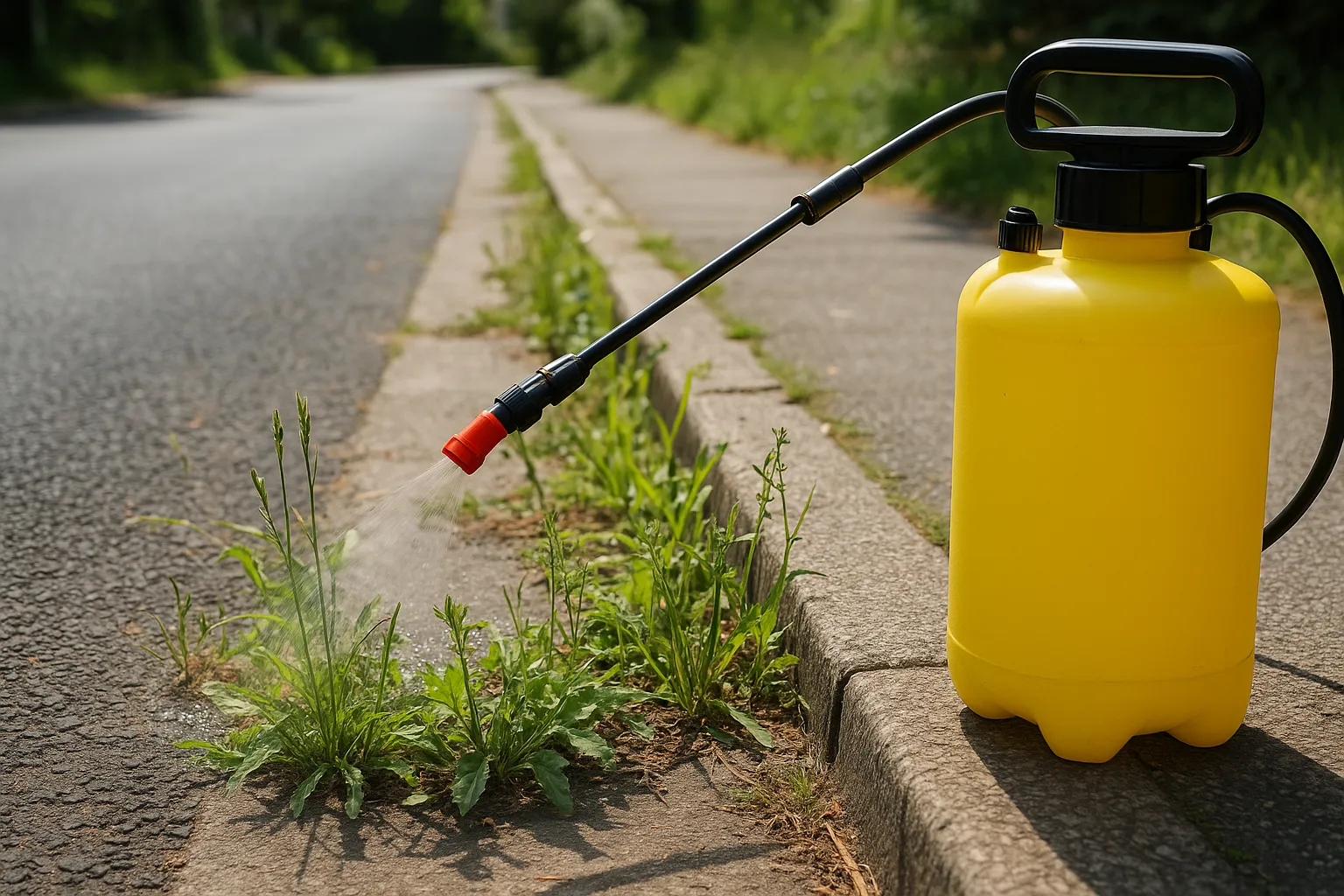
The implemented strategy indicates that all areas maintained by Cornwall Council will be included in the programme, which involves the application of a diluted glyphosate solution on public highways within urban settings. However, the authority has offered an opt-out provision for those town and parish councils desiring to manage their areas without chemical intervention, provided they can adhere to the required standards. Councils interested in this exemption have until April 20 to notify the council, a timeframe some have described as inadequate for careful consideration.
Redruth Town Council has previously initiated a petition in opposition to the reintroduction of glyphosate, calling for solidarity among other councils in Cornwall to resist the council’s decision regarding the chemical’s use.
In light of these developments, Cornwall Wildlife Trust, a local conservation charity, has also formally urged a postponement of the plans. The trust is advocating for an extension of the opt-out deadline and a revision of the timeline that would support extensive local consultation and thorough examination of the issues at hand.
Cllr James Mustoe, representing Mevagissey and St Austell Bay for the Conservative Party, was involved in a successful campaign back in 2016 led by the late Liberal Democrat councillor Edwina Hannford, which resulted in Cornwall Council’s endorsement to become a “bee-friendly local authority.” This commitment included ceasing the use of both neonicotinoids and glyphosate in all publicly accessible areas under the council’s management, except in cases of controlling invasive species or addressing genuine risks to asset integrity.
Mustoe sharply criticized the recent decision, stating, “What the council is now proposing is an absolute reversal of everything it said it was going to do. While I support the aim of tidying public spaces, we must explore alternatives that do not involve introducing harmful chemicals into our environment. This represents a complete about-face, and I believe it has been rushed without careful consideration of the potential consequences.”
A public protest has been scheduled to occur outside County Hall in Truro prior to a full meeting of the Cornwall Council on April 21. This meeting aims to discuss a motion opposing the cabinet’s resolution regarding glyphosate.
The motion, put forth by Green Party councillors Drew Creek and Karen La Borde, argues that the decision to reintroduce chemical weed control utilizing glyphosate is a significant policy shift with both ecological and public health ramifications for residents of Cornwall. Supported by members from various political groups—including Conservative, Green, Mebyon Kernow, and Cornish Independent councillors—the motion requests a halt to the planned chemical treatments set to begin in May 2026 until a thorough public consultation process is realised.
It further highlights the inadequacy of the three-week opt-out window allocated for town and parish councils, which coincided with the Easter period, calling for an extension to 30 days following the release of public consultation results.
The report submitted for the full council session stresses the global concerns surrounding glyphosate, which is increasingly perceived as posing serious risks to both human health and ecological balance. Recent epidemiological research has established a correlation between glyphosate exposure and non-Hodgkin lymphoma, leading to numerous lawsuits against corporations like Bayer and Monsanto.
Consequently, many countries—including France, Germany, and Italy—have either banned or restricted glyphosate’s use significantly, while locations within the United States and Canada have similarly enacted prohibitions against its application. In the UK, the government’s licensing of glyphosate remains effective until December 2026 pending further assessments from the Health and Safety Executive.
Councillors have underscored that the decision to utilise glyphosate for aesthetic purposes represents a fundamental departure from Cornwall Council’s decade-long commitment to environmental stewardship.
The motion also references public apprehension regarding glyphosate, noting that numerous local councils have already taken proactive measures to forbid its application. Wadebridge Town Council is particularly highlighted for its 2016 initiative to become glyphosate-free, a stance that has been echoed by other parishes such as Bude, Newquay, and Perranporth.
A spokesperson for Cornwall Council responded to the criticism by stating that the authority received nearly 2,000 complaints over the past three years regarding weed growth on pavements and public roads. The council reiterated its commitment to biodiversity, community welfare, and the improvement of public spaces across Cornwall, announcing a £5 million investment over the next three years to enhance the management of verges and kerbsides.
In addition to addressing weeds, Cornwall Council aims to safeguard natural habitats by limiting the frequency of verge cutting to once per year, thus benefitting pollinators and wildflower populations. Targeted weed control will still be executed in urban areas where weed presence poses risks to safety and infrastructure, with a focus on minimised chemical usage.
The use of best practice techniques adopted in other regions has been emphasised as a cost-effective strategy for managing weed issues, balancing public safety with ecological considerations.
Our Thoughts
To avoid the backlash against the reintroduction of glyphosate weed treatment, Cornwall Council should have adhered to the Health and Safety at Work Act 1974, ensuring adequate consultation and risk assessments were performed before implementing any chemical usage. A more extensive public consultation process would have demonstrated compliance with the need for stakeholder engagement under the Management of Health and Safety at Work Regulations 1999.
The perceived lack of adequate notice for town and parish councils to opt-out highlights a potential breach of the Council’s duty to ensure the health and safety of the public and its employees, as mandated by the Health and Safety at Work Act. The insufficient consultation timeframe could have led to missed opportunities for communities to express environmental concerns regarding glyphosate, which poses health risks.
Key lessons include the importance of transparent communication and the need for robust consultation processes to prevent similar incidents. Cornwall Council should consider alternative weed management methods, as recommended under the Environmental Protection Act 1990, which mandates minimizing the environmental impact of harmful chemicals. This incident underscores the necessity for councils to uphold their environmental commitments and reconsider their strategies that may endanger public health and biodiversity.