















Story Highlight
– New procedure preserves donor livers inside the body.
– Increases viable liver transplants by reducing organ damage.
– NRP maintains oxygen supply for two hours pre-removal.
– Draft guidance aims for fair NHS availability nationwide.
– Estimated 150 additional liver transplants possible annually.
Full Story
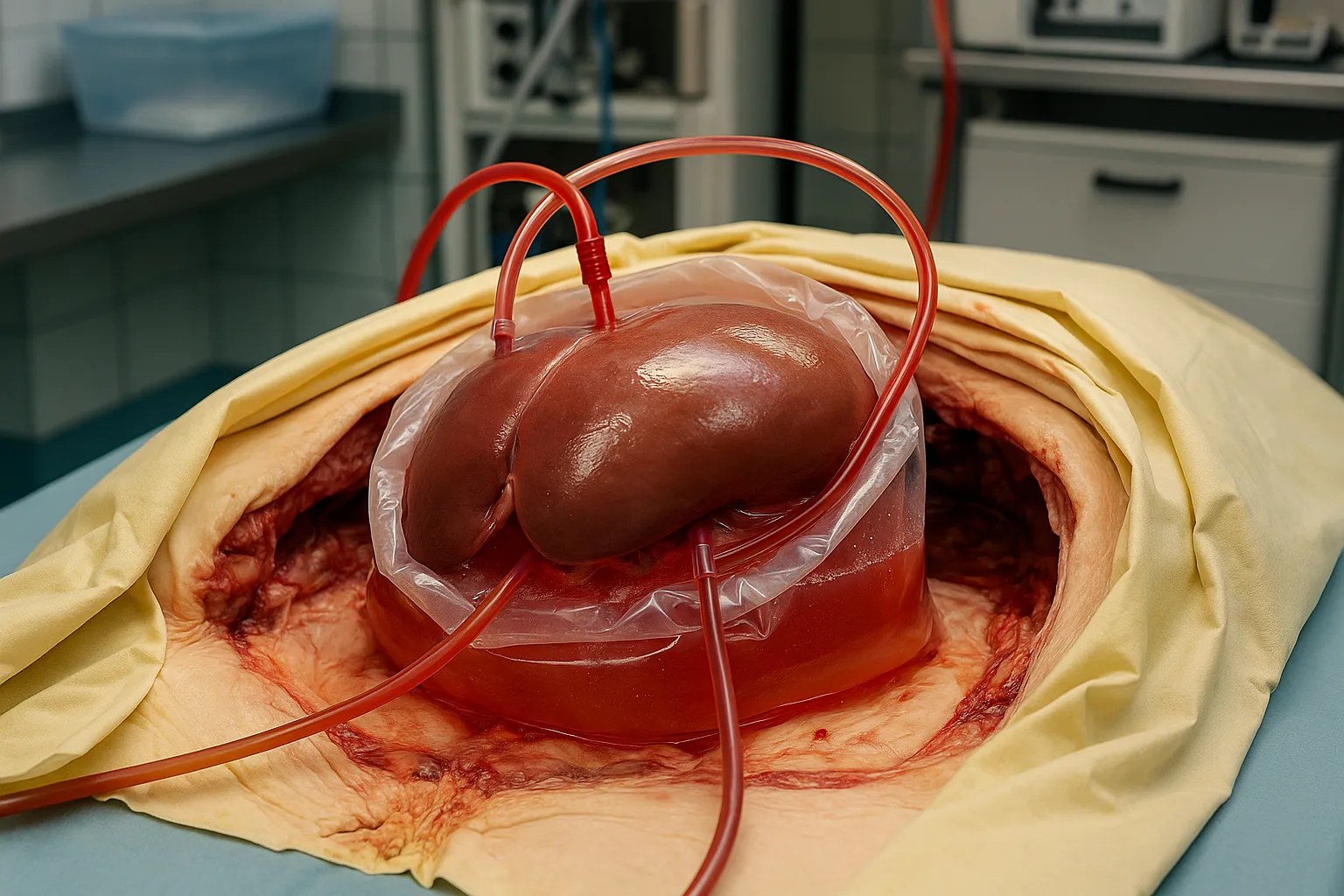
A revolutionary technique developed for preserving donor livers within the body is poised to enhance the availability of transplants, according to health authorities. This pioneering method aims to maintain the oxygen supply to the liver for roughly two hours after the donor’s heart has ceased functioning, allowing the organ to recuperate from potential damage prior to its removal.
The National Institute for Health and Care Excellence (NICE) highlighted that this critical timeframe not only aids in the organ’s recovery but also provides medical professionals with essential time to perform necessary tests to assess viability. Traditionally, after a liver is donated, it is immediately flushed with a cold preservation solution and placed on ice for transport—a procedure that often leads to significant organ deterioration.
Data released by NICE indicates that in the UK, during the 2024/25 period, of the 727 livers donated following circulatory death, only 309 were successfully transplanted. This alarming statistic illustrates that more than half (58 per cent) of the livers available went unused, mainly due to concerns regarding damage from interrupted blood circulation, an issue that this new method seeks to address.
The technique, referred to as in-situ abdominal normothermic regional perfusion (NRP), is designed to sustain donor livers post-retrieval after the heart has stopped beating, according to forthcoming guidance from NICE. Additionally, NICE’s separate draft recommendations propose the use of specialized machines for liver preservation, which operate outside the human body. These devices utilise tailored solutions to safeguard the liver from deterioration while it’s being stored.
Dr Anastasia Chalkidou, programme director for health technology at NICE, remarked, “Too many donated livers are currently going unused, and too many people are dying while waiting for a transplant. The evidence shows this procedure works as well as, or better than, existing methods and has a good safety record. This is the first time NICE has evaluated this procedure for any organ, and our draft guidance gives the NHS a clear, evidence-based foundation to make it available consistently and fairly across the country.”
The NHS Blood and Transplant has projected that the broader implementation of the NRP technique could facilitate an additional 150 liver transplants annually. This represents a significant increase that could greatly benefit patients facing advanced liver disease.
Vanessa Hebditch, representing the British Liver Trust, expressed her support, stating, “Too many people with advanced liver disease spend months living with uncertainty while waiting for a suitable donor liver, and sadly every year people die whilst waiting for a life-saving transplant. This is encouraging because it supports an innovative approach that could help make more donated livers be viable and available for transplantation. We know that every additional transplant represents a life saved and a family given hope for the future. We welcome the opportunity to see innovations like this benefiting more patients across the UK.”
This advancement not only highlights the urgent need to maximise the potential of organ donations but also brings hope to numerous patients who are currently awaiting transplants. The potential to improve outcomes significantly with the use of this new method could change the landscape of organ donation in the UK, making the process safer and more efficient.
The traditional method of storing organs poses inherent risks, including the degradation of the organ due to the lack of blood and oxygen after the donor’s death. The NRP method tackles this problem by keeping the liver in a near-normal physiological state for a short period, allowing it to remain in a more favourable condition for transplantation. Such innovation in the field of organ transplant medicine signifies a crucial step towards addressing the disparity between the number of organs available and those needed.
The implications of broadening the use of NRP extend beyond transplant numbers; they resonate deeply within communities where families are grappling with the heart-wrenching reality of waiting for life-saving procedures. Patients who often endure long waits have uncertainty that can weigh heavily on their quality of life. Therefore, the encouragement derived from developments like NRP is profound, as it immerses these families in a renewed sense of hope.
Experts in the field are eager to witness how the adoption of this technique will unfold. The NHS’s commitment to utilizing evidence-based practices presents a substantial opportunity for improving liver transplant outcomes, and all eyes will be on the efficiency of implementation across the country.
As evaluations continue to assess the potential impacts of this new procedure, the medical community looks forward to seeing how it will influence the trajectory of organ donation and transplantation, ultimately saving lives and providing families with the answers and relief they desperately need. The concerted effort from health authorities and organisations reflects a broader ambition to ensure that every available organ has the potential to benefit the patients and families awaiting transformation through liver transplants.
Our Thoughts
The recent announcement of a new liver preservation procedure highlights several key areas where health and safety measures could be improved to prevent organ damage and enhance transplant success rates in the UK. One primary lesson is the importance of adhering to health and safety regulations concerning organ retrieval and handling. The implementation of the in-situ abdominal normothermic regional perfusion (NRP) technique addresses prior issues related to blood flow disruption, aligning with the Health and Safety at Work Act 1974, which mandates the protection of health and safety for employees and the public.
To prevent similar incidents where viable organs are wasted, it is crucial to ensure that all healthcare professionals are trained in the latest techniques and that appropriate equipment is available. Additionally, the Medical Devices Regulations 2002 should be rigorously followed to ensure that any new technology or procedure meets necessary safety standards.
By embracing innovative preservation methods and ensuring compliance with existing legislation, the NHS can substantially reduce the number of unused donated organs, ultimately saving lives and providing hope for patients awaiting transplants. Enhanced training and resources for staff involved in organ retrieval and transplantation processes could further minimize risks associated with outdated procedures.